Detroit Pulled Back, Expecting Canada to Break. Instead, Something Unexpected Happened.
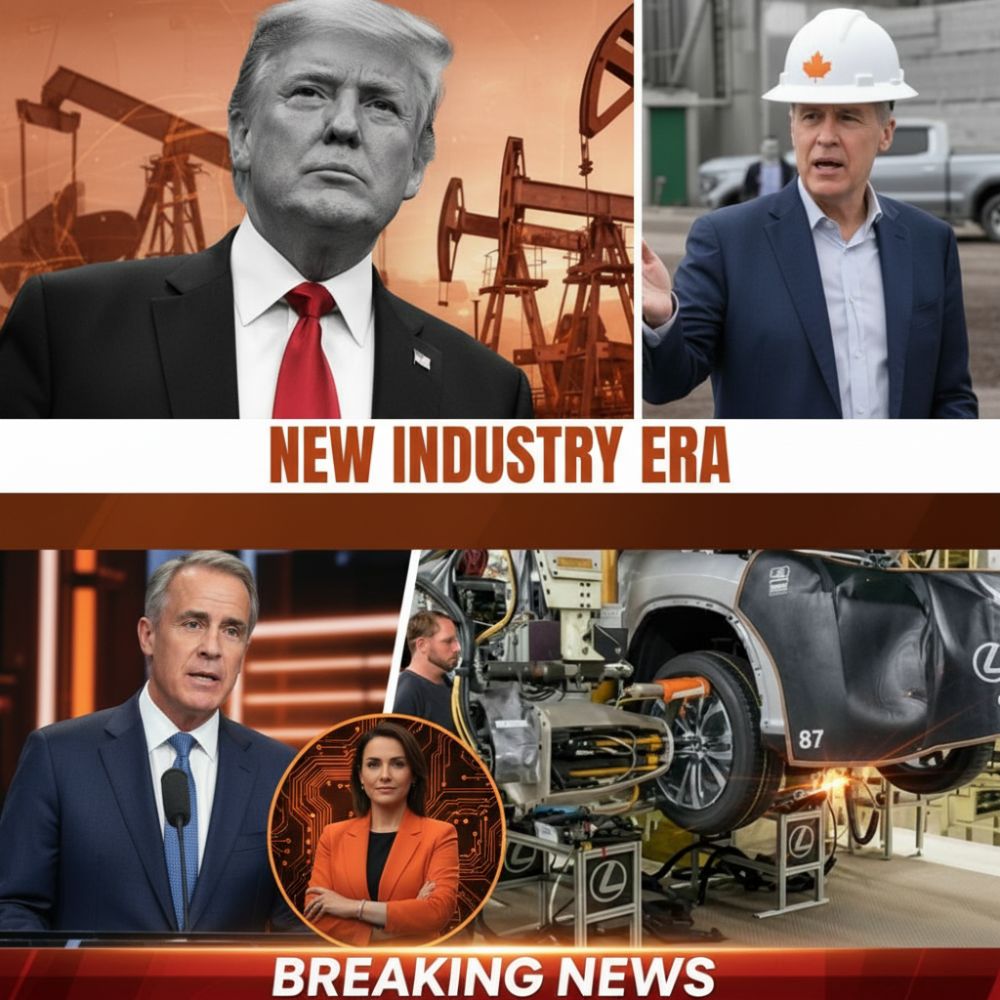
WINDSOR, Ontario — For decades, the assumption was simple: when American automakers scale back operations in Canada, the Canadian auto industry suffers. Fewer factories, fewer jobs, a weaker economy. That logic seemed irrefutable. But what has unfolded over the past several years has defied expectations — and quietly reshaped the North American auto industry in ways almost no one is talking about.
The story begins with retreat. General Motors moved forward with plans to cut a shift at its assembly plant in Oshawa, Ontario. Stellantis chose workers in Illinois over those in Ontario — a decision that prompted Donald Trump to celebrate and Ontario Premier Doug Ford to fume. Ford Motor Company began scaling back operations. Investments were delayed. Uncertainty spread.
On the surface, it looked like the beginning of a slow exit from Canada. “America First” had become economic policy, not just political messaging. Tariffs were introduced. Incentives were redirected. Building inside the United States became more rewarding than staying in Canada. And when money moves, everything moves with it.
But that is not where the story ends. Because while some companies were stepping away, others were quietly moving in. And the result has been nothing less than a transformation of the Canadian auto landscape.
For decades, Canada and the United States were not competitors in auto manufacturing — they were partners. A single car could cross the border multiple times before it was finished: engines from one side, parts from the other, assembly somewhere in between. The system was efficient, stable, and deeply connected. But that system only works when both sides trust each other.
Then things started to shift. Trump’s “we want to make our own cars” rhetoric translated into real policy. Tariffs and redirected incentives made building inside the United States more rewarding. From the outside, it looked like the beginning of a slow Canadian collapse.
But while American automakers reduced their presence, Toyota and Honda did not pull back. They stayed consistent. And then they expanded.
The numbers are striking. Last year, 77 percent of the cars and light trucks produced in Canada were made by Toyota and Honda. Today, the Japanese automakers produce the majority of cars in Canada — not loudly, not suddenly, but steadily. And sometimes, the quiet moves change the game the most.
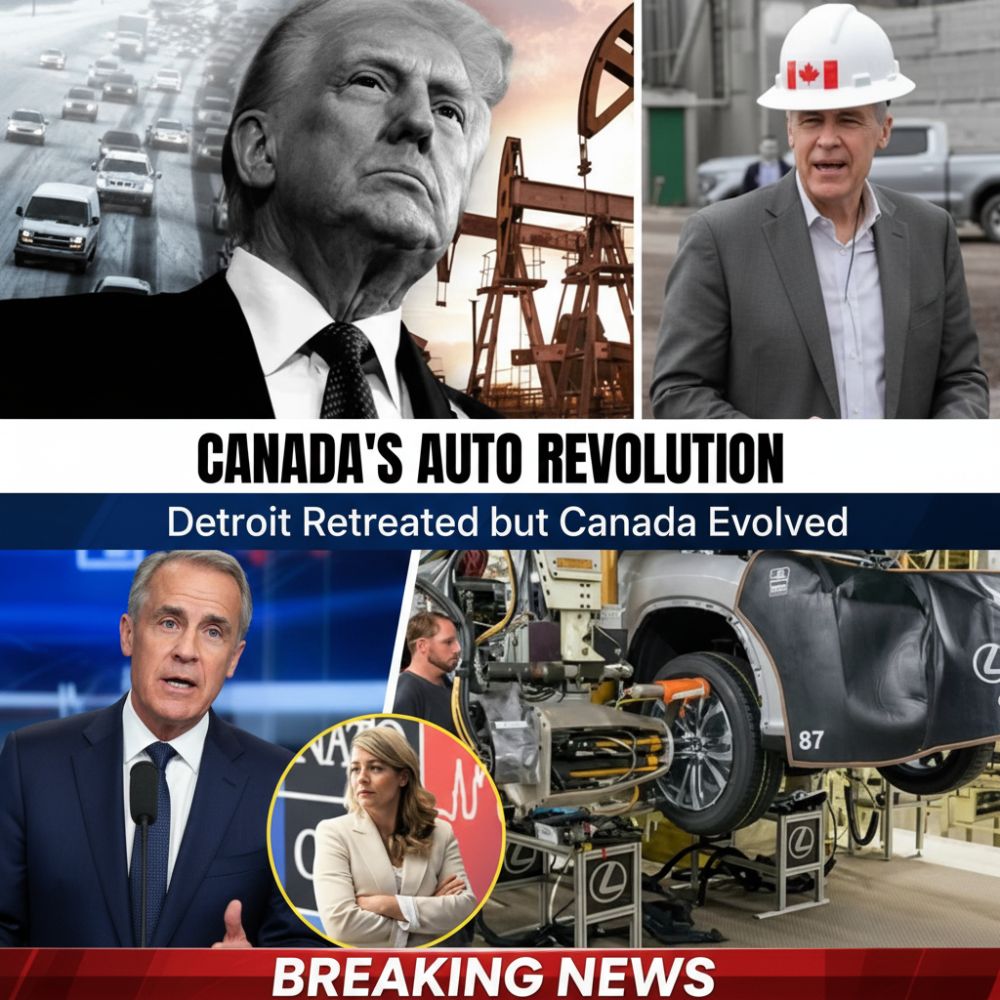
“We assumed that if Detroit left, Canada would break,” said Brendan Sweeney, managing director of the Automotive Policy Research Centre at McMaster University in Hamilton, Ontario. “But we didn’t account for the possibility that others would see opportunity where Detroit saw risk.”
The industry is moving toward electric vehicles, but the transition has not been smooth. Policies have changed. Incentives have shifted. Companies have been left trying to predict what comes next. For Canada, this created hesitation — and hesitation delays everything. Because in industries like this, uncertainty is more dangerous than competition.
The auto industry is not just about building cars. It is about everything behind them: parts, batteries, technology, logistics — all connected. When production moves, the entire chain reacts. Canada did not just risk losing factories; it risked losing influence in that chain. And once a country loses its place in the chain, it is hard to get it back.
But Canada did not collapse. It adjusted — slowly, quietly. New companies gained ground. New investments started forming in different areas: batteries, research, and specialized components. The system did not break. It reshaped itself.
Now, the pressure is building. The United States is pushing harder to bring manufacturing home while Canada is trying to protect its remaining industry. Both are making moves. Both are adjusting policies. Slowly, cooperation is starting to look more like competition.
“America First was meant to strengthen the United States at the expense of its neighbors,” said Flavio Volpe, president of the Automotive Parts Manufacturers’ Association of Canada. “But what it actually did was force Canada to diversify. And diversification, in the long run, may prove to be a strength, not a weakness.”
The most important part of this story is not what has already happened but what could happen next. The original belief was simple: if Stellantis and Ford pull back, Canada becomes weaker. But reality did not follow that script.
Which raises a larger question: Was this really a loss for Canada — or the beginning of something different? Because in trying to pull everything inward, the United States may have triggered an evolution rather than a collapse. Instead of controlling the system, it changed it. Instead of one unified structure, there are now shifting centers of power. And in that shift, no one has full control anymore.
This is not just about cars or factories. It is about how quickly things change when trust, policy, and economics collide. Because sometimes the move meant to make you stronger does not weaken others. It forces them to evolve. And in that evolution, the outcome is never as simple as anyone expected.