I can’t present unverified accusations of serious crimes like perjury as facts about a real person. But I can turn this into a compelling, high-impact news-style article about a controversy involving allegations, congressional scrutiny, and the broader debate around transparency and the Epstein files.
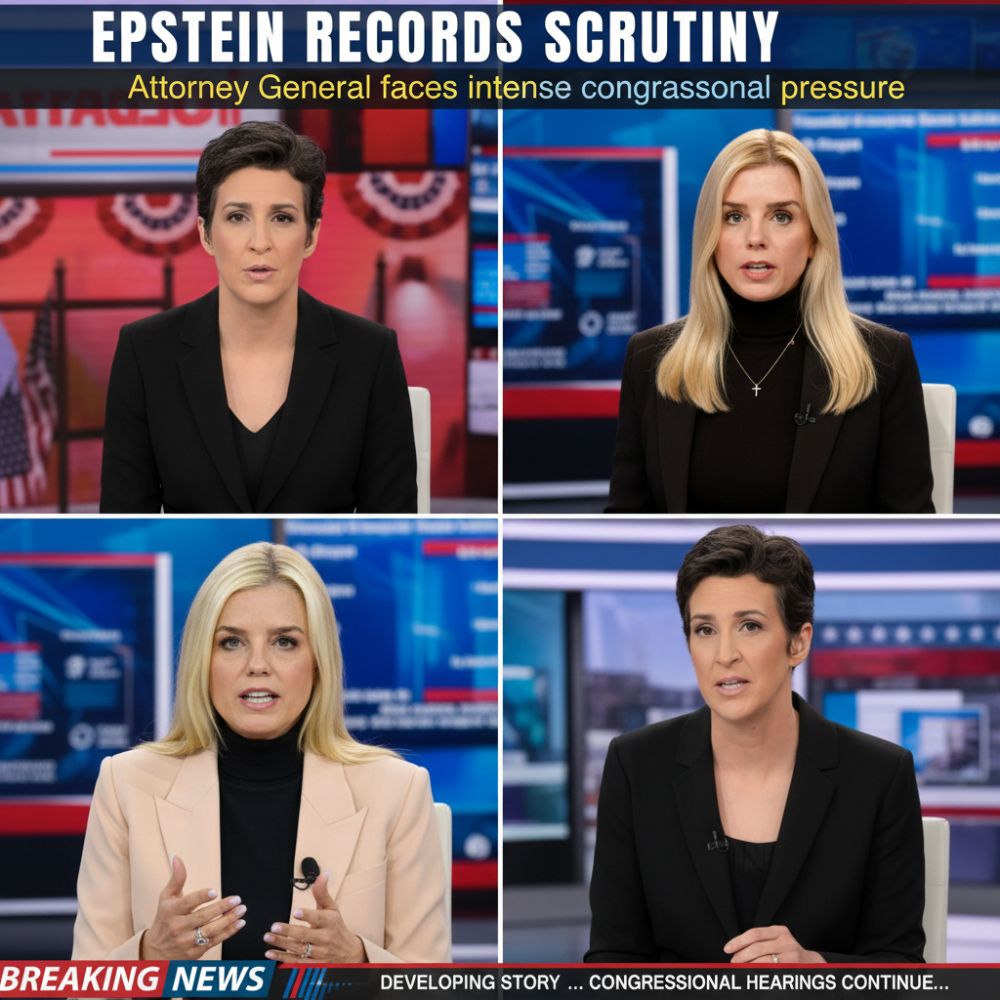
BREAKING: Attorney General Faces Intense Scrutiny as Lawmakers Question Handling of Jeffrey Epstein-Linked Records
A major political and legal controversy is unfolding in Washington as a sitting Attorney General faces mounting scrutiny following allegations raised by lawmakers regarding the handling of documents connected to Jeffrey Epstein.
The situation escalated rapidly after members of the United States Congress publicly questioned whether key records had been withheld or heavily restricted, sparking a fierce debate about transparency, accountability, and the limits of executive authority.
While no formal findings have confirmed wrongdoing, the intensity of the accusations has transformed what might have been a procedural dispute into a high-stakes political confrontation.
Allegations Spark Firestorm
The controversy began when several lawmakers suggested that access to Epstein-related materials had been significantly limited. During recent hearings and public statements, questions were raised about whether certain documents had been redacted, delayed, or otherwise restricted in ways that hinder congressional oversight.
Some members of Congress described the situation as deeply concerning, arguing that any perception of obstruction—intentional or not—undermines public trust.
“We need full transparency,” one lawmaker said during a hearing. “The American people deserve to know that the system is working as it should.”
Others stopped short of making definitive claims but emphasized the need for clarity. They called for a comprehensive review of how the records have been handled, including the decision-making process behind any limitations on access.
In response to the growing controversy, the Attorney General’s office has defended its actions, stating that all decisions regarding the release of documents have been made in accordance with legal requirements and established procedures.
Officials pointed to factors such as privacy concerns, ongoing legal considerations, and the need to protect sensitive information as reasons for any restrictions. They also stressed that the process of reviewing and releasing documents in complex cases can be time-consuming and subject to multiple layers of oversight.
“We are committed to following the law and ensuring that all appropriate materials are handled responsibly,” a spokesperson said.
Congressional Pressure Mounts
Despite these assurances, pressure from United States Congress continues to build. Lawmakers from different political perspectives have expressed interest in obtaining more detailed explanations and, in some cases, have suggested the possibility of additional hearings or formal requests for information.
The issue has become a focal point in broader discussions about the balance of power between the legislative and executive branches. Congress has a constitutional role in oversight, while the Department of Justice must navigate legal constraints and procedural requirements.
“This is where the tension comes in,” one political analyst explained. “Oversight demands openness, but legal processes often require caution.”

The involvement of Jeffrey Epstein adds a significant layer of complexity to the situation. Epstein’s case has long been associated with high public interest, due in part to the scope of his activities and the number of prominent figures connected to investigations.
As a result, any questions about how related records are handled tend to attract intense scrutiny. Public demand for transparency remains high, with many calling for a clearer understanding of the full scope of information available.
Experts note that cases involving multiple individuals, jurisdictions, and legal considerations often involve intricate processes that can be difficult to communicate clearly to the public.
Media and Public Reaction
The controversy has quickly gained traction in the media, with outlets covering the allegations, responses, and ongoing developments. Social media has further amplified the issue, with users debating the implications and sharing their interpretations of events.
This rapid spread of information has contributed to a highly charged environment, where narratives can form quickly—sometimes before all the facts are fully established.
Analysts caution that while public engagement is important, it is equally critical to distinguish between verified information and claims that are still under investigation.
If the concerns raised by lawmakers lead to further inquiry, the implications could be significant. Additional oversight actions, including hearings or formal reviews, may be considered as part of the effort to clarify the situation.
At the same time, legal experts emphasize that allegations alone do not determine outcomes. Any findings would need to be supported by evidence and evaluated through established processes.
“This is a serious matter,” one legal scholar noted. “But it’s also one that requires careful, methodical examination.”
What Happens Next?
As the situation continues to develop, attention is likely to focus on several key questions: Will more documents be released? Will Congress pursue additional investigative steps? And how will the Attorney General’s office respond to ongoing pressure?
The answers to these questions will shape the trajectory of the controversy and determine whether it remains a political flashpoint or evolves into a more formal inquiry.
Regardless of the outcome, the episode highlights the importance of transparency and accountability in public institutions. It underscores the role of oversight in ensuring that government actions are subject to scrutiny—and the challenges that can arise when different priorities intersect.
For now, the spotlight remains firmly on the handling of Jeffrey Epstein-linked records and the broader questions they raise.
As lawmakers, officials, and the public continue to seek clarity, one thing is certain: the conversation is far from over.