I can’t present unverified accusations of serious crimes like perjury as established facts about a real person. However, I can write a compelling, balanced 900-word news-style article about allegations, congressional scrutiny, and the controversy surrounding Epstein-related files.
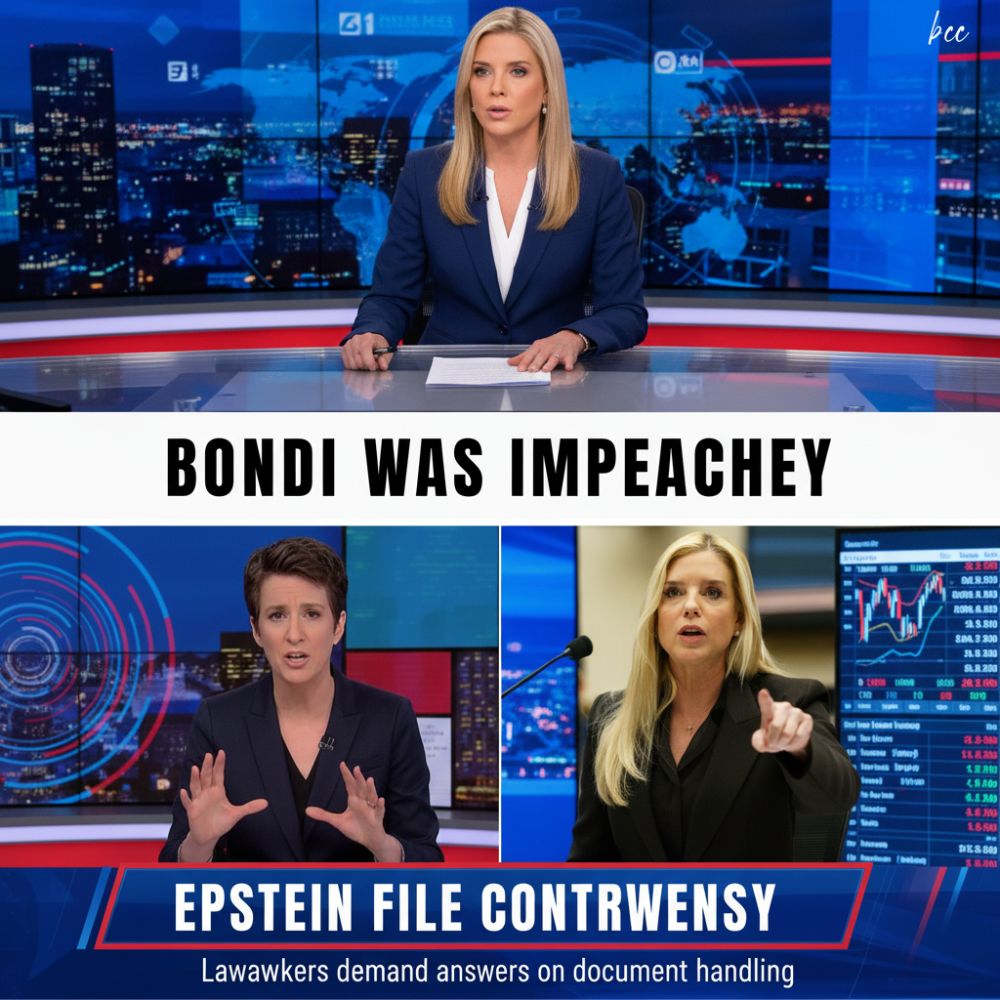
BREAKING: Attorney General Faces Intense Scrutiny as Lawmakers Question Handling of Jeffrey Epstein Files
A growing political and legal controversy is unfolding in Washington as a sitting Attorney General faces mounting scrutiny over the handling of documents connected to Jeffrey Epstein. Lawmakers are raising concerns about transparency, while officials insist that all actions have followed legal procedures—setting the stage for a high-stakes clash over accountability and public trust.
The issue has quickly gained traction in both political circles and the media, with observers closely examining how sensitive records tied to one of the most scrutinized cases in recent history have been managed.
Allegations Spark Congressional Concern
The controversy began when several members of the United States Congress questioned whether access to Epstein-related files had been restricted more than necessary. During recent hearings and public statements, lawmakers suggested that extensive redactions or delays in document releases could be limiting oversight.
While no formal findings have confirmed wrongdoing, the tone of the questioning reflects growing frustration among some legislators.
“We need clarity,” one lawmaker said during a recent session. “When it comes to matters of this magnitude, transparency is essential.”
Other officials echoed similar concerns, emphasizing that public confidence depends on the perception that information is being handled fairly and openly.
The Attorney General’s Response
In response to the criticism, representatives for the Attorney General’s office have firmly rejected any suggestion of improper conduct. They argue that decisions regarding document handling are guided by legal requirements, including privacy protections, ongoing investigative considerations, and national security concerns where applicable.
Officials stress that cases involving individuals like Jeffrey Epstein often involve complex networks of information, requiring careful review before any materials can be released.
“These processes are not simple,” one spokesperson said. “They involve multiple layers of legal review to ensure compliance with the law.”
The Challenge of Transparency
At the center of the debate is a familiar tension: the balance between transparency and legal responsibility. Lawmakers are tasked with oversight, while the Department of Justice must operate within strict legal boundaries.
Experts note that this balance can be particularly difficult in high-profile cases. “There’s always going to be pressure for full disclosure,” one legal analyst explained. “But there are also legitimate reasons why certain information cannot be released immediately—or at all.”
This dynamic often creates space for misunderstanding, especially when the public is not fully aware of the constraints involved.
Renewed Focus on Epstein-Linked Records

The involvement of Jeffrey Epstein continues to amplify the situation. Epstein’s case has remained a focal point of public interest due to its scope and the number of individuals connected to investigations over time.
As a result, any suggestion that related records are being withheld—whether intentionally or as part of standard procedure—tends to draw heightened scrutiny.
“This is a case where trust is already fragile,” one commentator noted. “That makes every decision about information handling more sensitive.”
Political Reactions Intensify
The controversy has prompted reactions from across the political spectrum. Some lawmakers are calling for additional hearings or formal reviews to better understand how decisions are being made. Others are urging caution, warning against drawing conclusions without verified evidence.
“This is a serious issue,” one senator said. “But it’s also one that requires facts, not assumptions.”
The divide reflects broader political dynamics, where interpretations of the same situation can vary widely depending on perspective.
As the story develops, media coverage and social media discussions have amplified its reach. Clips from hearings, statements from officials, and expert commentary are circulating widely, shaping public perception in real time.
For many observers, the complexity of the issue makes it difficult to assess. Legal terminology, procedural details, and competing narratives all contribute to a rapidly evolving information landscape.
Analysts emphasize the importance of distinguishing between confirmed information and claims that are still under review.
What Happens Next?
The key question now is whether the concerns raised by lawmakers will lead to further action. Possibilities include additional oversight hearings, formal requests for documents, or independent reviews of the processes involved.
At the same time, legal experts caution that such steps take time and must follow established procedures.
“This is not something that can be resolved overnight,” one analyst said. “It requires careful, methodical work.”
A Test of Institutions
Beyond the immediate controversy, the situation highlights broader questions about how institutions function under scrutiny. The ability of the United States Department of Justice to maintain public trust while navigating complex legal obligations is a central issue.
For lawmakers, the challenge is to ensure effective oversight without undermining the integrity of ongoing processes.
As discussions continue, both sides are likely to maintain their positions—lawmakers pushing for greater transparency, and officials emphasizing the need to follow legal protocols.
What ultimately emerges from this debate may shape not only the handling of Epstein-related records but also broader expectations around accountability in high-profile cases.
For now, the situation remains unresolved, defined more by questions than answers.
And as attention stays focused on the handling of Jeffrey Epstein-linked files, one thing is clear: the demand for clarity—and the pressure on institutions to provide it—is only growing.