WASHINGTON — A striking new poll showing that nearly half of Americans express discomfort or embarrassment tied to President Trump has set off alarm bells across the political establishment — but not for the reasons strategists on either side of the aisle might have expected. Instead of signaling weakness, the numbers appear to have coincided with a sharp uptick in the president’s overall approval rating, creating a paradox that is forcing a fundamental rethinking of how political identity and foreign policy intersect.
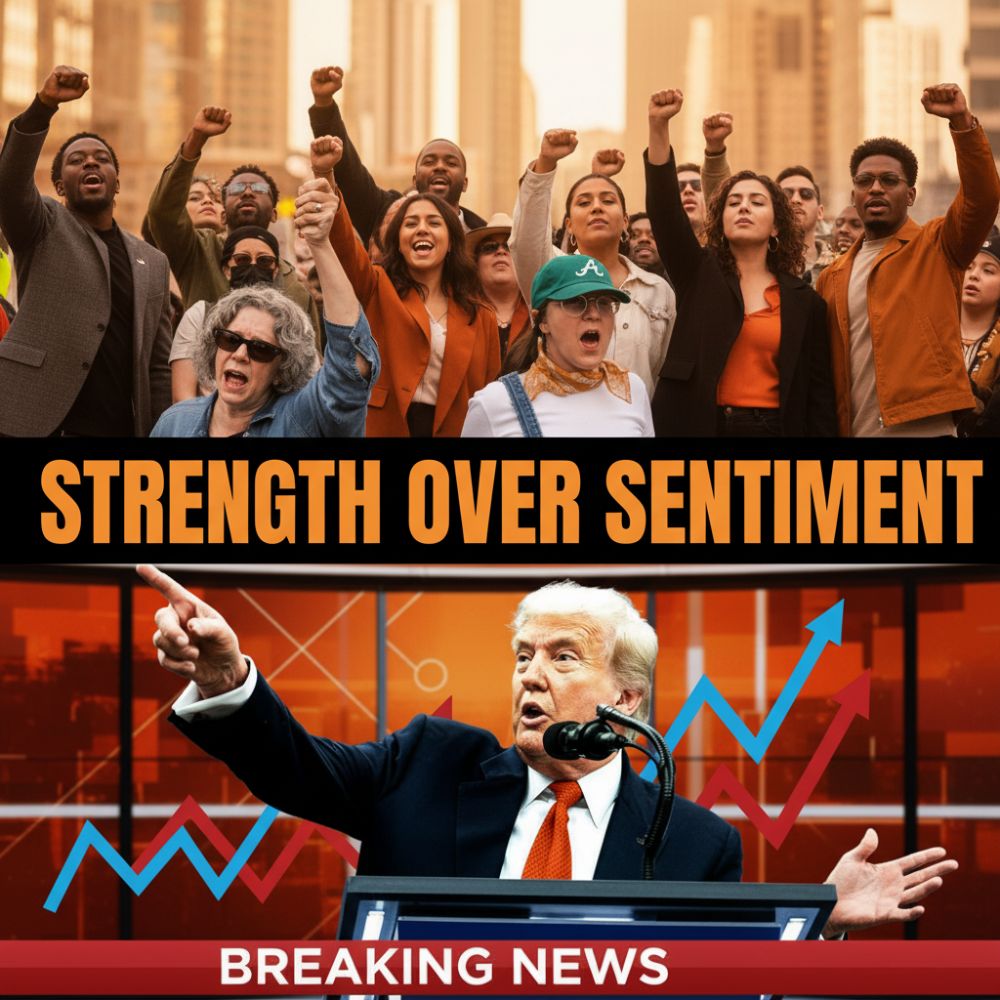
The survey, conducted by The New York Times and Siena College over the past week, found that 48 percent of registered voters reported feeling either “uncomfortable” or “embarrassed” when considering the president’s conduct and public statements. Yet in the same poll, Mr. Trump’s overall approval rating climbed to 47 percent — his highest mark since returning to office — with voters expressing surprising confidence in his handling of a rapidly escalating confrontation with Iran.
The apparent contradiction has ignited a broader institutional conversation about how the public evaluates leadership in times of geopolitical strain. What began as a standard opinion poll has now escalated into a high-stakes signal about the direction of American political identity.
“You cannot look at these numbers in isolation,” said Kristen Soltis Anderson, a Republican pollster. “What we are seeing is a public that is making a distinction between personal discomfort and perceived competence. Voters may not like the messenger, but in a moment of international crisis, they are signaling that they trust the message.”
The data arrives at a moment of intense geopolitical turbulence. Over the past 72 hours, the administration has dramatically escalated its posture toward Iran, deploying additional naval assets to the Persian Gulf and issuing what officials described as “final warnings” regarding Tehran’s nuclear program. The move has drawn sharp criticism from Democratic lawmakers but appears to have resonated with a public increasingly concerned about global instability.
Officials and observers are now signaling that this is not just about public opinion — it is about system response. Internal frameworks, including review clauses, diplomatic positioning strategies, and cross-agency coordination channels, are reportedly being activated to assess how foreign policy narratives translate into domestic trust metrics.
The White House has taken notice. According to multiple aides who spoke on condition of anonymity to describe internal deliberations, the president’s polling resilience has emboldened his team to adopt a more aggressive posture on both foreign policy and domestic messaging. The calculation, aides said, is that voters who might wince at Mr. Trump’s rhetoric are nonetheless willing to back him when they perceive strength on the world stage.
Behind the scenes, insiders suggest a deeper layer unfolding. Strategic advisors, policy architects, and institutional stakeholders are quietly evaluating how messaging, alliance posture, and escalation thresholds could reshape both perception and policy outcomes. The numbers may appear simple — but the implications are anything but.
For Democrats, the polling presents a confounding challenge. For months, party strategists have operated on the assumption that highlighting Mr. Trump’s personal conduct and legal vulnerabilities would erode his support. Instead, they find themselves facing a president whose approval rating has defied historical patterns, climbing amid the very controversies that were supposed to bring him down.
“This is not about embarrassment anymore,” said David Axelrod, the former chief strategist for President Barack Obama. “Voters are making a cold calculation about who they trust to manage a dangerous world. Democrats need to recognize that and adjust their strategy accordingly.”
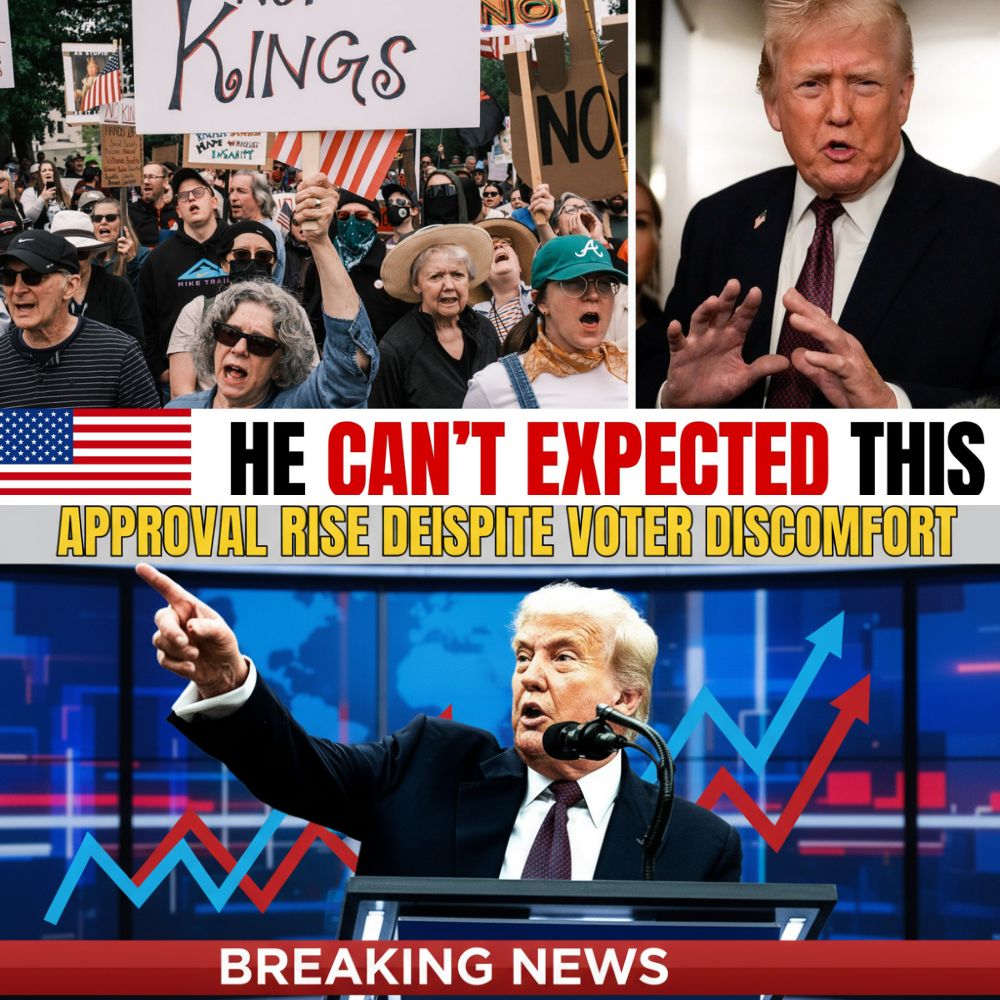
The geopolitical dimension cannot be overstated. The administration’s Iran policy, which critics have called reckless and insufficiently coordinated with allies, has nevertheless consolidated support among a significant slice of the electorate that prioritizes strength over diplomacy. Market participants are also watching closely, with early caution emerging around sentiment-driven volatility and long-term confidence indicators.
The polling also reveals a sharp divide between demographic groups. Among voters under 30, discomfort with Mr. Trump remains extremely high — hovering near 70 percent. But among voters over 50, a different story emerges, with nearly six in ten expressing approval of his handling of the Iran situation specifically.
That divide has not gone unnoticed in foreign capitals. European allies, already rattled by the administration’s go-it-alone approach to Iran, are now recalibrating their own assessments of American staying power. If the public is willing to tolerate aggressive foreign policy postures, they reason, the administration may feel emboldened to push further.
“It is a dangerous feedback loop,” said Richard Haass, president emeritus of the Council on Foreign Relations. “Public support for tough talk can encourage more tough talk, which can escalate tensions, which can generate more public support for toughness. The question is where it stops.”
On Capitol Hill, Republican lawmakers who have often been wary of Mr. Trump’s unpredictability are taking note of the numbers. Several who had expressed reservations about the administration’s Iran strategy have moderated their criticism in recent days, according to aides.
“Is this a temporary fluctuation in public mood — or the early signal of a structural shift in how leadership is perceived in times of geopolitical strain?” asked Mark Mellman, a Democratic pollster. “We are about to find out. But anyone who thinks the old rules still apply is not paying attention.”
As the administration prepares for what could be a decisive week in its confrontation with Iran, the political landscape has shifted in ways few predicted. The president, who has long defied conventional political gravity, appears to have found in foreign policy a source of strength that transcends the personal baggage that has so long defined his public image.
For his opponents, the question is no longer how to make voters uncomfortable. It is how to compete with a president whose polling strength is growing alongside the very tensions they argue he is creating.