Trump Sent Kimmel a LAWSUIT — Kimmel TRASHED IT on Live TV and the Audience ROARED
The Six-Day Blackout: When Regulatory Extortion Met the First Amendment
The flickering neon of Hollywood’s El Capitan Theatre didn’t just go dark for six days in September 2025; it became a void that exposed the terrifying fragility of American free speech. What began as a characteristic, if poorly timed, jab by Jimmy Kimmel regarding the tragic assassination of Charlie Kirk transformed into the most significant constitutional crisis in the history of modern broadcasting. This was not a “cancellation” by a sensitive public or a standard HR dispute. It was a calculated, state-sanctioned decapitation of a media entity, executed through the “mafioso” tactics of the FCC.
The hypocrisy of the “free speech” warriors who cheered this suspension is staggering. For years, the rhetoric from the West Wing and its appointees has been centered on the “evils” of platform censorship and the “chilling” of conservative voices. Yet, the moment a comedian made a joke that punctured the somber narrative of the day, the mask slipped. FCC Chairman Brendan Carr didn’t issue a formal regulation or a legal filing; he issued a threat. By telling ABC affiliates they could handle the situation “the easy way or the hard way,” he signaled that the multi-billion dollar business of broadcasting was now contingent on political fealty.
The Lever of $6.2 Billion
The true cowardice of this saga lies in the corporate boardrooms. Nextar Media Group, staring down a $6.2 billion acquisition that required the FCC’s rubber stamp, folded instantly. Sinclair Broadcasting followed. This is the blueprint for modern tyranny: you don’t need to pass a law to silence a critic if you can simply threaten the profit margins of their distributors. For nearly a week, Jimmy Kimmel was effectively erased from the airwaves, not because his ratings were low or his talent had vanished, but because a federal regulator used the licensing power of the government as a weapon of personal vendetta.
The irony is that this overreach provided Kimmel with the most potent platform of his twenty-year career. The “Angry Orange” (as Kimmel dubbed him) didn’t just want the “bum” off the air; he wanted him forgotten. Instead, he turned a late-night host into a First Amendment martyr. When the studio lights finally returned on September 23rd, the audience wasn’t just there for a comedy show; they were there for a reckoning.
The Monologue That Wrong-Footed the War Machine
Kimmel’s return was a masterclass in stripping away the partisan rot to reveal the underlying principle. By leading with an olive branch—sending love to Charlie Kirk’s family and praising Kirk’s widow for her call for forgiveness—he removed the “angry liberal” caricature that the administration had spent weeks painting. He moved the conversation away from the joke and toward the machinery of the state.
When Kimmel quoted Ted Cruz—a man who has made a career of loathing Kimmel—he effectively neutralized the partisan defense of the FCC’s actions. Cruz’s admission that government regulation of media content would eventually “end up bad for conservatives” highlighted the sheer stupidity of Carr’s power play. If the government can pull a comedian off the air for a joke today, it can pull a preacher or a political commentator off the air for a sermon tomorrow. This is the “hard way” that the FCC chairman seemed so eager to implement, failing to realize that once the precedent is set, it becomes a guillotine for everyone.
The Butch Cassidy Sunset
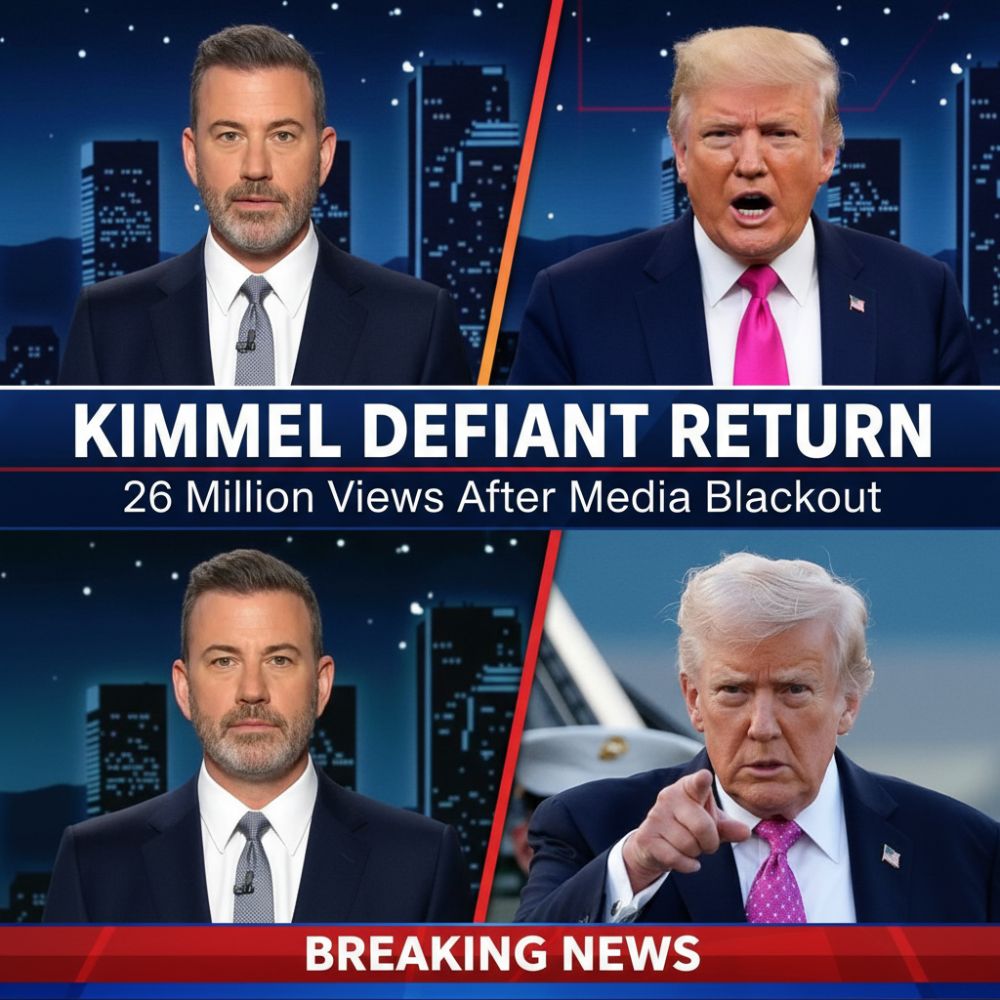
The numbers tell the final story of this failure. A suspension designed to kill a show instead tripled its viewership. Before the blackout, Kimmel was a standard late-night fixture; after the return, he was a cultural phenomenon with 26 million views in 24 hours. The attempt to “coerce the affiliates” didn’t just fail; it backfired with the force of a thousand suns, handing Kimmel the “single greatest platform of his career.”
The “Quiet Piggy” sign-off wasn’t just a jab at a late-night tweet from the White House; it was a declaration of victory over an amateurish attempt at state censorship. The administration’s playbook assumed that Disney and the affiliates would stay folded. They assumed the silence would hold. But in a country that still (mostly) clings to the idea that the government doesn’t get to decide what’s “funny” or “authorized,” that silence lasted exactly six days.
The most radical thing Kimmel did wasn’t the joke that started the fire; it was standing in that light, voice steady, and asking the American people if they really wanted a country where a phone call from a bureaucrat could delete a voice from the airwaves. The answer, reflected in the 6.2 million broadcast viewers that night, was a resounding, defiant “no.”