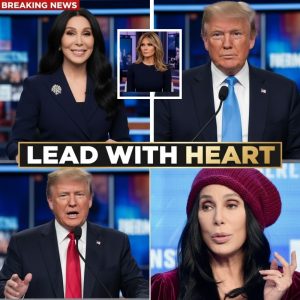
“Late-Night Truth Bombs and Political Fallout: When Television Turns the Spotlight Back on Power”
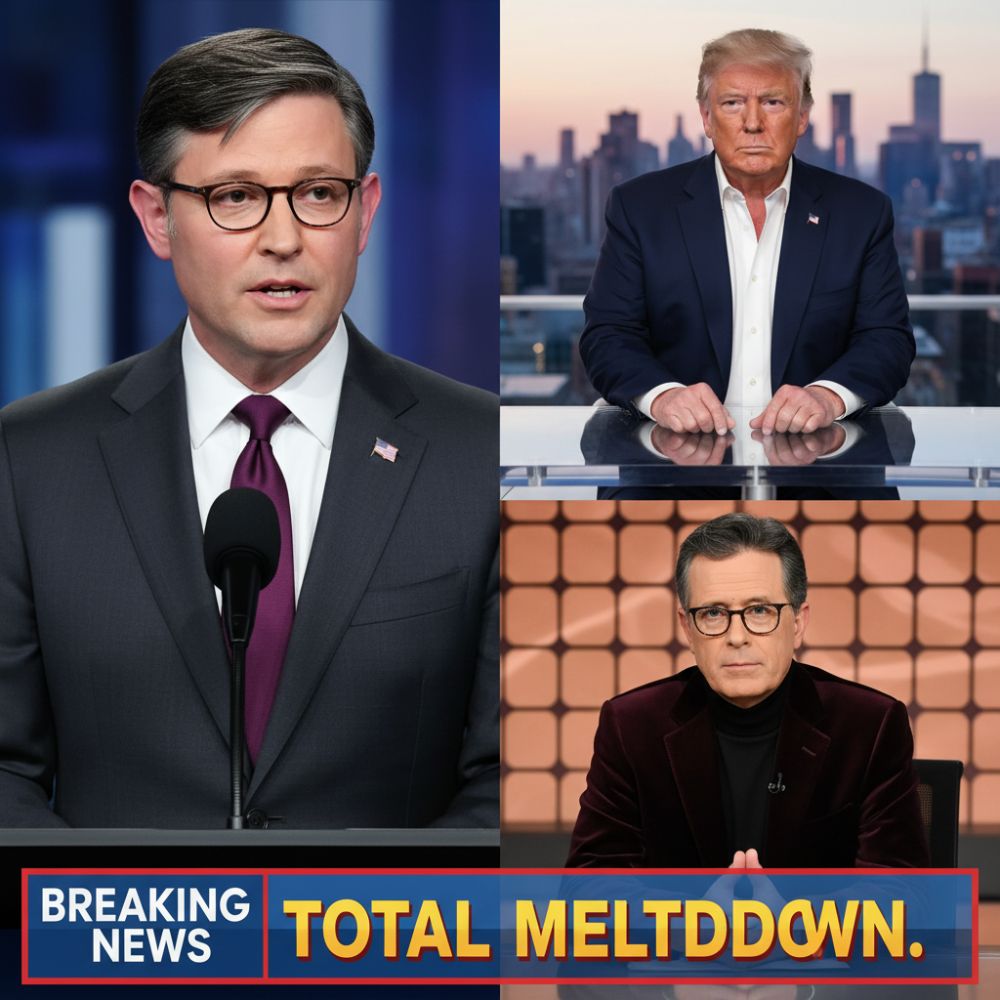
Late-night television unexpectedly became a political battleground when a live broadcast ignited controversy, emotion, and fierce debate, instantly transforming entertainment into a viral arena of accountability and spectacle.
What unfolded was not simply comedy or commentary, but a collision of narratives where power, media, and perception clashed under studio lights and unfiltered reactions.
Viewers sensed immediately that this moment would travel far beyond the television screen, spilling rapidly into social media timelines, political forums, and private conversations across ideological lines.
The exposure resonated because it blended humor with accusation, satire with seriousness, leaving audiences unsure whether to laugh, applaud, or feel deeply unsettled by the implications.
Television has long flirted with politics, yet moments like this reveal how fragile the boundary truly is when unscripted reactions disrupt carefully constructed public images.
Mike Johnson suddenly found himself at the center of a narrative storm, framed not by policy debate but by timing, optics, and the relentless momentum of viral media culture.
The segment gained traction because it appeared spontaneous, raw, and emotionally charged, qualities that modern audiences increasingly trust more than rehearsed political messaging.
Stephen Colbert’s role amplified the moment, leveraging his platform to blur comedy and critique, a formula that often disarms viewers before delivering sharper ideological blows.
What truly intensified reactions was the inclusion of Trump-related references, instantly activating deeply polarized audiences primed to interpret every gesture as confirmation of their beliefs.
Supporters saw vindication, critics saw hypocrisy, and undecided viewers were pulled into a swirling debate that demanded attention rather than passive consumption.
Social media algorithms quickly recognized the engagement potential, pushing clips, captions, and reactions into millions of feeds within hours of the broadcast.
Short videos, reaction memes, and dramatic headlines reframed the moment repeatedly, each iteration shaping public understanding in subtly different yet powerful ways.
The controversy thrived on ambiguity, allowing opposing camps to project their own interpretations onto the same televised exchange without shared agreement on basic facts.
This fragmentation highlights how modern political discourse often values emotional resonance over resolution, ensuring arguments persist long after the original moment fades.
Johnson’s response, scrutinized frame by frame, became a secondary spectacle, revealing how silence, tone, or a single phrase can redefine a public figure’s credibility.
Critics accused him of evasion, supporters praised restraint, while media commentators debated whether the exposure was genuine accountability or theatrical ambush.
The phrase “exposed live on TV” carries immense psychological weight, suggesting unmasking, vulnerability, and loss of control in a culture obsessed with curated identities.
Such moments tap into a collective desire to see powerful figures caught off-guard, reinforcing the belief that authenticity emerges only under pressure.
Late-night hosts increasingly function as alternative gatekeepers, shaping narratives traditionally controlled by journalists, press secretaries, and political institutions.
This shift unsettles traditional power structures, raising questions about who holds authority to challenge leaders and define truth in the public imagination.
Supporters argue this democratizes discourse, while critics warn it risks oversimplification, turning complex issues into viral soundbites devoid of nuance.
The Johnson-Colbert-Trump triangle exemplifies how personalities now overshadow policies, with attention driven more by conflict than by legislative substance.
Audiences, however, remain complicit, rewarding outrage with clicks, shares, and comments that fuel the very cycles they claim to resent.
The controversy’s longevity depends not on new information, but on emotional investment, ensuring it resurfaces whenever related names re-enter headlines.
Media outlets, sensing opportunity, framed the event through sensational language, further amplifying perceptions of scandal and confrontation.
Each retelling intensified stakes, transforming a television segment into a symbolic referendum on credibility, courage, and media power.
International observers also engaged, interpreting the moment as another example of America’s uniquely performative political culture.
For fans, the episode felt electrifying, reaffirming loyalty to figures they perceive as truth-tellers challenging entrenched systems.
For critics, it symbolized decline, arguing serious governance should not hinge on comedic confrontation or viral exposure.
The debate ultimately reflects deeper anxieties about trust, leadership, and the role of entertainment in shaping democratic discourse.
Whether viewed as accountability or exploitation, the moment undeniably captured attention in an era where attention equals influence.
It demonstrates how a single broadcast can ripple outward, shaping conversations far removed from the studio where it originated.
As the dust settles, one truth remains clear: modern power is no longer exercised quietly, but contested loudly, publicly, and relentlessly.
In this environment, exposure is currency, controversy is oxygen, and television moments can redefine reputations overnight.
The question is not whether such moments will continue, but how societies will adapt to politics performed under constant, unforgiving spotlight.