Ottawa — A series of coordinated economic moves by Mark Carney has drawn new attention to the evolving dynamics of North American trade, as policymakers and analysts assess the potential impact of shifting strategies on both sides of the border.
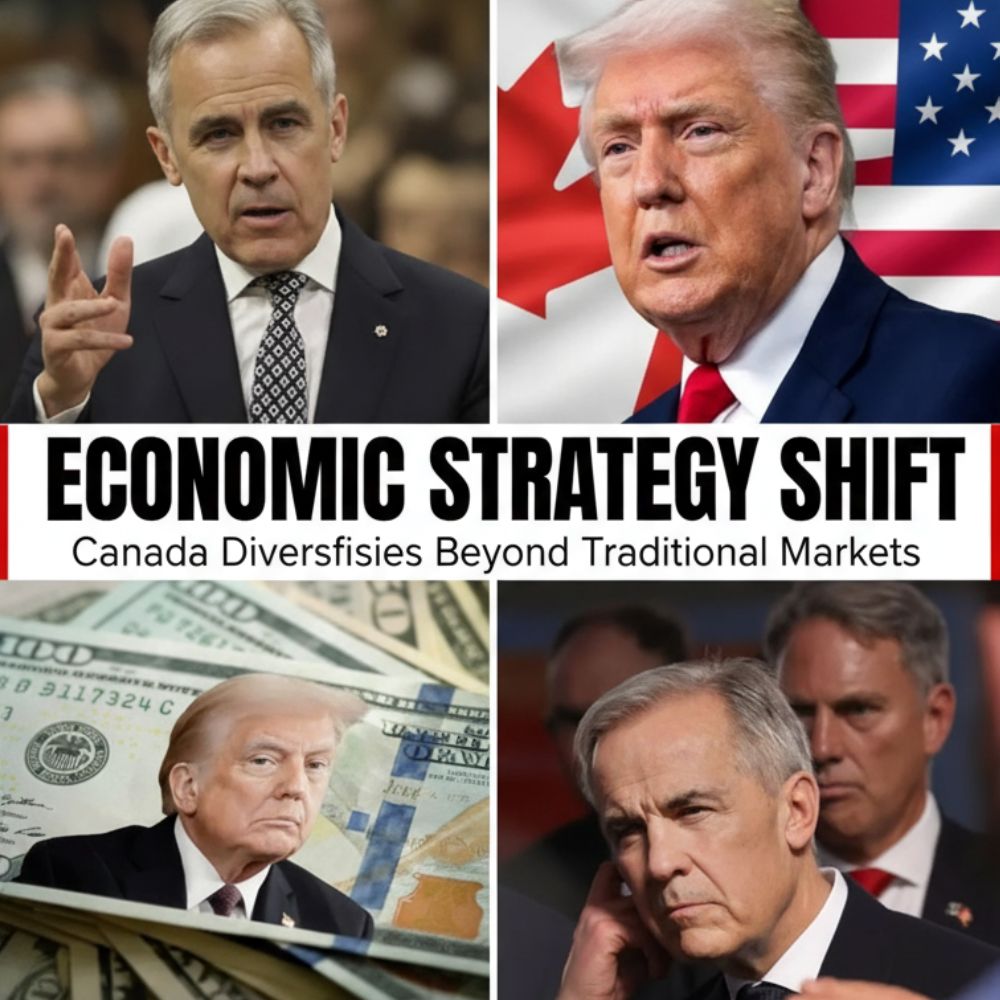
The developments come amid renewed debate over tariffs introduced under the leadership of Donald Trump, policies that were designed to protect domestic industries but have also reshaped trade relationships with key partners, including Canada.
While no single action has dramatically altered the balance of power, recent adjustments in Canada’s economic posture—ranging from diversified trade partnerships to targeted domestic investments—have prompted discussion about whether a longer-term strategic shift is underway.
Mr. Carney, who has emerged as a prominent voice in Canadian economic policy, has emphasized resilience and adaptability in an increasingly uncertain global environment. His approach has focused on strengthening ties beyond North America while reinforcing domestic economic capacity.
“We are operating in a world where flexibility is essential,” Mr. Carney said in a recent address. “Economic strategy must reflect both opportunity and risk.”
Analysts say that Canada’s efforts to broaden its global connections could, over time, reduce its dependence on U.S. markets. Trade agreements with Europe and Asia, along with investments in infrastructure and energy, are often cited as examples of this evolving strategy.
At the same time, the effects of U.S. tariff policies continue to ripple across industries. American manufacturers reliant on imported materials have faced increased costs, while exporters have encountered retaliatory measures in certain sectors. The resulting pressures have contributed to ongoing debate within the United States about the long-term effectiveness of such policies.
“There are always trade-offs,” said an economist specializing in international trade. “Tariffs can protect certain industries, but they can also introduce new costs and inefficiencies elsewhere.
Some observers have framed Canada’s response as a calculated effort to navigate those trade-offs, positioning itself to absorb shocks while maintaining competitiveness. Others caution against overstating the impact, noting that the economic relationship between the two countries remains deeply interconnected.
The integration of supply chains across North America means that changes in one country often have consequences in another. Industries such as automotive manufacturing, energy and agriculture depend on cross-border coordination, making abrupt shifts difficult to sustain without broader repercussions.
Business leaders have expressed concern about uncertainty, emphasizing the need for predictable policy frameworks. Several industry groups have called for renewed dialogue between the United States and Canada to address points of friction and reinforce stability.
Government officials in both countries have signaled a willingness to engage, though differences in approach remain evident. While U.S. policymakers continue to debate the role of tariffs in economic strategy, Canadian leaders have highlighted diversification as a central priority.
For now, the situation reflects a broader recalibration rather than a decisive break. Experts suggest that the outcome will depend on a range of factors, including global economic conditions, domestic political considerations and the pace of policy implementation.
“The idea of a single ‘turning point’ can be misleading,” one analyst said. “What we’re seeing is a gradual shift shaped by many decisions over time.”
As North America navigates these changes, the relationship between its largest economies remains a defining feature of the regional landscape. Whether current tensions lead to lasting transformation or renewed alignment will likely become clearer in the months and years ahead.
In the meantime, policymakers and businesses alike are watching closely, aware that even incremental adjustments can carry significant implications in a system as interconnected as modern trade.