U.S.–Canada Trade Tensions Draw Attention After Escalating Rhetoric

Washington — A fresh round of political rhetoric between the United States and Canada has drawn attention to the fragile balance underpinning one of the world’s most integrated trade relationships, though officials on both sides say there is no indication of a sudden collapse in cross-border commerce.
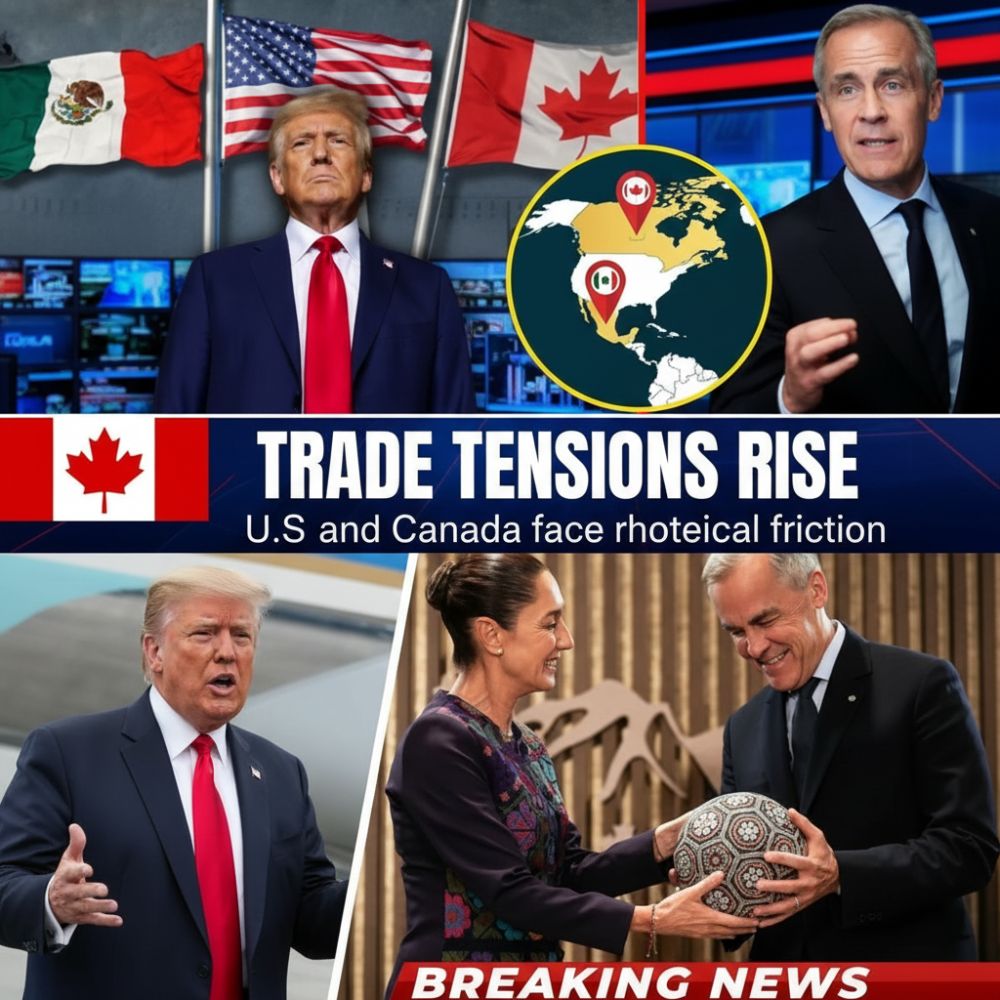
The latest tensions follow comments by Donald Trump referencing Mark Carney in a manner that prompted criticism from Canadian leaders and observers. While the remarks themselves were largely symbolic, they have coincided with a surge of speculation online about potential economic retaliation.
Some reports circulating on social media have suggested that major trade flows—valued in the tens of billions of dollars—were disrupted overnight. However, government officials and trade analysts say there is no verified evidence of a sudden, systemwide shutdown of commerce between the two countries.
“Trade relationships of this scale do not halt abruptly without formal action,” said a senior policy analyst based in Ottawa. “What we are seeing is heightened rhetoric, not confirmed structural change.”
The United States and Canada share one of the largest bilateral trade partnerships in the world, with supply chains spanning industries such as energy, automotive manufacturing and agriculture. Daily cross-border exchanges total billions of dollars, making stability a central concern for businesses on both sides.
Even so, experts note that tensions can still produce localized disruptions. Regulatory adjustments, inspections or administrative delays—whether routine or politically influenced—can affect specific sectors, particularly those dependent on tightly coordinated logistics.
“There can be pressure points,” said an economist specializing in North American trade. “But those are typically targeted and temporary, not sweeping shutdowns.”
In Canada, officials have not announced any new broad-based trade restrictions. Government statements have emphasized continuity and adherence to existing agreements, while reaffirming the importance of maintaining stable economic ties with the United States.
For businesses, however, the perception of instability can be as significant as actual policy changes. Reports of potential disruptions have contributed to uncertainty in some sectors, with companies monitoring developments closely and assessing potential risks.
“Markets react quickly to headlines,” said a financial strategist in New York. “Even unverified claims can influence sentiment in the short term.”
Political analysts suggest that the episode reflects a broader pattern in which public statements and digital narratives intersect with economic policy. In an environment where information spreads rapidly, distinctions between confirmed developments and speculation can become blurred.
“This is part of a larger communication dynamic,” said a researcher in political messaging. “Narratives can escalate before institutions have time to respond.”
Despite the heightened attention, officials in both countries have indicated that formal channels of communication remain open. Trade agreements continue to govern cross-border activity, and there has been no announcement of emergency measures affecting the overall framework.
Still, the situation underscores the sensitivity of economic relationships to political signals. Even rhetorical shifts can prompt scrutiny of underlying arrangements, particularly in a partnership as extensive as that between the United States and Canada.
For now, the core structures of North American trade remain intact. While tensions may persist, experts say any significant changes would likely emerge through formal negotiation rather than sudden, unilateral action.
As the story continues to develop, policymakers and business leaders alike are watching closely, aware that perception, policy and politics are increasingly intertwined in shaping economic outcomes.