Washington has seen plenty of political theater before, but this latest confrontation hit a nerve in a way few hearings ever do.
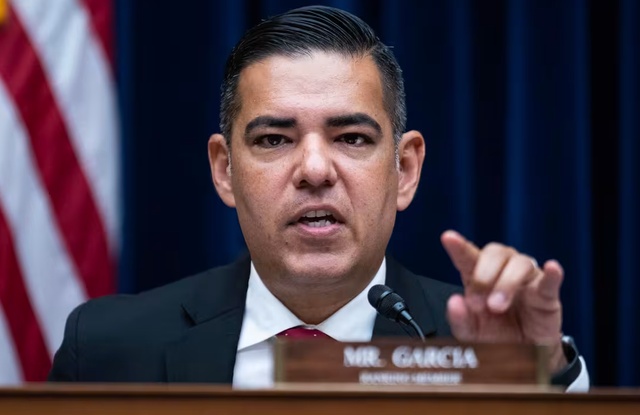
What should have looked like a routine fight over testimony instead turned into a symbol of something much bigger: trust collapsing in real time.
At the center of the uproar is one question that sounded simple, direct, and impossible to misread.
Will the attorney general appear under oath and answer questions in a formal deposition that can be transcribed and made public.
That question now defines the entire controversy.
Not the briefing room, not the talking points, not the choreography, but the refusal to give a clean yes.
The reason this moment exploded online is obvious.
In politics, people can forgive spin, dodge, delay, even arrogance, but they rarely forgive the appearance of running from accountability.
That is what made this confrontation so combustible from the start.
The more carefully the event looked managed, the more aggressively critics framed it as proof of a larger cover-up.
And that is exactly why this story is spreading so fast across social media.
It has all the ingredients modern outrage needs: power, secrecy, legal pressure, partisan warfare, and a single answer the public believes it never got.
Pam Bondi, the current U.S. attorney general, was subpoenaed by the House Oversight Committee this week to appear for a deposition on April 14, 2026, as lawmakers continue pressing for answers about the Justice Department’s handling of Epstein-related files.
A subsequent briefing with lawmakers quickly descended into a public relations disaster after Democratic members said Bondi would not commit to appearing under oath, while Republicans argued she had already shown up to answer questions.
That difference is not minor.
It is the entire fight.
One side says presence is enough.
The other says presence without oath, transcript, and binding legal exposure means almost nothing at all.
And if you want to understand why this has become such a powerful political flashpoint, start there.
Because Americans are no longer just debating facts, they are debating what accountability is supposed to look like when trust is already broken.
Critics of the attorney general are pushing one brutal argument.
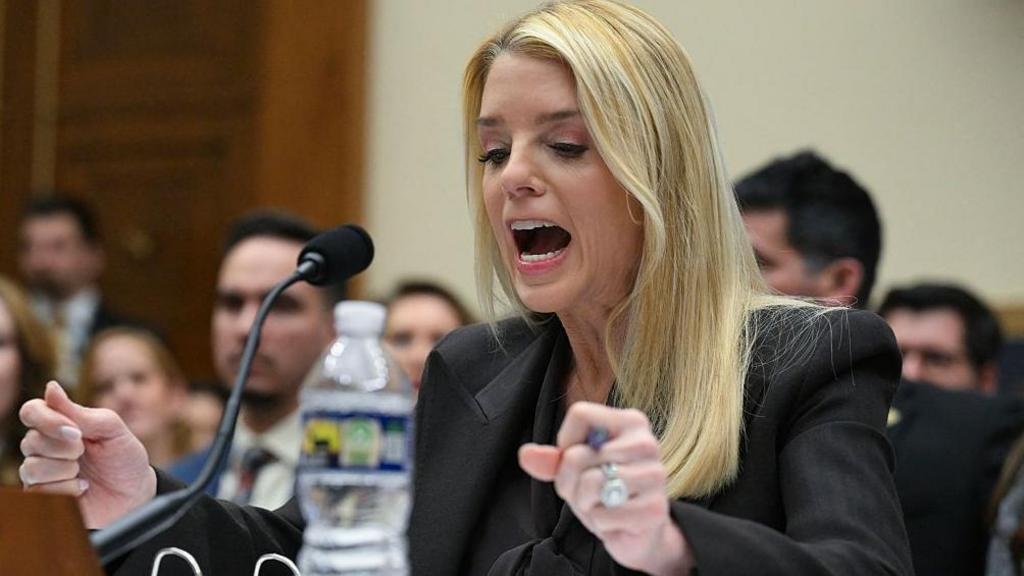
If there is nothing to hide, why resist the format that carries the greatest legal risk for falsehood.
Supporters answer with a different line.
They say the outrage is performative, the deposition demand is political, and opponents are trying to turn procedure into spectacle.
That clash is why the story keeps growing.
Each side thinks the other just exposed itself.
To critics, the refusal to clearly embrace sworn testimony looks like the oldest move in the crisis-management playbook.
Appear available enough to calm headlines, but avoid the setting where every contradiction can follow you forever.
To defenders, the walkout and public fury look just as strategic.
Why engage with a briefing, they ask, if the real objective is to preserve a cleaner campaign message outside the room.
This is what makes the controversy so dangerous for everyone involved.
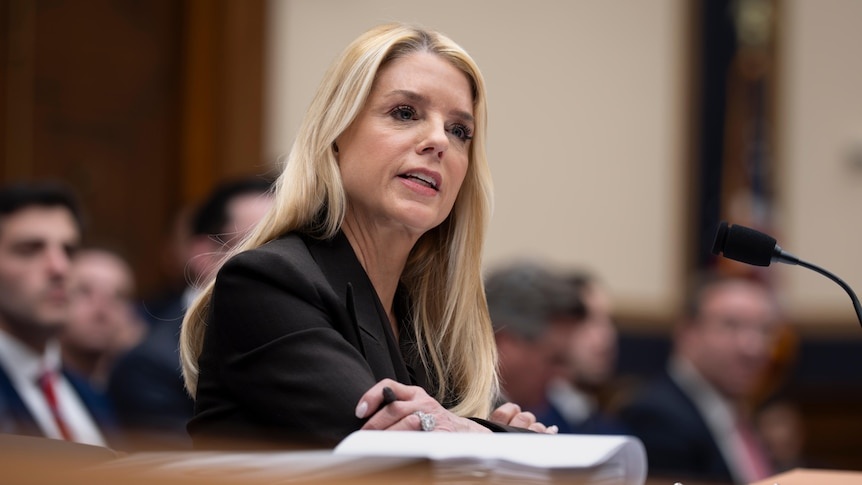
No one is merely arguing facts anymore, because the symbolism has overtaken the substance.
A briefing becomes a “fake hearing.”
A refusal becomes proof. A walkout becomes principle. A camera clip becomes a referendum on institutional credibility.
That transformation is why this dispute has escaped the committee room and entered the bloodstream of the internet.
The public does not need to master congressional procedure to feel that something about this looks wrong.
And that instinct matters.
Political scandals grow when process starts looking more suspicious than the original explanation.
The White House and DOJ now face a problem that is bigger than any one document dispute.
They are battling the perception that every move is being designed not to inform the public, but to control the damage.
That perception may or may not be fair in every detail.
But once it hardens, it becomes more powerful than the official line itself.
The most damaging part of this saga is not even what was said inside the room.
It is the impression left outside it.
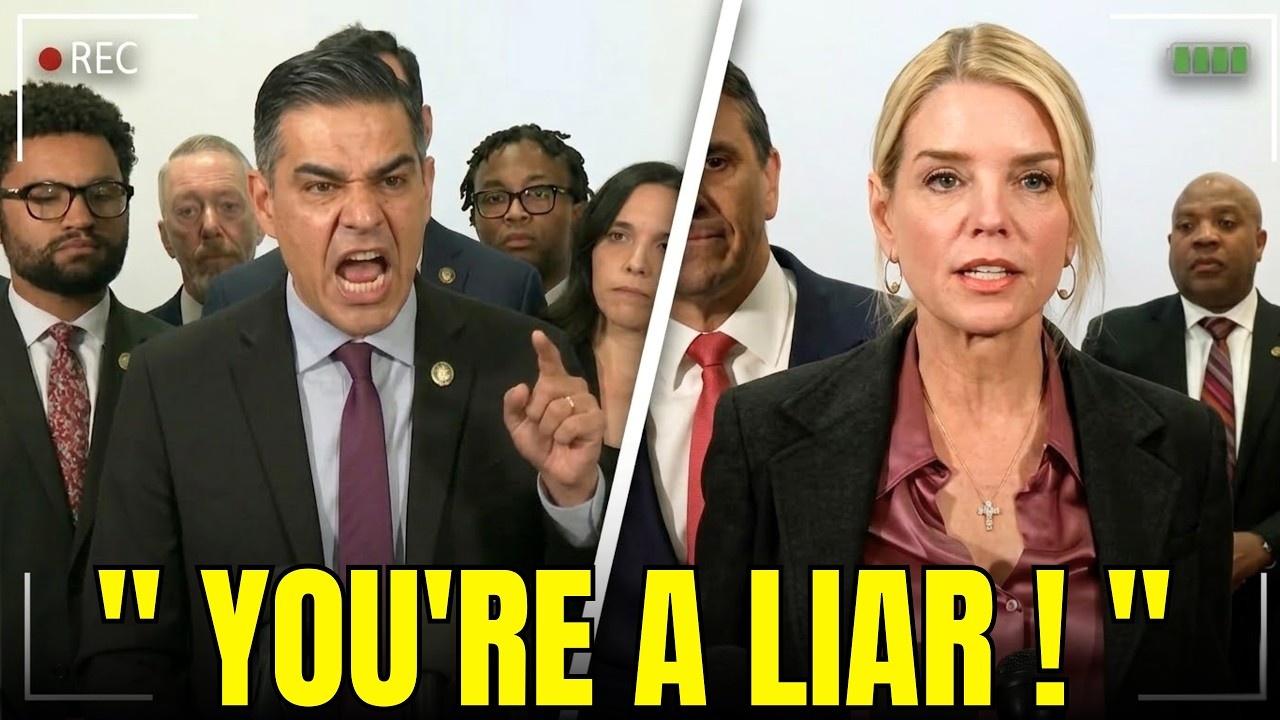
If the public walks away believing the government created a forum that looked open while avoiding the conditions of real scrutiny, then the optics become devastating.
In a polarized climate, optics are often the first verdict.
Even more striking is the role of internal contradiction.
James Comer, the House Oversight chair, did issue the subpoena for Bondi’s April 14 deposition, but later suggested publicly that he did not personally see a reason she needed to sit for one.
That tension is what supercharges suspicion.
If the chair subpoenas the attorney general and then appears unenthusiastic about forcing compliance, critics do not see confusion. They see choreography.
And once people start using the word choreography, the political damage multiplies.
Because choreography implies the outcome was planned before anyone entered the room.
This is where the story becomes bigger than Bondi herself.
It becomes a test of whether congressional oversight still means anything when the witness is powerful, politically connected, and shielded by competing narratives.
If a subpoena can be issued with public fanfare and then softened in practice, what exactly is the message to future witnesses.
Show up just enough to say you cooperated, but never enough to risk real exposure.
That is why critics are leaning so hard into the language of contempt, evasion, and staged accountability.
They understand that public memory keeps the emotional frame long after the procedural details disappear.
And they are not wrong about one thing.
The public rarely remembers committee formats, but it always remembers who looked like they were ducking the oath.
Meanwhile, Republicans backing Bondi have their own calculation.
They appear to believe voters care more about whether questions were offered than whether the setting met the opposition’s preferred legal standard.
That argument has some political logic.
Many voters are exhausted by institutional drama and instinctively distrust any demand that sounds tailor-made for humiliation.
But it is also a gamble.
Because the moment you frame a demand for sworn testimony as unfair theater, you risk sounding afraid of the oath itself.
That is the trap now closing around this controversy.
Every explanation for avoiding the deposition risks reinforcing the very suspicion it is trying to neutralize.
And in the age of viral politics, suspicion is the most shareable currency of all.
It moves faster than transcripts, faster than statements, and much faster than any careful legal defense.
The online response proves it.
People are not sharing this story because they fully understand the committee rules. They are sharing it because they understand what “just say yes under oath” means.
That phrase lands because it feels universal.
In workplaces, courts, schools, and family fights, people know the difference between talking and formally standing behind what they say.
This is why April 14 now matters so much.
Not only because of what may happen that day, but because of what the run-up to that date is already doing to public trust.
If Bondi appears under oath, the political war enters a new phase.
If she does not, critics will say the entire episode confirmed exactly what they suspected from the start.
Either outcome carries risk.
That is what makes this battle so potent and so unstable.
For Democrats, the objective is clear.
Turn a procedural dispute into a moral one, and force the public to see the refusal as an admission of fear rather than a disagreement over format.
For Republicans defending the process, the mission is just as clear.
Convince the public this was access, not avoidance, and that the outrage campaign is bigger than the underlying evidence.
But the broader public is watching something simpler.
Who wanted the oath, who dodged the answer, and who looked most comfortable with less transparency.
That is why this story is not fading.
It taps directly into a national exhaustion with half-answers, managed appearances, and institutions that seem to offer scrutiny without consequences.
The most dangerous thing for any administration is not one scandal.
It is the accumulation of moments that make ordinary people feel the rules are flexible for the powerful.
That is the emotional engine driving this controversy forward.
Not just anger at one official, but a deeper suspicion that Washington still knows how to stage accountability better than it knows how to practice it.
If that impression sticks, this hearing will be remembered for more than partisan shouting.
It will be remembered as the day one unanswered question became more politically explosive than a room full of prepared responses.
And that is why the backlash keeps growing.
Because in a city built on language, the most unforgettable word in the room may have been the one the public never heard: yes.