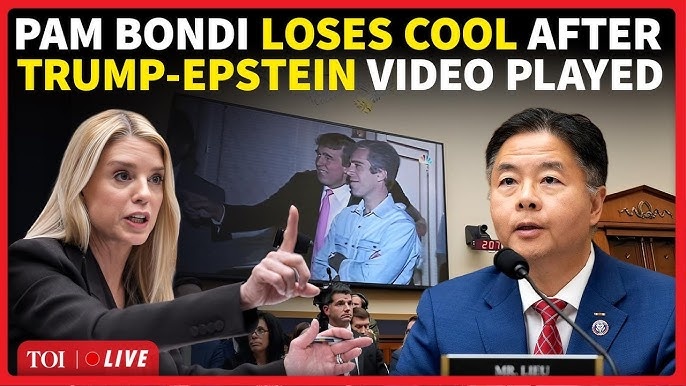
It began with a single image, lifted into the air in a tense congressional hearing, freezing the room in a silence so heavy that even seasoned officials seemed unprepared for what came next.
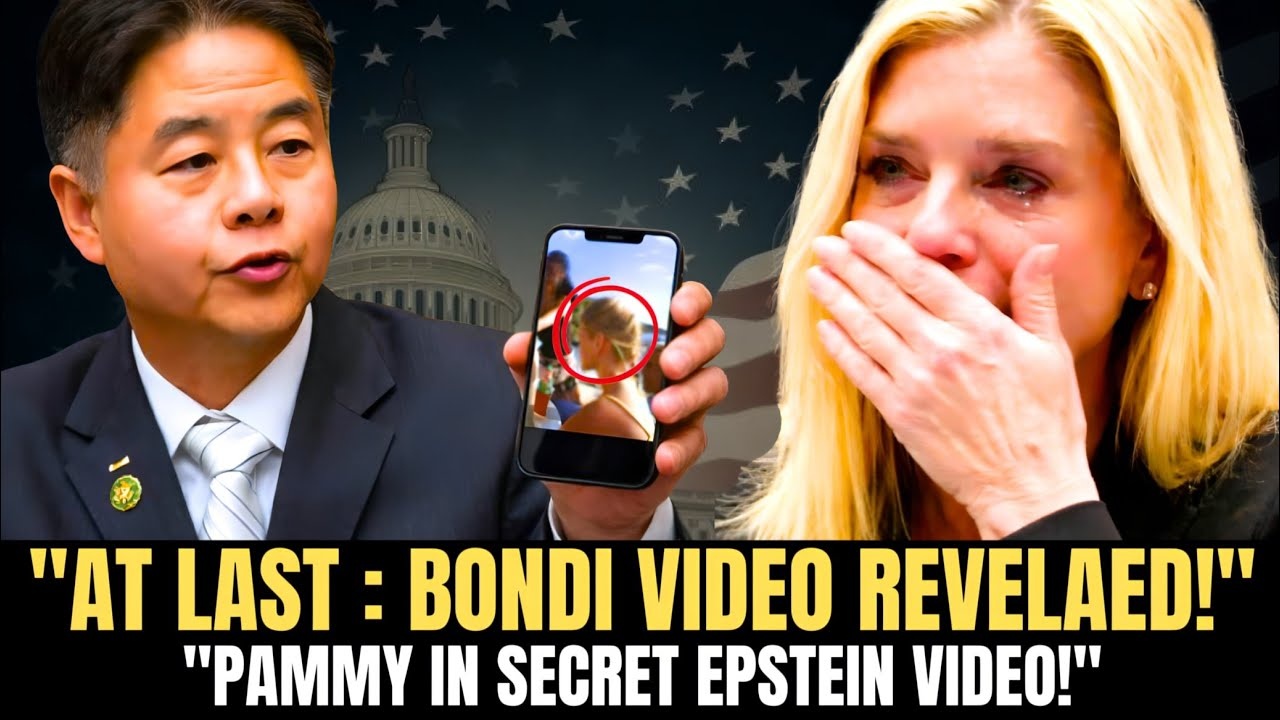
For seven seconds, nothing moved, and in that pause, something deeper than politics surfaced, something raw, uncomfortable, and impossible to ignore.
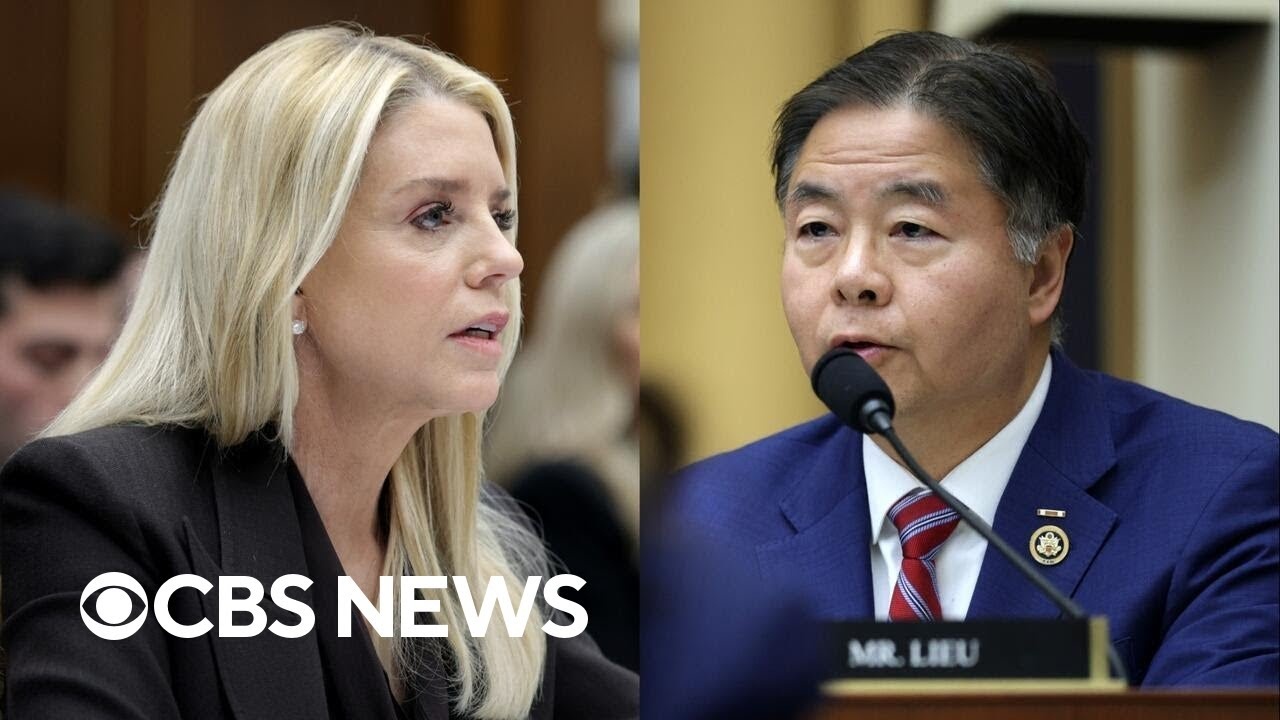
A question followed, simple in wording yet explosive in implication, cutting through layers of authority that suddenly felt fragile and exposed under public scrutiny.
This was not just another hearing, not another scripted exchange between officials trained to deflect, but a moment that felt unscripted, volatile, and dangerously real.
Voices rose quickly, tension escalated, and accusations began flying across the room, each one sharpening the sense that something much bigger was being challenged.
Because this was never only about Jeffrey Epstein anymore, it was about everyone who had ever stood within his orbit and walked away untouched.
A system designed to deliver justice now stood accused of something far more troubling, selective silence in the face of overwhelming public suspicion.
The congressman’s approach was direct, almost surgical, presenting two images tied to a figure long associated with controversy, former Prince Andrew.
The details were impossible to ignore, the redacted face in the photograph signaling legal recognition of a victim, not speculation, not rumor, but something formally acknowledged.
That single detail changed everything, because it reframed the discussion from abstract allegations to something grounded in legal reality.
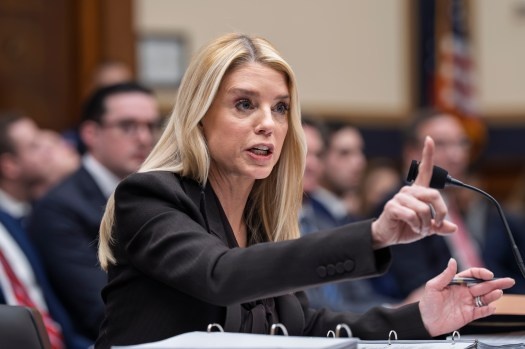
If the individual in the image was recognized as a victim under federal law, then the implications extended far beyond one man or one case.
The logic seemed straightforward, yet the response from authority appeared anything but, raising more questions than it answered.
Why, despite such evidence, had no further investigation been pursued, and why did official statements continue to insist that no actionable evidence existed.
The contradiction hung in the air, unresolved and deeply unsettling, fueling a growing sense that the system might not be failing accidentally.
When the July 2025 memorandum was brought into the discussion, the tension escalated even further, transforming the hearing into something closer to confrontation than inquiry.
The document had effectively closed the door on pursuing additional individuals connected to Epstein, stating that no sufficient evidence justified further action.
For some, that statement represented closure, a legal conclusion after years of investigation, but for others, it sounded like an abrupt shutdown of accountability.
The congressman challenged that narrative directly, pointing to the image as a contradiction that could not easily be dismissed or explained away.
How could visual evidence tied to a recognized victim fail to meet the threshold for investigation, especially in a case already saturated with global attention.
The question lingered, unanswered, amplifying a sense of distrust that extended far beyond the walls of that hearing room.
Then the discussion expanded, pulling in names that instantly intensified public interest and controversy, including former President Donald Trump.
Officials were quick to emphasize that no confirmed evidence linked him to criminal wrongdoing, a statement repeated firmly during the exchange.
Yet the mere mention of his name alongside Epstein reignited years of speculation, social media debate, and unresolved public curiosity.
This is where the situation becomes more complex, because association does not equal guilt, yet repeated connections raise unavoidable questions.
The same pattern appeared with other high-profile figures, including Elon Musk and Bill Gates, both of whom have publicly denied deeper involvement.
Documents indicated varying levels of contact or communication, but nothing definitively proving criminal behavior, leaving the narrative suspended between suspicion and denial.
And that ambiguity is exactly what fuels the controversy, because uncertainty invites interpretation, and interpretation spreads rapidly in the digital age.
Meanwhile, something far more troubling unfolded in the background, something that shifted focus away from powerful figures and toward the victims themselves.
The release of documents, intended to bring transparency, instead exposed identities that had long been protected under legal safeguards.
For many victims, anonymity was not just a legal status, but a fragile shield against further trauma, one that was suddenly stripped away.
Reports suggested that some felt betrayed, not only by individuals but by institutions they had trusted to protect them.
This development added another layer to the controversy, raising questions not just about past actions, but about present responsibility and carelessness.
Was this exposure a mistake, an oversight, or something more deliberate, something that had yet to be fully explained.
As the hearing continued, the narrative fractured into competing interpretations, each side presenting a version of reality that seemed incompatible with the other.
On one side stood officials insisting that the legal threshold for prosecution had not been met, emphasizing the complexity of building cases.
On the other side stood a growing number of observers who believed the issue was not complexity, but selectivity in how justice was applied.
This divide is what keeps the story alive, because it transforms a legal case into a broader question about institutional trust and accountability.
How can so much information exist without leading to more definitive action, and what does that say about the systems designed to enforce the law.
These are not easy questions, and they do not produce comfortable answers, which may explain why they continue to be avoided.
At its core, this situation is no longer just about Epstein or the individuals connected to him, it is about the credibility of the institutions involved.
Trust, once shaken, is difficult to restore, especially when each new revelation seems to deepen rather than resolve existing doubts.
The moment that photo was held up did more than disrupt a hearing, it reignited a conversation that refuses to fade.
It reminded the public that unresolved questions still exist, that gaps in the narrative remain, and that closure has not truly been achieved.
In an age where information spreads instantly, moments like this do not stay confined to a single room, they ripple outward across platforms and audiences.
They become talking points, debates, trending topics, and sources of division, drawing in millions of voices with competing interpretations.
And perhaps that is what makes this moment so powerful, not what it answered, but what it reopened.
Because once doubt is reintroduced into a story, especially one as widely followed as this, it becomes almost impossible to contain.
The questions remain, the conversations continue, and the demand for clarity grows louder with each passing day.
Whether this leads to further investigation, new revelations, or continued silence is still uncertain, but one thing is undeniable.
The story is far from over, and the world is still watching, waiting, and asking what happens next.