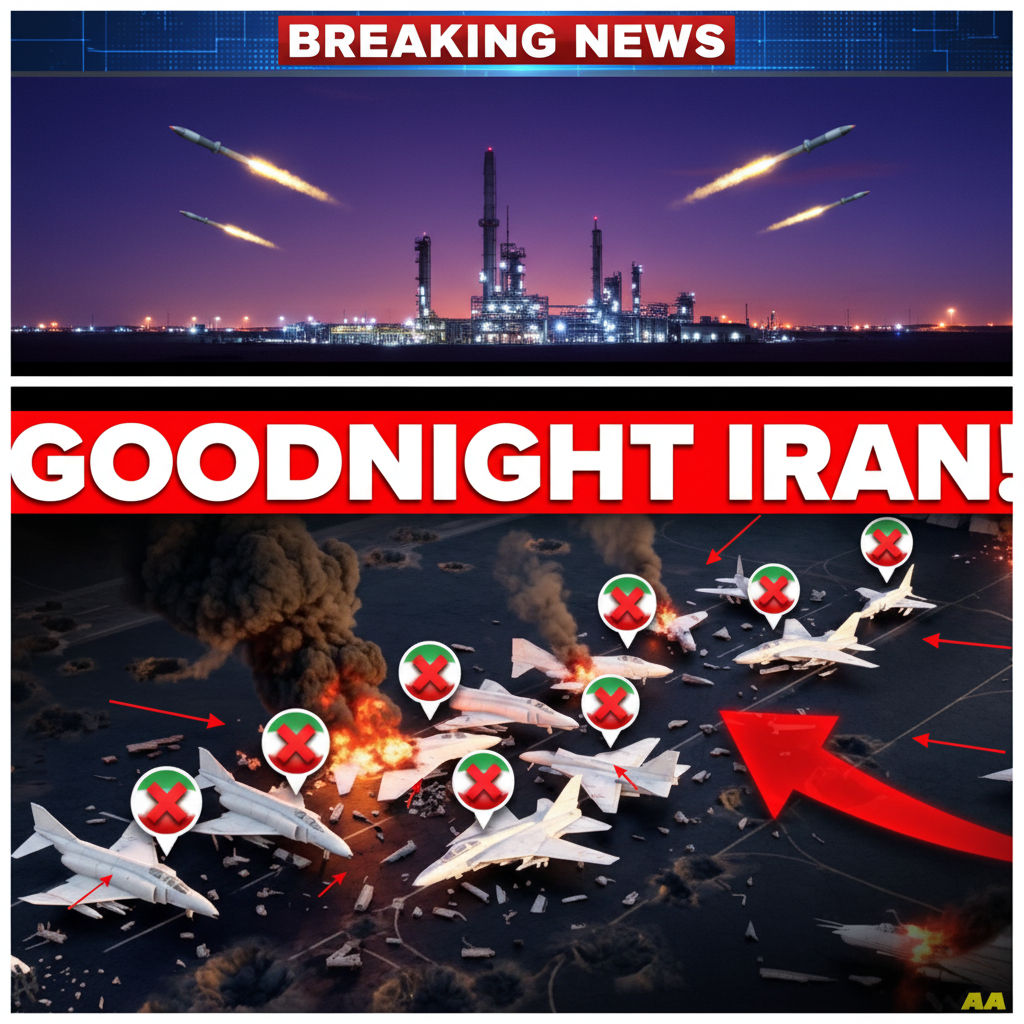
In a development that has sent ripples across the geopolitical landscape, Iran’s air force, a military asset painstakingly developed over nearly five decades, was reportedly neutralized within a remarkable 24-hour period. This extraordinary event, occurring on March 6, 2026, has ignited intense discussions among international observers and military strategists alike.
The Swift Operation Unfolds
Reports indicate that the operation was a meticulously coordinated effort by U.S. and Israeli forces, launched in the early hours of March 6. The objective was clear: to dismantle Iran’s aerial capabilities, a task previously estimated to require weeks, if not months. However, the execution demonstrated unparalleled military precision and speed.
The initial waves of strikes targeted crucial airbases with precision-guided munitions. Aircraft, many of them aging models from a bygone era, were swiftly rendered inoperable. Eyewitness accounts described intense activity and significant destruction. Command centers, once considered impenetrable, were reportedly crippled, unable to mount effective countermeasures.
Psychological and Strategic Fallout
The psychological impact on the Iranian military and leadership was immediate and profound. High-ranking officials were reportedly left grappling with the reality of this extensive setback. The swift loss of such significant military infrastructure dealt a severe blow to morale, challenging long-held perceptions of national defense capabilities.
Globally, the reaction has been a mixture of shock and intense analysis. Military experts are examining the implications of this unprecedented event, suggesting it could mark a significant turning point in regional power dynamics. With Iran’s air force effectively neutralized, the balance of power in the Middle East appears to have dramatically shifted.
Unpacking the Vulnerabilities
The speed of the force’s collapse has led to critical questions: How could such an established defense system be overcome so swiftly? Analysts point to a combination of factors:
- Aging Technology: Many of Iran’s aerial assets were older models, making them vulnerable to advanced modern systems.
- Economic Pressures: Prolonged economic challenges and sanctions may have hampered maintenance and modernization efforts.
- Underestimation: A possible underestimation of adversaries’ capabilities and resolve.
Despite the Iranian leadership’s historical emphasis on its air force as a deterrent, the reality proved more complex.
Looking Ahead: A New Regional Dynamic
In the aftermath, the Iranian government has faced the challenge of managing the public narrative, with state media reportedly downplaying the severity. However, the operational reality on the ground tells a different story. The repercussions of this event are expected to be felt for years, redefining Iran’s strategic posture.
As the international community monitors developments, the potential for escalating regional tensions remains a key concern. The events of March 6, 2026, serve as a stark reminder of the dynamic and sometimes fragile nature of military power, fundamentally altering the strategic landscape.