North American Trade Shock: Canada Rejects US Corn, Igniting Supply Chain Realignment
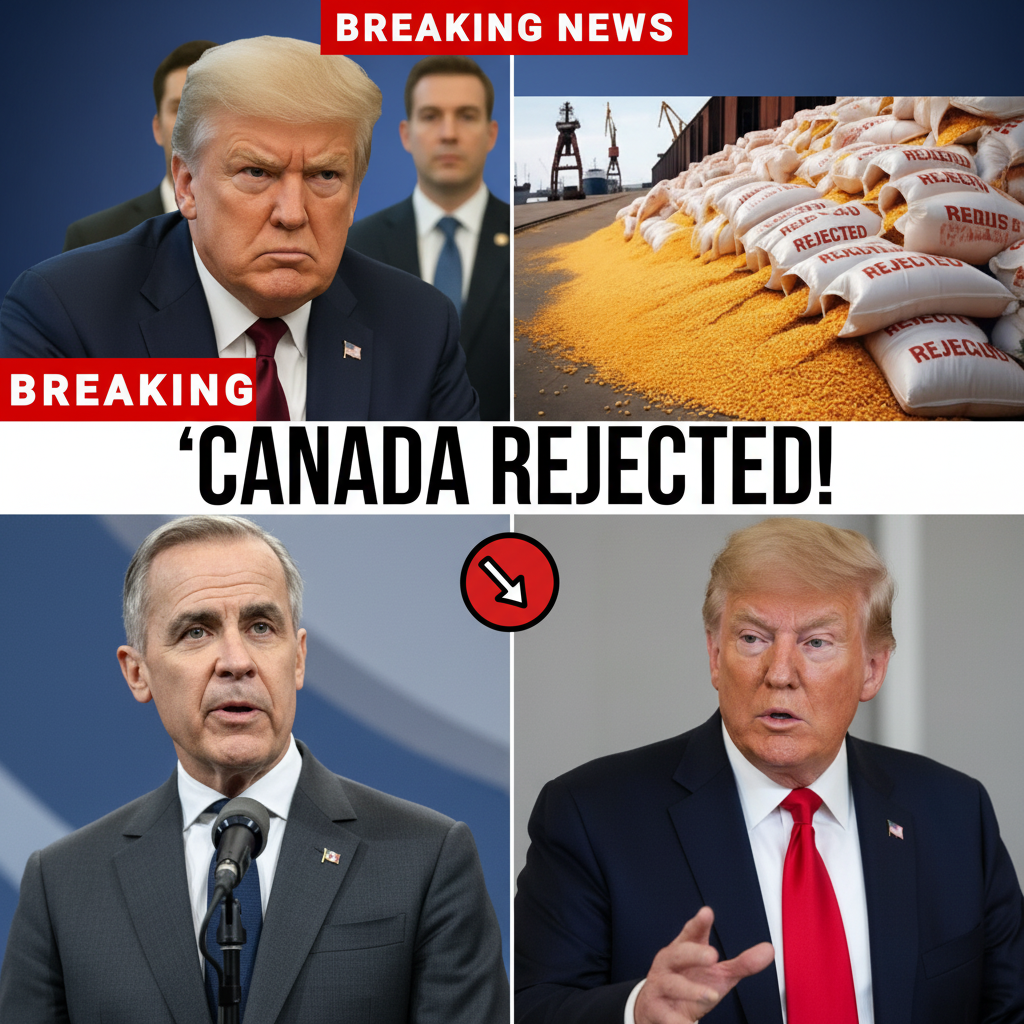
CHICAGO – A significant disruption in North American agricultural trade has escalated into a prominent political and economic concern, following confirmed reports that major shipments of U.S. corn have been rejected at the Canadian border. This action comes as Ottawa strategically orchestrates a backup plan to replace American exports with domestic and alternative international sources.
Sources indicate that former President Donald Trump is expressing strong disapproval over the development, as a key sector of the American economy faces sudden exclusion from its northern neighbor’s market.
The Strategic Pivot: More Than Just Quality Concerns?
What initially began as a routine quality inspection dispute at a Manitoba grain terminal has rapidly evolved into what analysts describe as a strategic realignment of food supply chains. Internal trade documents obtained by agricultural reporters reveal that multiple U.S. corn shipments destined for Canadian livestock operations were flagged for not meeting newly tightened phytosanitary standards.
While the official reason cited concerns over agricultural residues, industry observers widely believe the rejections were a calculated move designed to communicate a new direction in trade policy.
Rapid Response: Canada’s Diversification Strategy
Within 72 hours of the border blockades, Canadian grain entities swiftly mobilized. Emergency contracts were reportedly signed with domestic producers in Ontario and Quebec, while a surge of imports from allied nations, including Brazil and Ukraine, began arriving at Canadian ports. This rapid response aimed to stabilize feed grain deliveries and effectively neutralized any leverage the United States might have held as a dominant supplier.
Economic and Political Repercussions
For American farmers, especially in vital corn-producing states like Iowa, Nebraska, and Ohio, the news has caused alarm. Local grain elevators are reporting a sudden surplus, with prices already showing signs of softening due to the Canadian market’s closure. Agricultural economists caution that if Canada’s strategic pivot becomes permanent, U.S. farmers could face annual export revenue losses potentially exceeding $2 billion.
Former President Trump, who has consistently championed American agricultural dominance, reportedly views this development as a significant setback. A former advisor noted, “He sees this as a personal betrayal. Corn exports to Canada were supposed to be untouchable.”
In Ottawa, officials have maintained a calm demeanor. Agriculture Minister Lawrence MacAulay emphasized Canada’s commitment to “ensuring the stability and security of our food supply chain.” When questioned about potential political motivations behind the rejections, MacAulay reiterated that “all imports must meet our rigorous standards.”
Broader Implications and Future Outlook
The economic ramifications extend beyond the agricultural sector. Transportation companies like BNSF Railway and Union Pacific, critical for moving grain northward, are already reporting reduced volumes. Ethanol producers, who rely heavily on corn, are closely monitoring the situation, fearing that a sustained loss of the Canadian market could destabilize domestic prices.
Trade economists, such as Dr. Sanjay Mehta of Northwestern University, suggest this situation represents a strategic repositioning. “Canada has demonstrated that the United States is no longer an irreplaceable partner. They’ve diversified. The question now is whether American producers can adapt,” Mehta explained.
As corn prices fluctuate on the Chicago Board of Trade and farmers in the Midwest discuss their anxieties, it is becoming increasingly clear that the era of automatic Canadian reliance on U.S. agriculture is undergoing a profound transformation. The rejection of these corn shipments appears to signify more than just a trade dispute; it highlights a declaration of strategic economic independence, leaving many to ponder the path ahead for North American trade relations.