One speech. Forty-one minutes. And suddenly the energy map of North America may never look the same again.
When Canada’s prime minister stepped up to the podium in Ottawa, few expected a declaration that could send shockwaves through global energy markets.
Canada has just fired a strategic warning shot across the North American energy landscape.
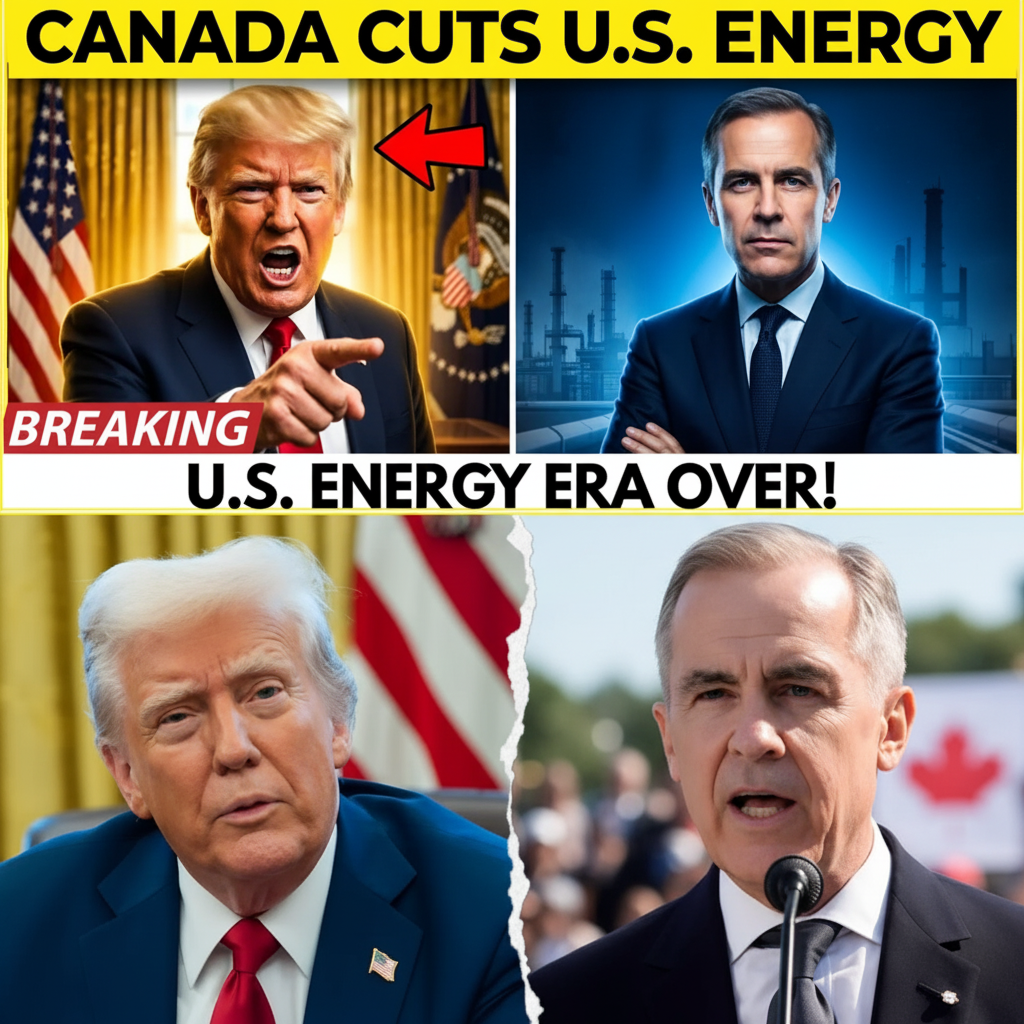
On March 17, 2026, Prime Minister Mark Carney delivered a speech before Parliament that insiders are already calling one of the most consequential economic announcements in decades. What began as a routine address on economic sovereignty quickly transformed into something far more dramatic: a declaration that Canada would no longer structure its energy future around the United States.
The announcement, dubbed the “Sovereign Energy Declaration of 2026,” outlined a sweeping plan to diversify Canada’s oil, gas, and electricity exports away from their traditional American destination. For more than fifty years, geography and infrastructure effectively tied Canada’s energy economy to the U.S. market. Pipelines flowed south. Hydropower crossed the border. Natural gas moved through a continental network built around American demand.
Carney’s message was blunt: that era is ending.
Behind the political language sits a concrete strategy designed to permanently reshape Canada’s energy architecture. The government unveiled a seven-point framework aimed at opening alternative export routes, securing long-term international energy contracts, and ensuring that no future U.S. administration could use Canadian energy dependence as leverage in trade negotiations.

The most dramatic element of the plan is the revival of the long-debated Energy East pipeline corridor. Originally proposed years ago and later abandoned, the project would transport Alberta crude thousands of kilometers east to Atlantic export terminals in New Brunswick. From there, Canadian oil could reach Europe and Asia directly—bypassing American refineries that have historically purchased the majority of Canada’s heavy crude.
Ottawa pledged nearly $15 billion in federal investment and promised to fast-track regulatory approvals in an effort to accelerate construction.
At the same time, Canada quietly laid the groundwork for a second pillar of the strategy: liquefied natural gas exports to Europe.
Just two days before Carney’s speech, Canadian officials signed a framework agreement in Brussels with European partners including Germany, France, and the Netherlands. The deal envisions new LNG terminals in Nova Scotia capable of shipping roughly 12 billion cubic meters of natural gas annually by the early 2030s.
For Europe, still searching for reliable alternatives after years of energy disruption, Canadian gas could become a major new supply line. For Canada, it represents something even more valuable: a global market that weakens reliance on a single buyer.
Hydroelectric exports—long a cornerstone of cross-border energy trade—are also being reconsidered. Provinces like Quebec, which provide electricity to parts of the U.S. Northeast, will begin renegotiating contracts at market rates. Future power exports may prioritize domestic industry before American utilities.

Taken together, the measures form a bold blueprint:
build pipelines to the coasts, construct LNG terminals facing the Atlantic and Pacific, and sign long-term energy deals with allies across Europe and Asia.
The goal is not to cut the United States off.
It is to make sure Canada never again depends on it.
The reaction from Washington was immediate.
Former U.S. President Donald Trump, responding on social media shortly after the speech, blasted the plan as “the biggest mistake in their history” and threatened 50 percent tariffs on Canadian energy imports if Ottawa followed through.
Yet the financial markets told a more complicated story.
Natural gas futures surged while several American utility stocks dipped sharply, reflecting investor concerns that replacing Canadian energy supplies would be far more difficult than political rhetoric suggests.
The reality is stark: Canada supplies roughly 60 percent of U.S. crude oil imports and provides electricity and natural gas to millions of American households, particularly in the Northeast and Midwest. Energy infrastructure connecting the two countries has been built over decades, and replicating those supply routes quickly would be nearly impossible.
Carney appears to be betting on exactly that reality.
Rather than abruptly severing the energy relationship, Canada’s strategy is to create credible alternatives—pipelines, export terminals, and global contracts—so strong that Washington can no longer assume Canadian resources will always flow south.

Infrastructure, once built, changes the map permanently. Pipelines last generations. LNG terminals create global trading networks that outlive political disputes.
If Canada succeeds, the North American energy system that defined the past half-century could evolve into something far more complex: a continent where Canadian resources serve not only the United States, but a growing network of markets stretching across Europe and Asia.
For analysts watching closely, the speech in Ottawa was not simply about energy.
It was about power, leverage, and the future structure of the Western economy.
And if Carney’s plan takes shape, the shift that began with one speech could ripple through global energy markets for decades.