A growing storm is building inside Washington as tensions between the United States and Iran spiral into a dangerous new phase, placing former President Donald Trump at the center of an escalating military and political crisis. What was initially framed as a decisive show of strength is now raising serious questions inside the Pentagon, on Capitol Hill, and among America’s allies around the world.
The conflict intensified after U.S. forces carried out major strikes against Iranian military infrastructure across the region. The operation targeted missile bases, drone launch sites, and command facilities believed to support Iran’s expanding military network in the Middle East. Officials initially described the strikes as a limited mission aimed at weakening Iran’s offensive capabilities and deterring future attacks.
But the situation quickly changed.
Iran responded with a wave of retaliatory missile and drone strikes aimed at U.S. positions and allied facilities across the region. According to military officials from United States Central Command, a fourth American service member has now been confirmed dead, with several others seriously wounded in attacks on U.S. installations. The casualties marked a sobering turning point, transforming what had been portrayed as a controlled military operation into a rapidly expanding conflict.
Inside the Pentagon, the mood has reportedly shifted dramatically. Senior defense officials describe an atmosphere that is tense, cautious, and increasingly anxious. Military planners are concerned that the conflict could stretch far longer than originally anticipated, forcing the United States to burn through large quantities of missile interceptors and advanced air-defense systems.
Those stockpiles are not unlimited.
Several commanders have privately warned that prolonged fighting with Iran could drain resources needed for other global flashpoints, particularly in the Indo-Pacific region around Taiwan and in Eastern Europe, where tensions with Russia remain high. For military leaders responsible for global readiness, the possibility of a multi-theater crisis is becoming an increasingly serious concern.
Yet publicly, Trump has dismissed those warnings.
The former president has insisted that the United States possesses more than enough military capability to sustain the operation and has repeatedly emphasized that American forces remain dominant in the region. In speeches and statements, he has portrayed the strikes as a powerful demonstration of American strength and a necessary response to Iranian aggression.
Behind closed doors, however, divisions appear to be emerging over what the ultimate objective should be.
Trump has reportedly floated the idea of pursuing a strategy aimed at regime change in Iran, comparing it to political pressure campaigns used in countries like Venezuela. But several advisers and intelligence officials have cautioned that such a model may be unrealistic when applied to Iran’s deeply entrenched political system and powerful military institutions, particularly the Revolutionary Guard.
Unlike smaller states, Iran possesses a complex political structure, significant domestic support networks, and strong regional alliances. Attempting to force a leadership collapse from the outside could trigger a prolonged and unpredictable conflict across the Middle East.
Adding to the uncertainty, some intelligence assessments reportedly indicated that Iran did not pose an immediate threat to the U.S. mainland prior to the escalation. That revelation has intensified debate in Washington about the strategic reasoning behind the strikes and whether the conflict risks expanding beyond its original objectives.
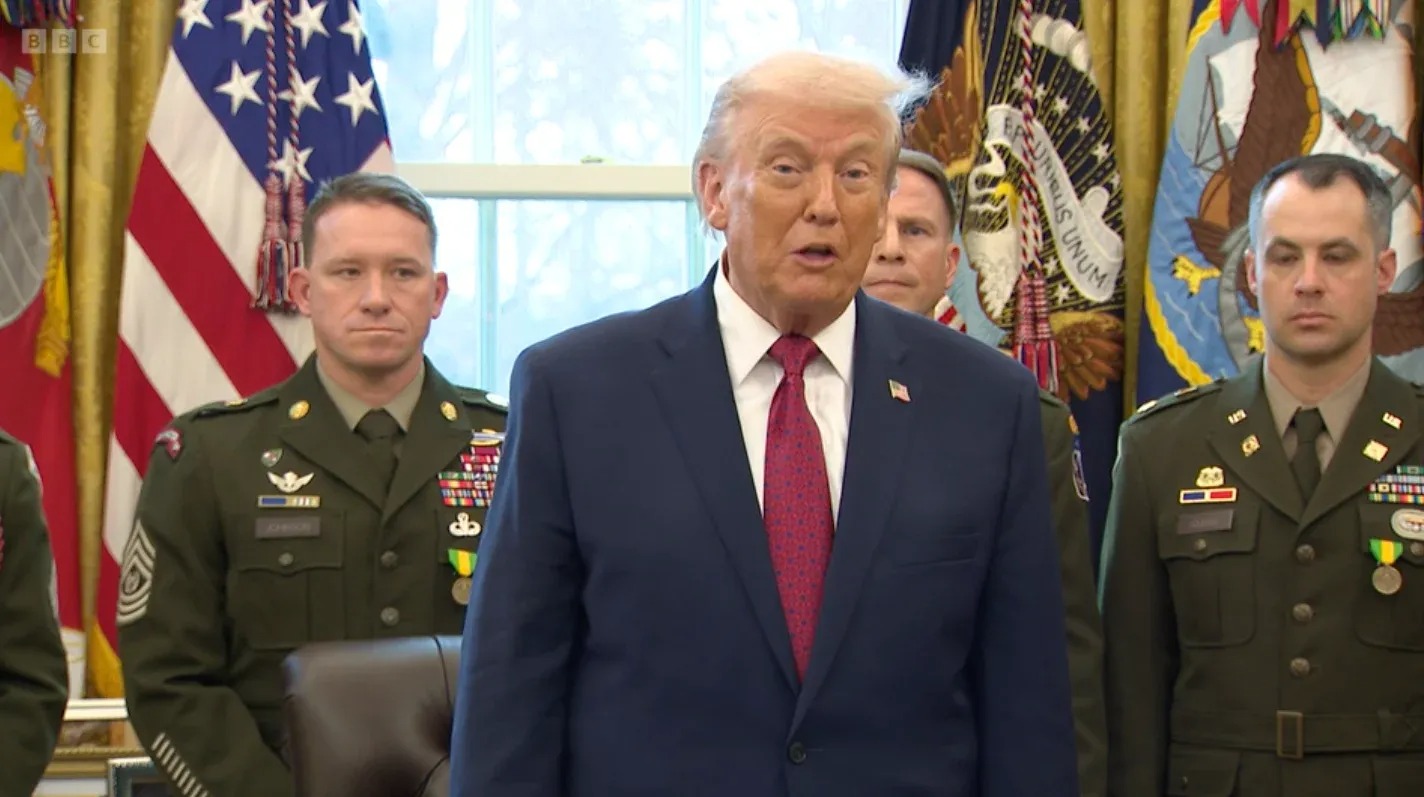
Meanwhile, political pressure is building in Congress, where lawmakers from both parties have begun questioning the scope of presidential authority in launching military operations without broader legislative approval. While efforts to formally limit the administration’s war powers have so far stalled, the debate reflects growing unease about how far the confrontation with Iran could go.
For now, the conflict continues to unfold in real time, with missile strikes, drone attacks, and military deployments reshaping the balance of power across the region.
What began as a calculated military operation is now evolving into a far more complicated geopolitical gamble.
And as casualties mount and strategic disagreements deepen inside Washington, one reality is becoming impossible to ignore: the battle unfolding in the Middle East is not only testing America’s military strength — it is also testing the unity of the very leadership directing the fight.