SKY WAR: Canada Slashes U.S. Airline Contracts, Sending Shockwaves Through American Aviation
OTTAWA & ATLANTA – In a devastating blow to the American aviation industry, Canada has announced sweeping reductions to cross-border flight contracts with major U.S. carriers, triggering what industry experts are calling the most significant realignment of North American air travel in decades. The move, effective immediately for 2026 scheduling, threatens billions in revenue and could permanently reshape the competitive landscape of continental aviation.
The decision, quietly buried in Transport Canada’s annual aviation strategy update, emerged yesterday as a political and economic earthquake. Canadian officials have slotted key routes previously served by American carriers to Canadian airlines instead, reduced landing rights at major airports, and signaled a fundamental shift in how the country views its aviation partnerships with its southern neighbor.
The Numbers Behind the Turbulence
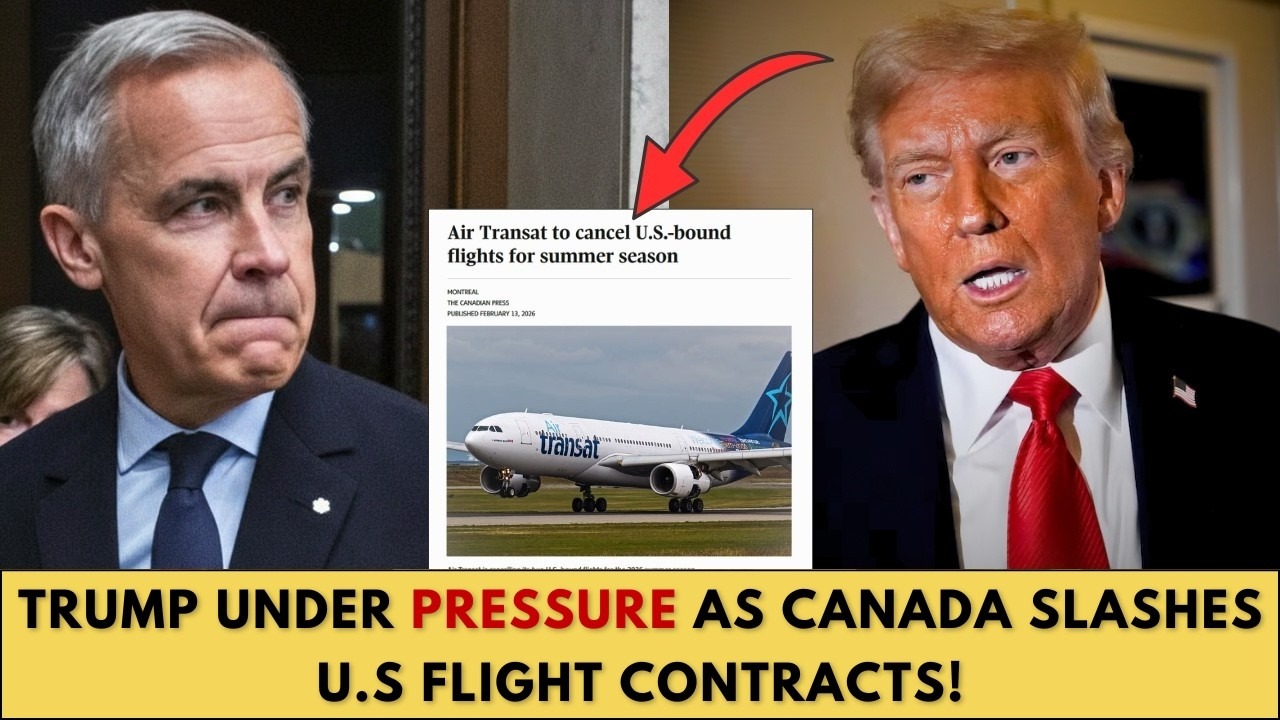
The financial implications are staggering. U.S. carriers collectively earn approximately $4.7 billion annually from Canada-U.S. air travel, representing roughly 12 percent of international revenue for major airlines like Delta, American, and United. The new Canadian strategy targets a 30 percent reduction in U.S.-carrier access to the most lucrative routes over the next eighteen months.
“Delta alone could lose $800 million annually if these cuts stand,” said aviation analyst Richard Aboulafia. “United and American face similar exposure. This isn’t turbulence—it’s a controlled crash.”
The cuts target precisely the routes that generate the highest margins: business travel corridors between Toronto and New York, Montreal and Chicago, Vancouver and Los Angeles, and Calgary and Houston’s energy sector connections. These routes, historically shared between U.S. and Canadian carriers, will now shift predominantly to Air Canada, WestJet, and other Canadian flag carriers.
The Strategic Logic
Canadian Transport Minister Pablo Rodriguez framed the decision as economic patriotism rather than retaliation. “For too long, we have allowed our aviation sector to be treated as an extension of the American market,” Rodriguez stated. “Canada is a sovereign nation with its own airline industry, its own workers, and its own economic interests. The time has come to ensure that Canadian carriers have priority in serving Canadian travelers.”
Behind the diplomatic language lies a harder reality: Canada is tired of watching its aviation dollars flow south. U.S. carriers currently capture approximately 55 percent of the transborder market, despite Canadian airlines operating comparable equipment and service. The new policy aims to flip those numbers, targeting 60 percent Canadian market share by 2027.

The Trump Reaction
President Trump, already embattled on multiple trade fronts with Canada, responded with characteristic fury. “Canada just stabbed us in the back again,” Trump posted on social media. “Our airlines will suffer because of their unfair tactics. We will respond. Nobody treats America this way.”
But the White House’s options are surprisingly limited. Aviation agreements fall under complex bilateral treaties that cannot be unilaterally abrogated without triggering international arbitration. The 1974 Trade Act, Trump’s favorite tariff weapon, applies to goods, not services like air transport. Legal experts suggest any U.S. retaliation would face years of court challenges.
“The administration painted itself into a corner,” said trade lawyer Sarah Weiner. “They spent years dismantling diplomatic relationships and burning trust. Now when a real dispute arises, they have no allies at the table and no quick mechanism to respond. Canada calculated this perfectly.”
Industry Panic
Inside American airline boardrooms, panic is spreading. United Airlines CEO Scott Kirby reportedly convened emergency meetings with his executive team, while Delta’s leadership scrambled to assess the damage to its lucrative New York-Toronto shuttle service, which operates hourly during business hours.
“We are deeply concerned by this development,” a Delta spokesperson said carefully. “The Canada-U.S. aviation market has operated successfully under existing agreements for decades. We urge both governments to resolve this matter through dialogue.”
But dialogue requires willing partners, and Canada’s current posture suggests little interest in negotiation. Prime Minister Mark Carney’s government, fresh from victories on the Gordie Howe Bridge, CPKC rail expansion, and Greenland minerals, appears convinced that Washington has no remaining leverage.
The Canadian Carriers Respond
Air Canada wasted no time celebrating its advantage. The airline announced immediate expansion plans, including new routes, increased frequency on existing U.S. destinations, and a marketing campaign targeting Canadian business travelers with the slogan “Fly Canadian. Fly Home.”
“We are prepared to serve every Canadian traveler who chooses to support their national carrier,” said Air Canada CEO Michael Rousseau. “Our network, our service, and our commitment to Canada have never been stronger.”
WestJet, traditionally focused on Western Canada and leisure travel, announced plans to acquire additional wide-body aircraft to compete for transcontinental business traffic previously dominated by American carriers.
The Passenger Impact
For the 20 million passengers who cross the Canada-U.S. border by air annually, the changes will be immediately visible. Fewer flight options, higher fares due to reduced competition, and longer connections await travelers accustomed to the convenience of multiple carriers competing for their business.
“Consumers always lose when competition decreases,” warned consumer advocate John Barlow. “Canadian travelers will pay more. American travelers will have fewer options. This is a lose-lose for everyone except the airlines themselves.”
The Broader Pattern
The aviation cuts represent the latest front in Canada’s systematic dismantling of U.S. economic leverage. Each move—the bridge, the rail corridor, the Greenland deal, and now aviation—targets a different sector, but the strategy remains consistent: reduce dependency, build independent capacity, and make coercion impossible.
“This is how you deal with a bully,” explained strategist Irvin Studin. “You don’t punch back; that’s what they expect. You build walls. You create alternatives. You make yourself useful but untouchable. Canada is executing a masterclass in asymmetric economic warfare.”
What Comes Next
As 2026 approaches, the aviation industry braces for impact. American airlines will lobby Washington for response, but the tools available are blunt and slow. Canadian airlines will hire, expand, and capture market share. Passengers will adapt to a new reality of higher prices and fewer choices.
And in Ottawa, planners are already eyeing the next target. Maritime shipping? Telecommunications? Energy transmission? Each sector offers opportunities to further insulate Canada from American pressure while expanding Canadian commercial influence.
“The United States spent decades assuming its market size alone guaranteed compliance from neighbors,” Aboulafia reflected. “Canada just proved that infrastructure, strategy, and patience matter more than size. The sky isn’t falling for American aviation. But it’s definitely getting more crowded—with Canadian flags.”