The moment Donald T.r.u.m.p sauntered onto the studio stage, the crowd already sensed the direction of the evening. His rallies, interviews, and even casual remarks had long carried the same signature mixture of bravado and provocation.
But on this particular night, during what MSNBC had billed as a “special live conversation on education and merit,” the former president seemed especially determined to make waves.
He found his opening early.

Leaning back in his chair, hands sweeping theatrically through the air, T.r.u.m.p launched into a tangent about elite universities—Harvard in particular.
With a dismissive scoff, he declared, “You know, a lot of these Harvard graduates… totally overrated. Many of them are dumb, actually. People don’t like to say it, but it’s true.” He paused, waiting for the laughter, the applause, the affirmation that usually met such lines at his rallies.
Instead, the studio sat in an uneasy stillness. Cameras tightened. A few audience members exchanged glances. And at the desk across from him, Rachel Maddow simply folded her hands.
For a moment, it seemed she might brush past the remark with her usual blend of dry humor and sharp analysis. But then—slowly, deliberately—she reached for a thin manila folder resting on the edge of her desk.
She didn’t open it; she merely touched it, almost casually. But the gesture alone shifted the atmosphere.
“T.r.u.m.p,” she began, her tone measured, “it’s interesting that you’re bringing up academic merit tonight.”
His eyes narrowed slightly, though his smile stayed fixed.
“Because,” she continued, tapping the folder once, “we’ve been reviewing some documents that I think might add context to the conversation.”
The crowd, sensing a pivot, leaned forward.
T.r.u.m.p laughed—one of those laughs meant to signal total confidence. “Rachel, Rachel,” he said, waving a hand. “I’ve talked about my academic record many times. Everybody knows I did amazingly well. Top scores. One of the best.”
Maddow didn’t flinch. Instead, she pulled the folder closer, opened it with a careful motion, and slid a single sheet of paper toward the edge of her desk so the overhead camera could capture it.
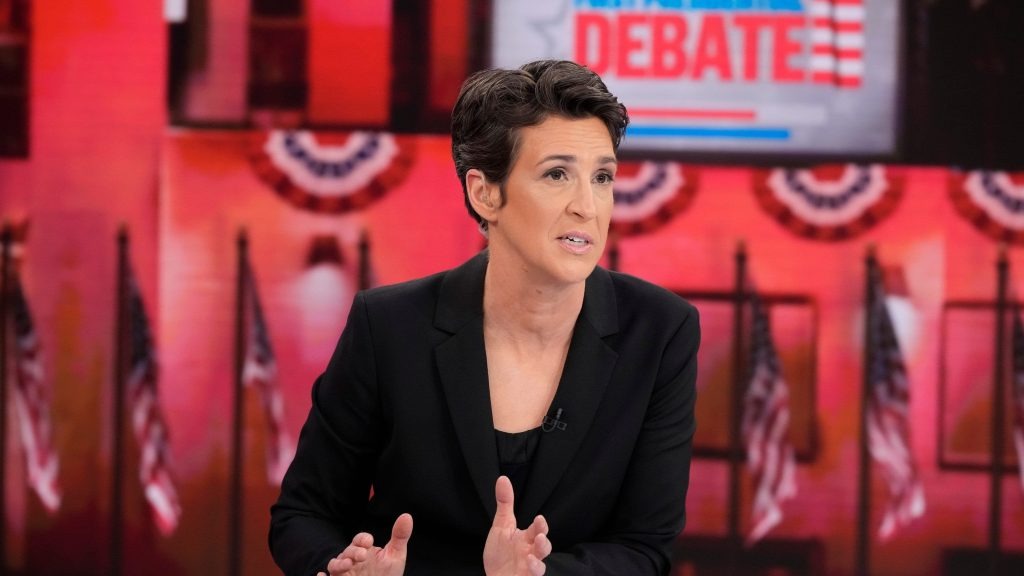
What appeared on the monitors was not flashy. Not dramatic. Just a scan of an old standardized test report—faded, creased, stamped with the markings of the era it came from.
“This,” she said calmly, “is the SAT report we were able to authenticate through independent archival verification. It differs, somewhat significantly, from the version you have previously described publicly.”
The studio fell silent.
T.r.u.m.p’s smile evaporated. His posture straightened, then collapsed slightly, as if he couldn’t decide whether to puff up or shrink from the page. His hands clasped together—a gesture of restraint more than confidence.
Maddow was meticulous. She didn’t shout. She didn’t gloat.
She didn’t editorialize. She read, line by line, the descriptive sections accompanying the score. She explained the historical scoring curve, the context in which the test had been taken, the inconsistencies between his past claims and the document on screen.
She never said the score aloud until the very end.
“When we look at the highlighted field here,” she said, tracing a finger along the photocopy, “we find the actual numerical result. This is the score that, according to this report, you earned.”
The number glowed on the monitors. A collective exhale moved through the audience—part disbelief, part fascination, part something harder to categorize.
The score was not catastrophic.
But it was far below anything T.r.u.m.p had ever suggested. It contradicted decades of self-mythology. It reframed his usual attacks on educational elites in ways the audience could feel in real time.
For several seconds, T.r.u.m.p said nothing.
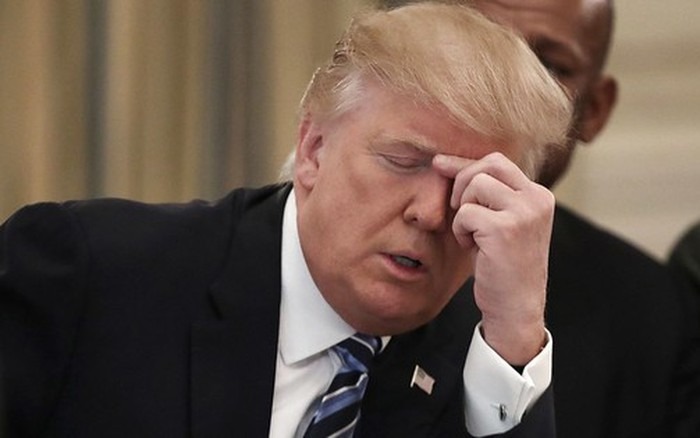
His silence was startling.
Then, attempting to recover, he leaned forward with a strained grin. “Well,” he began, “I don’t know where you got that. Looks like a fake. Total fake. Everybody knows—”
Maddow held up a hand, not rudely but definitively.
“We’ve confirmed its authenticity through two separate archival institutions, including the testing service’s historical records division.
We also contacted your former school’s admissions office, which confirmed receiving this score at the time.”
The studio screens displayed the verification letters—names and personal data redacted, but the institutional headers clear as day.
T.r.u.m.p blinked. His expression stiffened. It was the first moment of the evening in which he appeared not combative, not theatrical, but genuinely unsettled.
The cameras seized the shift: his jaw tightening, his shoulders rounding inward, his fingers tapping a nervous rhythm against the arm of his chair.
Suddenly, the conversation was no longer about Harvard graduates, or merit, or elitism. It was about him.
It was always about him—but this time, the mirror had been turned around.
The audience sensed it. The control he typically exerted—the dictation of tone, pace, and emotional temperature—had slipped out of reach.
Even the lights seemed to cast him differently now, less like a performer commanding the stage and more like a man caught off-balance in a play he didn’t write.
Maddow did not push further. She didn’t need to.
The document spoke for itself. Instead, she pivoted gently, reminding viewers that conversations around education shouldn’t hinge on personal attacks or inflated narratives of personal brilliance.
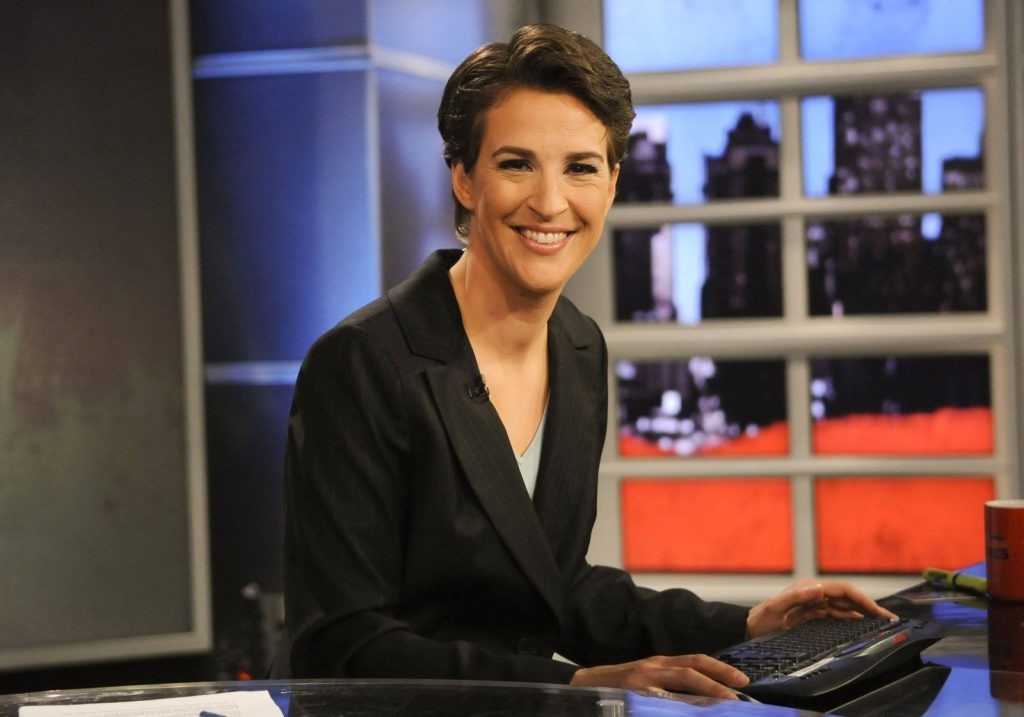
“Academic achievement,” she said, “is not the measure of a person’s worth. But accuracy is. Honesty is. And when we talk about institutions, fairness, and merit, it’s important that the public understand the truth—not mythology.”
It was a surgical strike delivered with an archivist’s precision, not a pundit’s aggression.
T.r.u.m.p attempted to regain footing. He accused the network of conspiracies, accused Maddow of staging “an ambush,” insisted that his “real scores”—the ones he had mentioned for years—were “lost,” “stolen,” or “destroyed,” yet somehow still unquestionably “very high.”
But the air had changed.
The audience, once attentive, now seemed contemplative. Even uneasy. Because Maddow had not merely challenged T.r.u.m.p’s claims—she had dismantled the narrative architecture he relied upon to belittle others while burnishing his own legend.
By the time the segment closed, the former president’s earlier comment—“Harvard graduates are overrated and dumb”—was no longer just an insult. It was an irony humming beneath the studio lights.
Maddow ended the show with her signature mix of restraint and pointed clarity.
“Tonight’s discussion reminds us,” she said, “that truth matters. That confidence without accuracy is performance, not substance. And that no conversation about education is complete without accountability—including for those who speak the loudest.”
The cameras faded out.
But the moment lingered—echoing in the digital world before the show had even finished airing.
Clips raced across social platforms, spawning debates, memes, think-pieces, and even late-night monologues. Some viewers framed the incident as a reckoning years overdue.
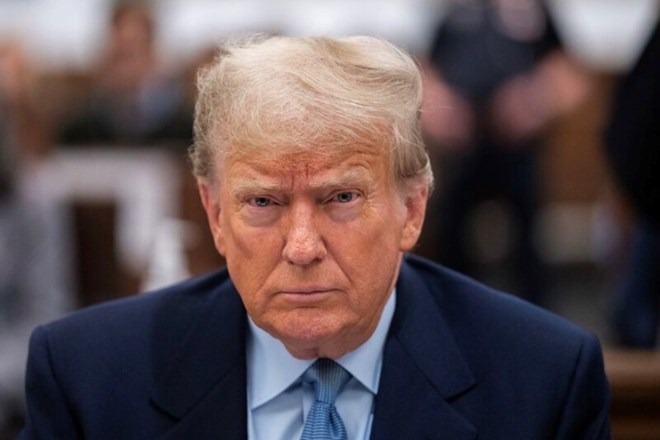
Others defended T.r.u.m.p, claiming all standardized tests were flawed anyway. And still others simply marveled at the silence—the rare, stunned quiet of a man so rarely quiet.
What was undeniable was this: in a single, crisp gesture—a folder slid across a desk—Maddow had changed the tone of the conversation.
Not with shouting.
Not with spectacle.
But with documentation.
And with that, the discourse surrounding academic merit, elitism, and self-mythology entered a new chapter—one where the loudest voice in the room was momentarily overshadowed by the simplest of artifacts: a score, a record, a truth laid bare under studio lights.