When Stephen Colbert looked into the camera and abandoned humor entirely, viewers immediately sensed that something unusually serious had entered the late-night television space.

The opening seconds felt different, stripped of punchlines and applause cues, as Colbert’s voice carried urgency rather than irony, signaling that entertainment had momentarily yielded to responsibility.
He spoke about public media outlets facing the possible loss of major funding sources, framing the issue not as partisan drama but as a democratic crossroads hiding in plain sight.
His tone suggested this was not a segment designed to trend, but a warning delivered because silence, in his view, had become more dangerous than controversy.
Colbert explained that public media does not exist to flatter power, but to inform communities often ignored by profit-driven coverage models.
He argued that defunding such institutions risks turning entire regions into information deserts where rumors travel faster than verified facts.
The studio audience remained unusually quiet, not confused, but attentive, recognizing the gravity of a message rarely delivered without a joke to soften it.
Colbert emphasized that laughter can open minds, but some moments demand clarity without cushion or comedy.
He described public media as connective tissue between communities, educators, emergency responders, and citizens who rely on accurate information during crises.
Removing that infrastructure, he warned, creates gaps where misinformation, extremism, and distrust quickly flourish.
The segment immediately triggered reaction online, with viewers expressing surprise that a comedian would risk ratings to deliver a sober civic message.
Supporters praised the courage, calling it a necessary interruption in an era addicted to spectacle.
Critics accused Colbert of exaggeration, arguing that private media can replace public outlets through market efficiency.
Others countered that markets reward engagement, not truth, and public media exists precisely because not all truth is profitable.
As clips circulated, the absence of jokes became the most discussed element, transforming tone itself into a talking point.

Commentators noted that seriousness on late-night television now feels radical because humor has become the default shield.
Colbert cited historical examples where public broadcasting filled critical gaps during natural disasters, elections, and public health emergencies.
He argued that weakening these systems does not punish elites, but isolates rural and underserved populations first.
The message resonated with educators who depend on public media resources for classrooms lacking commercial alternatives.
Parents shared stories of local stations providing educational lifelines during school closures and emergencies.
Opponents insisted the warning overstated the stakes, framing funding cuts as budgetary discipline rather than cultural erosion.
That framing ignited further debate, pushing the segment deeper into political and civic discourse.
Media scholars weighed in, noting that public broadcasting historically balances market excess by prioritizing service over scale.
They warned that once dismantled, such institutions rarely return intact.
Colbert acknowledged disagreement directly, stating that debate itself depends on shared facts, which public media helps preserve.
Without trusted information anchors, he argued, discourse devolves into tribal shouting rather than democratic deliberation.
The segment also raised uncomfortable questions about who decides which voices deserve amplification.
Colbert warned that funding decisions often reflect power dynamics more than public need.
Within hours, hashtags emerged framing the moment as either principled leadership or ideological overreach.
Both sides shared the clip, ironically amplifying the very public media conversation Colbert hoped to ignite.
Political analysts observed that the message landed because it avoided naming villains, instead focusing on consequences.
That approach forced viewers to consider outcomes rather than personalities.
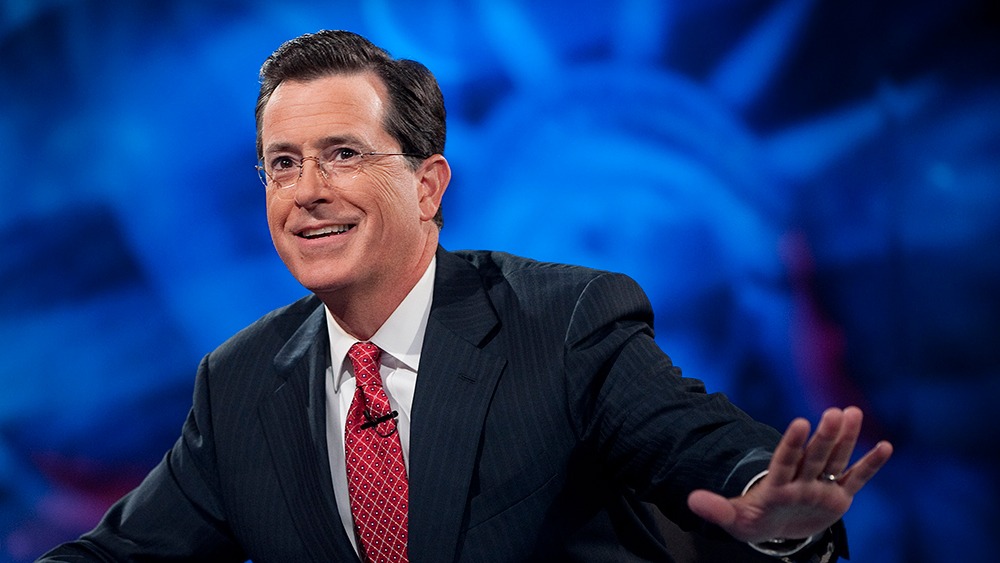
Colbert concluded by urging audiences not to confuse quiet institutions with weak ones.
He argued that public media’s strength lies in consistency, not volume.
The absence of a call-to-action frustrated some viewers, while others appreciated the restraint.
Colbert appeared to trust audiences to reflect rather than react.
As the news cycle moved on, the segment continued resurfacing whenever funding debates reappeared.
Educators, journalists, and civic leaders referenced it as a rare moment of televised responsibility.
Critics maintained that comedians should stay in their lane, questioning the legitimacy of advocacy from entertainment figures.
Supporters responded that platforms create responsibility regardless of profession.
The debate expanded beyond Colbert, evolving into a broader conversation about information as public infrastructure.
Who pays for truth, many asked, when truth does not monetize easily.
Colbert’s seriousness forced a recalibration of expectations, reminding viewers that comedy can pause without losing relevance.
That pause, many argued, made the message harder to dismiss.
The segment did not resolve the funding debate, nor did it pretend to.
Instead, it reframed the issue as a shared risk rather than a partisan skirmish.
In an age of constant noise, Colbert chose silence, restraint, and urgency.
That choice transformed a late-night monologue into a civic moment.
Whether praised or criticized, the warning achieved its aim by demanding attention without spectacle.
It asked audiences to consider what disappears when public media does.
And long after the laughter would have faded, the question lingered.
What happens to democracy when information becomes optional.