ATLANTA — For 137 years, Coca-Cola has been more than a company. It has been a shared American refreshment, a symbol of capitalism’s cheerful promise, and a fixture of the global imagination as recognizably American as the Grand Canyon.
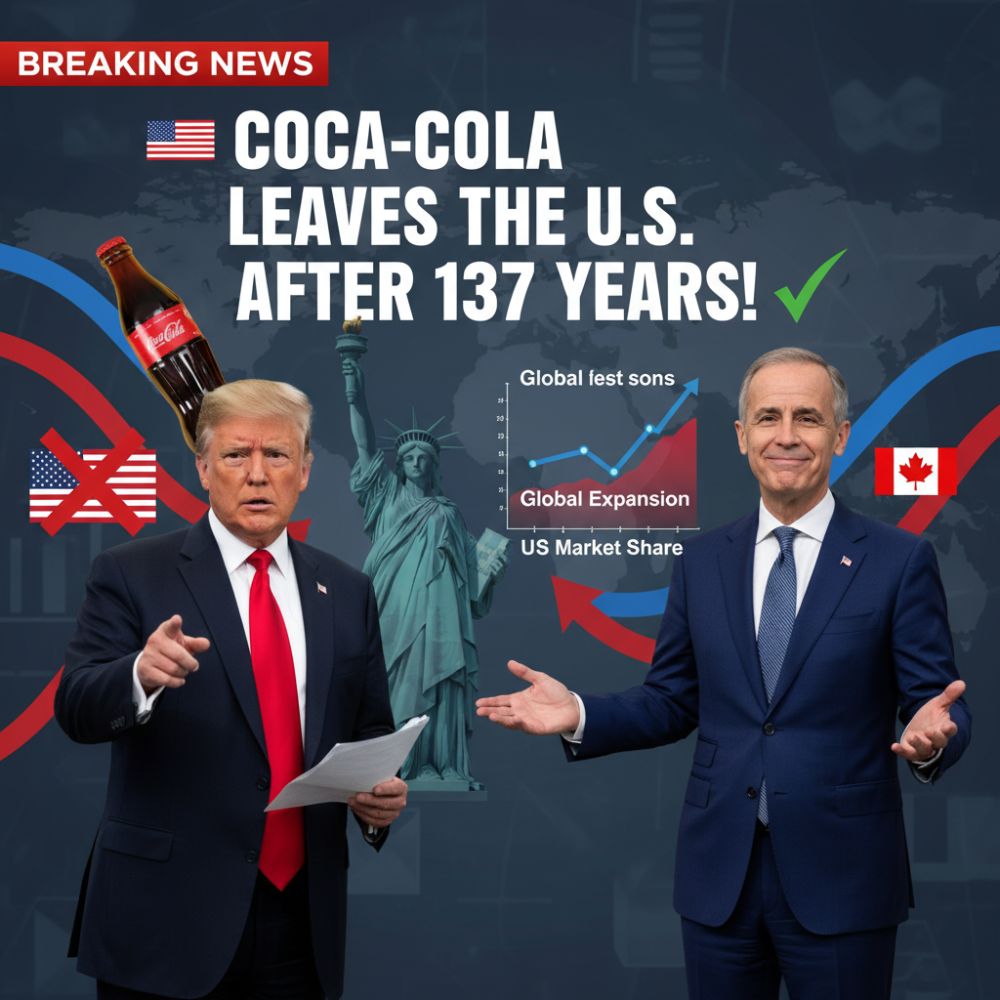
No longer.
In a stunning corporate realignment announced early Tuesday, the beverage giant confirmed it is shifting the bulk of its strategic concentrate production and global finance operations outside the United States. The decision, executives said, was a direct consequence of sweeping new tariffs imposed by former President Donald Trump.
The move represents the most symbolic corporate withdrawal from the American market since the trade-war era began. Within hours, political Washington erupted in blame and disbelief.
“This is not a relocation,” said Lina Khan, a trade economist at Columbia Business School. “This is an indictment. When Coca-Cola leaves, confidence leaves with it.”
The trigger, according to internal memos reviewed by The New York Times, was the so-called “Giant Tariff” — a 35 percent levy on imported aluminum, European concentrate components, and sweetener precursors.
For decades, Coca-Cola’s genius lay in its global supply chain. Syrup made in Atlanta was shipped to bottlers worldwide. But the new tariffs made that model untenable overnight.
“We cannot produce iconic American Coke if we cannot afford the inputs,” a senior executive said on condition of anonymity. “The math stopped working.”
By Wednesday, workers at three blending facilities in Georgia and Texas were told to expect layoffs beginning next quarter. In total, nearly 2,000 direct jobs are at risk, with thousands more in logistics and packaging likely to follow.
Canada moved first. Within hours of Coca-Cola’s announcement, Ontario’s premier offered expedited permits, tax abatements, and a new “Coca-Cola Innovation Corridor” in Toronto.
Belgium and the Netherlands followed, each proposing dedicated logistics hubs to absorb the Atlanta-based concentrate operations. Coca-Cola’s board is expected to vote on a new dual headquarters structure — likely Toronto and Amsterdam — by June.
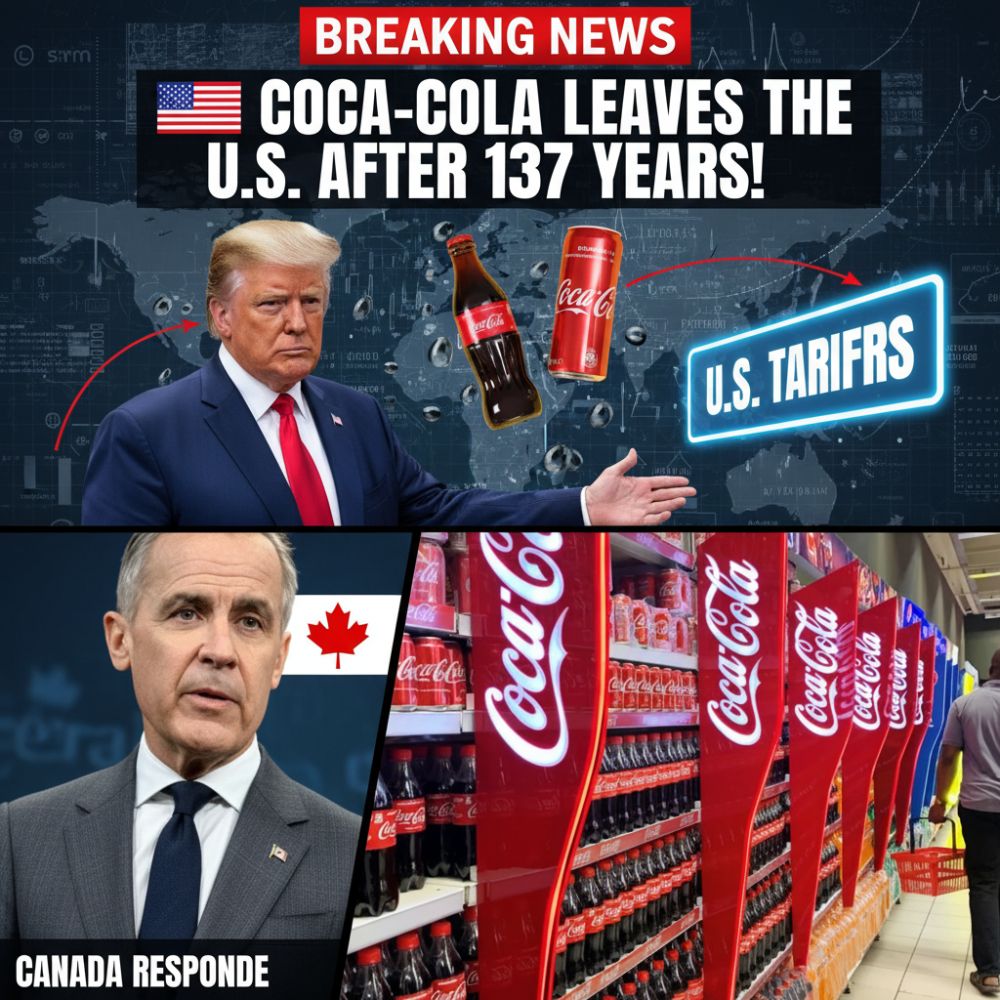
The irony is inescapable. A brand built on patriotism, on Christmas commercials and “I’d Like to Buy the World a Coke,” is leaving because American trade policy made American production too expensive.
“We have lost an icon,” said Senator Jon Tester, Democrat of Montana. “Not because Coke wanted to leave. Because tariffs made staying impossible.”
The White House, still under pressure from Trump-aligned trade hawks, called the decision “corporate betrayal.” But privately, Republican strategists acknowledge the optics are devastating.
On Wall Street, Coca-Cola’s stock fell 4 percent in after-hours trading — not because profits will shrink, analysts said, but because the move signals that even the most loyal American brands no longer see the U.S. as a safe manufacturing base.
“This is worse than a factory closure,” said Mary Lovely, senior fellow at the Peterson Institute. “This is a flagship sailing to another harbor. Other companies will follow.”
Already, whispers have emerged that Whirlpool and John Deere are reviewing their own domestic supply chains. If tariffs remain, experts warn of a cascading effect: a slow but accelerating hollowing out of legacy American manufacturing.
Coca-Cola’s departing CEO, who will remain through the transition, offered no apology. “We did not want this,” he said. “But we must survive.”
In downtown Atlanta, outside the company’s world headquarters, a small crowd gathered Tuesday evening. Some held old glass Coke bottles. Others waved signs reading “Tariffs cost us.”
Inside, workers packed boxes. Outside, the American flag still flew — though for how much longer, no one could say.
The company has promised to keep its museum open. But the real thing, the actual making of the world’s most American drink, is quietly leaving home.
And nothing, perhaps, has ever said more about the new era of American trade than that.