OTTAWA — The phone call from the Pentagon came at 11 p.m. It was not congratulatory.
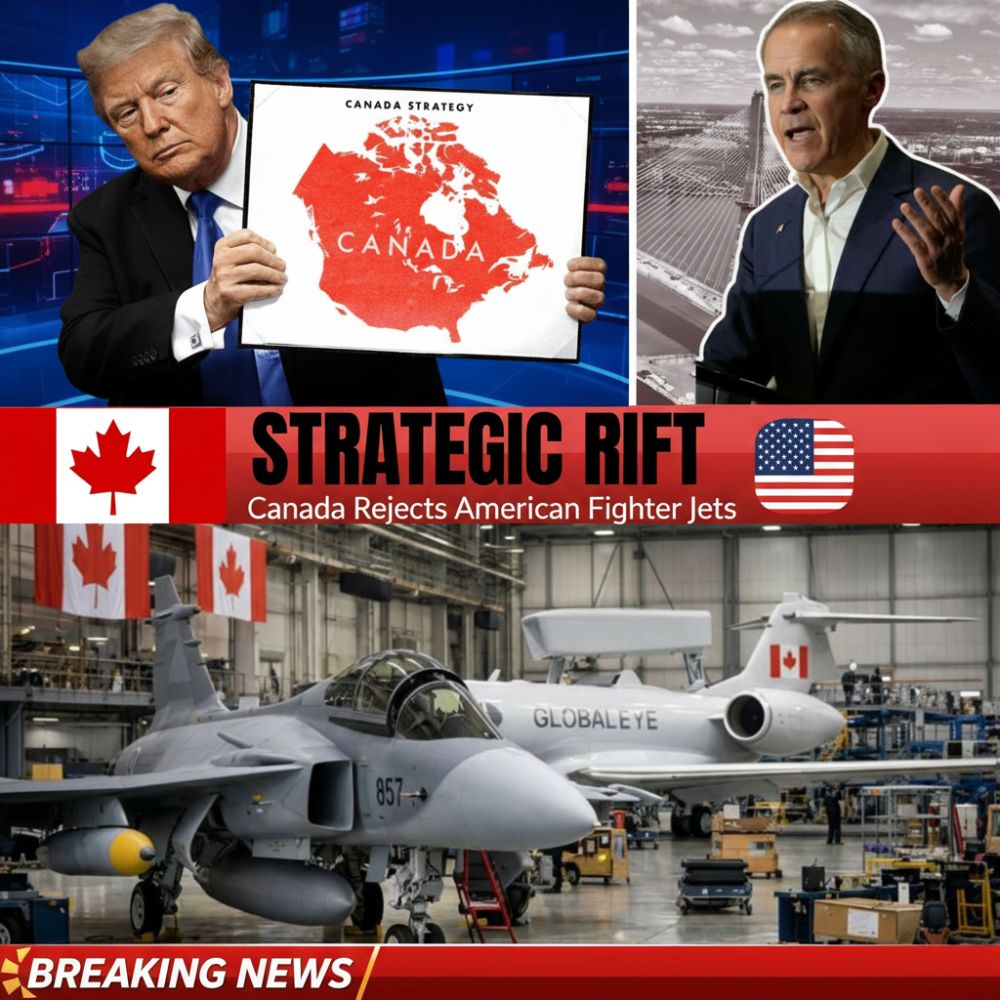
Hours after news leaked that Canada was finalizing a deal to acquire Saab’s Gripen E fighter jet, complete with an unprecedented Swedish technology-transfer package, senior U.S. defense officials were caught completely off guard. The reaction, according to three people familiar with the conversation, ranged from disbelief to fury.
“They accused us of playing with fire,” said a Canadian official who spoke on condition of anonymity. “We told them we were choosing what is best for Canada — not what keeps America comfortable.”
The rebuke was rare. The rupture may prove historic.
For nearly two decades, the Lockheed Martin F-35 was considered the only serious option for allied air forces. Canada had been a partner in the program since its inception, investing hundreds of millions of dollars and patiently awaiting delivery of its first jets.
But patience, Ottawa decided, had become a trap.
The Swedish offer, details of which were obtained by The New York Times, goes far beyond a simple aircraft sale. Stockholm has proposed a comprehensive industrial partnership that includes full domestic production options, sovereign software upgrades, and next-generation sensor systems with no American export controls.
“We are not selling a plane,” a Swedish defense ministry official said. “We are selling independence.”
The F-35, by contrast, remains a locked ecosystem. Every modification, every weapons integration, every mission-data file requires approval from the Pentagon’s Joint Program Office. For a country like Canada, with unique Arctic operational requirements, that dependency has become intolerable.
“This is not about which plane is better in a dogfight,” said Richard Aboulafia, an aerospace analyst. “It is about who controls the keys. Sweden is handing Canada the whole key ring. America keeps the keys in Washington.”
The political fallout has been immediate. Republican lawmakers on the House Armed Services Committee issued a joint statement accusing Canada of “undermining American air-power leadership” and “weakening NATO interoperability.”
Senator Roger Wicker of Mississippi, where the F-35 is assembled, went further. “Canada is making a dangerous mistake,” he said. “The Gripen cannot match the F-35’s stealth or sensor fusion. This is politics over pilots.”
But Canadian officials counter that stealth matters less over the Arctic than cold-weather reliability and operational independence. The Gripen was designed for Scandinavian winters. The F-35 has experienced well-documented cold-weather issues, including battery failures and frozen fuel probes.
“Our pilots need to fly, not file paperwork,” said a senior Royal Canadian Air Force officer. “Every time we want to change a software setting on the F-35, we have to ask permission. That is not a partnership. That is a leash.”

Sweden, for its part, is celebrating what it calls a historic breakthrough. The deal, expected to be formally announced within weeks, would mark the Gripen’s first major NATO customer and establish a Canadian production line that could export to other allies seeking alternatives to American dominance.
“Europe needs choices,” Swedish Prime Minister Ulf Kristersson said in a brief statement. “Canada has just proven that choices exist.”
The timing is no accident. With the United States locked in trade disputes with Canada and threatening tariffs on everything from dairy to lumber, Ottawa has been systematically reducing its reliance on Washington across multiple sectors — energy, agriculture, and now defense.
“This is not just a fighter jet deal,” said Fen Hampson, a foreign policy analyst at Carleton University. “This is a declaration of strategic independence. Canada is building an alliance portfolio that does not run through the Pentagon.”
NATO officials have privately expressed concern. Alliance interoperability — the ability of different air forces to share data, coordinate strikes and support one another — has long depended on common platforms. A Canadian Gripen fleet would be the odd plane out.
But Canadian officials argue that modern data links can bridge the gap. And they note that several European NATO members already operate the Gripen, including Hungary, the Czech Republic and Sweden itself — the latter having just joined the alliance.
The biggest twist, according to sources close to the negotiations, has not yet been revealed. A second-phase agreement, still under wraps, is said to include a joint hypersonic research program and Arctic-surveillance satellites.
“If that leaks, Washington will really panic,” one Canadian official said, smiling.
For now, the Pentagon is scrambling. A high-level delegation is reportedly scheduled to arrive in Ottawa next week, hoping to salvage what remains of the F-35 partnership.
But Carney’s government has already signaled its answer. The phone call at 11 p.m. was returned the next morning — by email.
“We have made our decision,” the message read. “We hope the United States respects it. We do not require permission.”
The Gripen deal is not yet signed. But the era of American vetoes over Canadian air power appears to be over. And in the frozen skies above the Arctic, a new formation is taking shape.