SEATTLE — The hum of American factory floors is fading. Across the border, a new sound is emerging: the whir of machinery, the crackle of welding torches, and the quiet satisfaction of Canadian aerospace workers who suddenly find themselves in high demand.
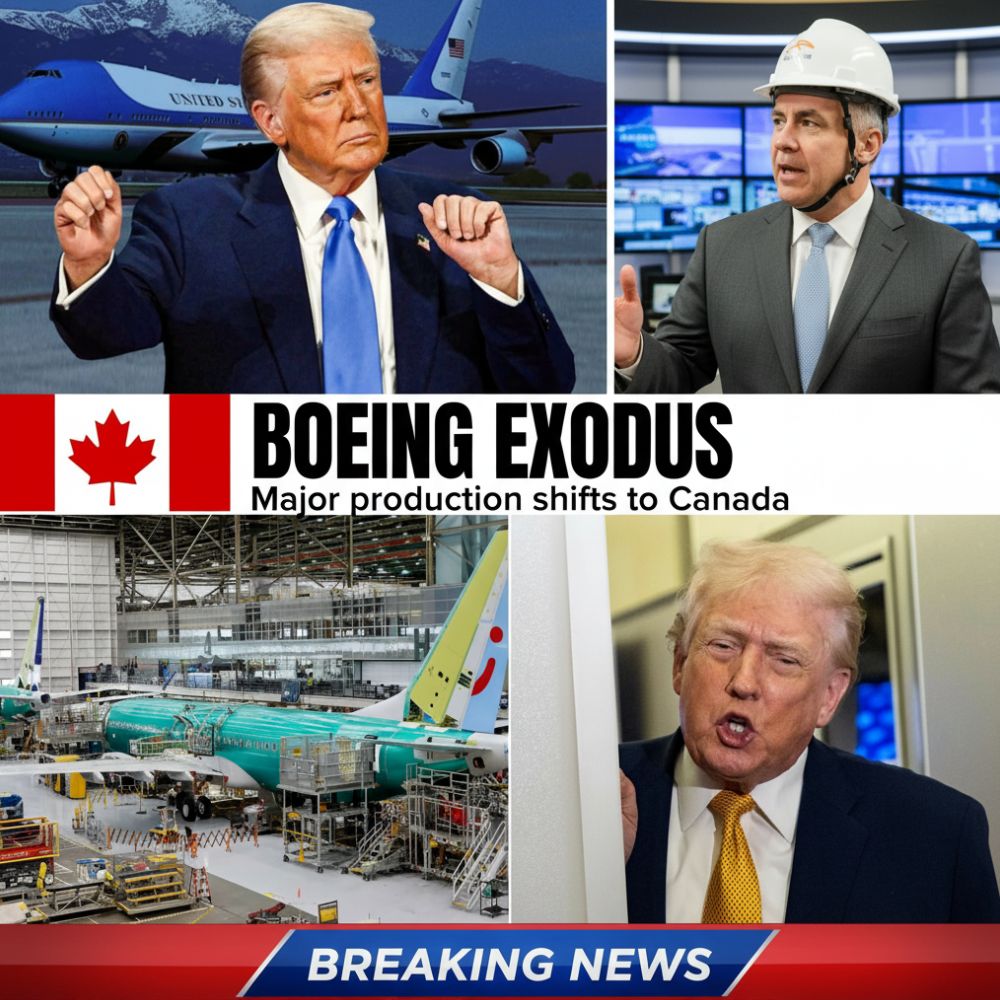
Boeing, the iconic American planemaker and a crown jewel of U.S. manufacturing, has reportedly begun shifting significant production work to Canada — a move that analysts are calling a real-time stress test of Trump-era tariffs and trade hostility.
The shift is not yet public. But according to internal documents and interviews with a dozen executives and suppliers, Boeing has quietly moved fuselage subassemblies and wing-component manufacturing to facilities in Montreal and Winnipeg. More transfers are planned.
“America is becoming harder to plan around,” said a senior Boeing supplier who spoke on condition of anonymity. “Canada feels stable. That is a devastating sentence for U.S. manufacturing to hear.”
The reasons are multiple. Trump-era tariffs on aluminum and steel, which President Biden largely retained, have increased Boeing’s material costs by an estimated 12 percent. Retaliatory tariffs from Europe and Asia have disrupted complex global supply chains.
Add to that the threat of new trade battles, labor shortages in key U.S. regions, and a regulatory environment that suppliers describe as “increasingly unpredictable,” and the calculus shifts.
“Certainty is worth more than tax breaks,” said Richard Aboulafia, an aerospace analyst. “Canada is offering certainty. The United States is offering chaos. Boeing is voting with its feet.”
For American workers, the shift feels like a gut punch. Washington state, Kansas and South Carolina — home to Boeing’s major U.S. assembly lines — have already seen layoffs in supplier networks. More are expected.
“It’s not a factory closure overnight,” said a union representative in Everett, Washington. “It’s a slow bleed. A contract here, a subassembly there. Eventually, you look up and half the plane is built somewhere else.”
For Canada, the moment is one of unexpected leverage. High-skill aerospace jobs are arriving faster than anyone predicted. Quebec’s aerospace sector, already a global hub for Bombardier and Pratt & Whitney Canada, is expanding rapidly.
“We didn’t steal these jobs,” said a senior Canadian trade official. “We inherited them. American trade policy pushed them across the border, and we simply opened the door.”
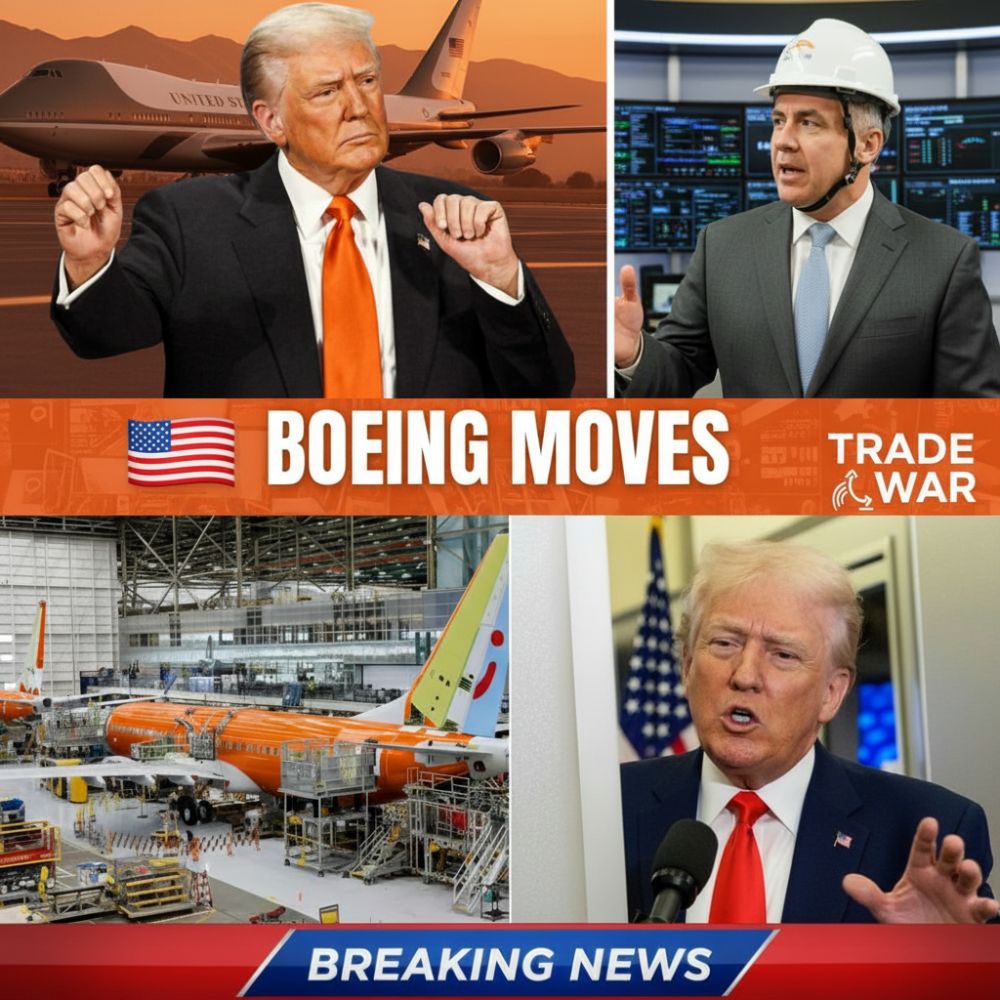
The Boeing shift is particularly symbolic. The company has long been intertwined with American industrial identity — from the B-17 bombers of World War II to the 787 Dreamliner of today. If Boeing adjusts course, the question looms: how many other flagship companies might follow?
Already, whispers have emerged that General Electric is reviewing turbine production options in Ontario. Caterpillar has quietly expanded its British Columbia logistics hub. Even Tesla, despite its CEO’s public alignment with Trump, has increased battery-component sourcing from Canadian suppliers.
“This is not a conspiracy,” said Mary Lovely, a trade economist at Syracuse University. “This is arithmetic. When you make manufacturing in the United States expensive and unpredictable, companies do the math. The math does not favor America.”
Boeing declined to comment for this story, citing “ongoing commercial discussions.” But a company spokesperson noted that Boeing has had a presence in Canada for nearly a century and that “supply chain decisions are made based on efficiency, not politics.”
Critics are unconvinced. “That’s corporate spin,” Aboulafia said. “Efficiency used to mean building in America. Now efficiency means building anywhere but America. That is a policy failure, not a market outcome.”
The political response in Washington has been muted. Trade hawks who championed tariffs as a tool to force manufacturing back to the United States are now confronting the opposite result: manufacturing leaving for countries that did not pick a fight.
“Tariffs were supposed to bring jobs home,” said Senator Maria Cantwell, Democrat of Washington. “Instead, they are shipping them to Canada. That is not a win. That is a self-inflicted wound.”
For Canadian workers, the irony is not lost. After years of watching manufacturing drift to Mexico and Asia, Canada is suddenly a beneficiary of American trade aggression — stable, predictable, and just across a relatively peaceful border..
“I never thought I’d thank President Trump,” said a machinist in Winnipeg, now assembling Boeing components that were once made in Kansas. “But here we are.”
The hum of U.S. factory floors is not gone. But it is quieter than it was. And across the border, the surge of activity has only just begun. For Washington, the alarm is ringing. Whether anyone is listening remains an open question.