The material presents an intense and highly emotional narrative centered on allegations involving Congresswoman Ilhan Omar, Somali-American communities in Minnesota, and broader claims of fraud, immigration violations, and government corruption.
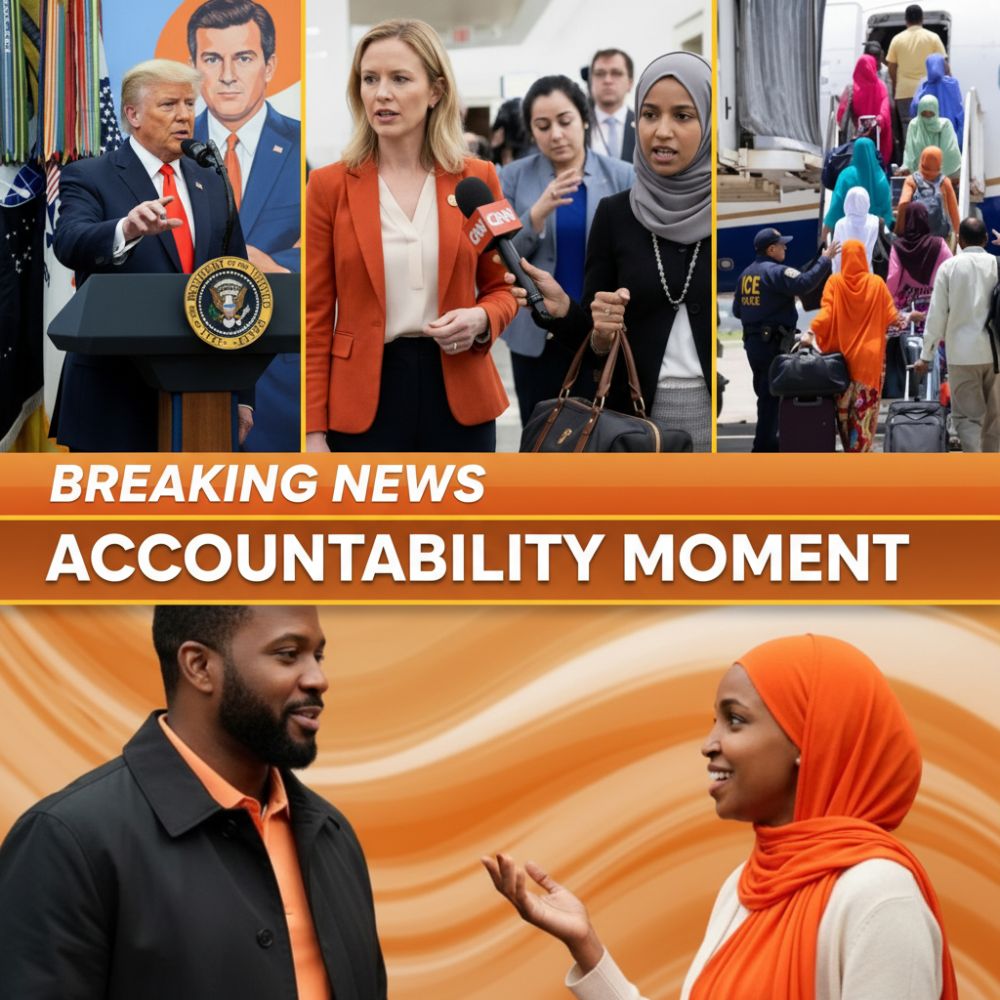
It blends commentary, interview clips, political statements, and personal opinion into a single storyline that suggests a large-scale, coordinated scheme is being exposed .
At the core of the content are real events that have been widely reported—particularly fraud cases in Minnesota, including the “Feeding Our Future” scandal.
Federal investigations have indeed led to dozens of indictments and convictions involving misuse of funds intended for child nutrition programs. These cases are serious and well-documented.
However, the narrative extends these events into sweeping conclusions about entire communities and specific political figures without presenting verified evidence linking them directly.
A major concern in the material is the repeated use of generalizations about Somali immigrants.
Claims that entire groups are involved in fraud, unwilling to work, or part of coordinated efforts to “take over” communities are not supported by credible evidence.
Such statements are not only misleading but also harmful, as they attribute criminal behavior to large populations rather than individuals who have actually been charged or convicted.
The video also relies heavily on commentary from individuals and online personalities, presenting their opinions as if they were established facts.
For example, labeling Ilhan Omar as a central figure behind fraud operations or calling her the “godmother” of such activities is an assertion—not a proven conclusion.
In legal and investigative contexts, such claims would require substantial documented evidence, which is not provided here.
Another significant element is the discussion of immigration fraud allegations. These claims—particularly the long-circulating accusation that Omar married her brother—have been repeatedly denied and have not been proven in court.
Despite being widely shared online, no legal ruling has confirmed these allegations. The material presents them as near-certainties, which is misleading.
The mention of Vice President JD Vance allegedly confirming immigration fraud is also presented without full context.
Public statements by political figures can reflect opinion or intent to investigate, but they do not constitute legal findings.
In the U.S. System, accusations must be proven through due process before any legal consequences—such as denaturalization or deportation—can occur.
Another pattern throughout the material is the blending of separate issues into a single narrative.
Fraud cases, immigration policy, refugee resettlement, welfare programs, and local politics are all connected into one overarching story.
While these topics may intersect in complex ways, combining them without clear evidence creates a misleading sense of a unified conspiracy.
The tone of the content plays a critical role in its impact. It is urgent, accusatory, and often framed as revealing hidden truths that others are ignoring.
This approach encourages viewers to accept conclusions quickly, rather than question the evidence behind them.
Phrases suggesting that “arrests are coming” or that people are “finally being exposed” create a sense of inevitability that is not supported by confirmed developments.
It is also important to highlight what is missing: credible sourcing. Major claims—such as widespread coordinated fraud tied to specific political figures, or imminent federal action against them—would typically be supported by court filings, official statements, or reporting from multiple reputable outlets.
The absence of such evidence is significant. At a broader level, this material reflects a common pattern in viral political content.
Real events provide a foundation, but they are expanded through speculation, emotional language, and selective interpretation.
This creates a narrative that feels convincing, especially when it aligns with existing beliefs, but may not accurately reflect reality.
None of this means that fraud or misconduct should be ignored. On the contrary, proven cases deserve serious attention and accountability.
But accountability depends on evidence, not assumption—and on distinguishing between individuals who have been proven to act illegally and entire groups being broadly accused.
Ultimately, the key takeaway is the importance of careful evaluation. When a story combines strong эмоции, large claims, and clear villains, it is especially important to ask: what is actually proven?
What is alleged? And what is simply being asserted without evidence? Because in a landscape where information spreads instantly, the difference between those three can determine whether we understand the truth—or are simply reacting to a powerful narrative.