A $2,000 Drone and the Shifting Economics of War in Ukraine
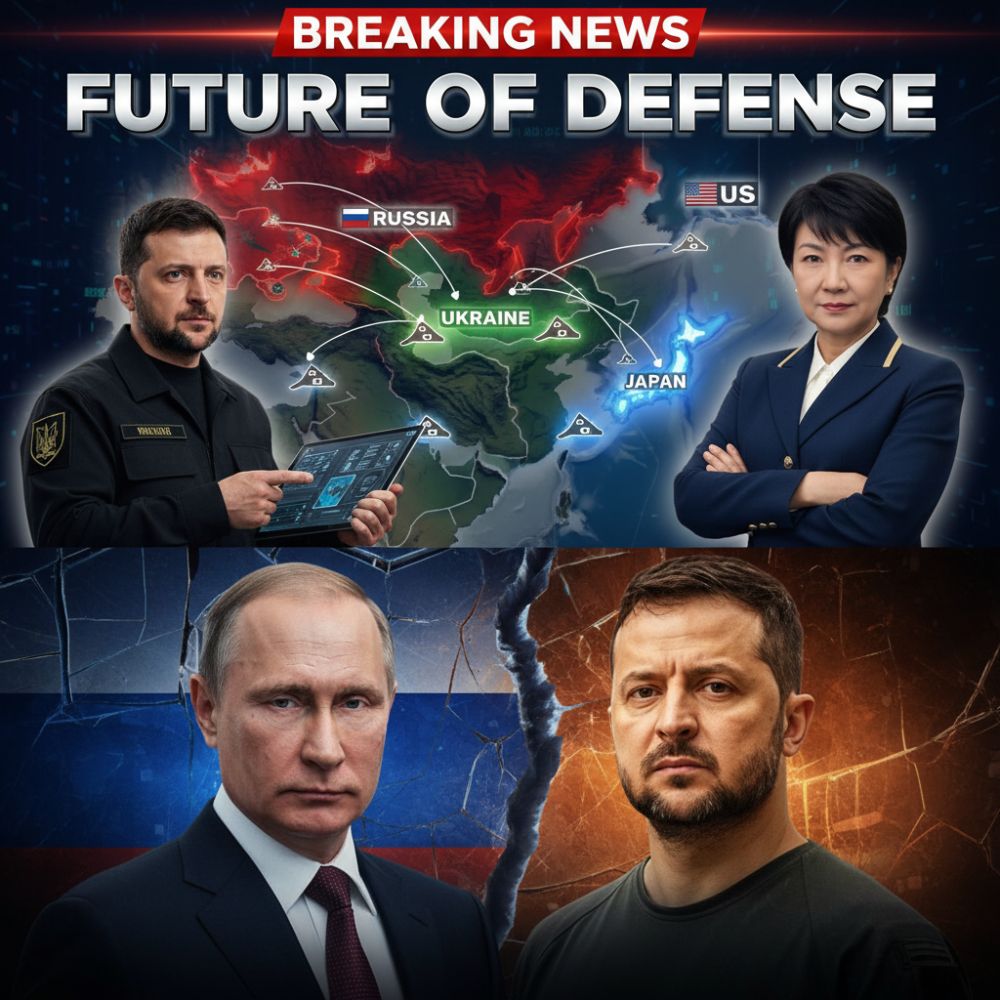
The war in Ukraine has entered a phase where innovation, not just firepower, is determining outcomes. In recent months, a quiet but consequential partnership has emerged between Ukraine and Japan, signaling a shift not only in alliances but in the very economics of modern warfare.
At the center of this development is a new class of interceptor drones—small, fast, and relatively inexpensive systems designed to counter Russia’s persistent aerial assaults. These drones, developed through cooperation between Ukrainian and Japanese firms, represent a calculated response to one of Moscow’s most effective tactics: mass drone attacks.
Russia has relied heavily on low-cost, Iranian-designed Shahed drones to overwhelm Ukrainian defenses. These drones are cheap to produce and can be deployed in large numbers, forcing Ukraine to expend far more expensive air الدفاع missiles to intercept them. The imbalance has long favored Russia.
The introduction of interceptor drones begins to reverse that equation.
Costing roughly $2,000 per unit, these interceptors are designed to neutralize threats that may cost Russia up to $50,000 each. In contrast, traditional air defense systems like Patriot missiles can cost millions per interception. The disparity is stark, and it is reshaping strategic calculations on both sides.
Speed and stealth are key to the interceptor’s effectiveness. Capable of reaching speeds significantly higher than incoming drones, and powered by quiet electric motors, these systems can engage targets with minimal detection. They are, in many ways, optimized for the specific demands of this war.
Yet the innovation is not limited to the technology itself. Perhaps more striking is where these drones are being produced.
Rather than relying on centralized factories—prime targets for Russian strikes—Ukraine has adopted a decentralized manufacturing model. Small, dispersed facilities, some reportedly underground, allow production to continue even under constant threat. This approach reflects a broader adaptation to wartime realities.
The partnership with Japan adds another layer of significance. Traditionally constrained by strict defense export policies, Tokyo’s involvement marks a notable shift. It signals a willingness to engage more directly in global security matters, particularly in response to rising tensions in its own region.
For Ukraine, the benefits extend beyond hardware. Japanese investment provides much-needed financial support to a defense sector strained by war. Access to capital, technology, and production expertise strengthens Ukraine’s ability to sustain and scale its innovations.
There is also a reciprocal dimension to the relationship. Ukraine has offered to share its battlefield experience, particularly in the development of naval drones. These systems have already demonstrated their effectiveness in the Black Sea, where they have challenged Russia’s naval presence despite Ukraine’s limited traditional fleet.
For Japan, an island nation facing its own security concerns, such technologies hold clear appeal. The potential applications extend to coastal defense and maritime surveillance in contested regions across East Asia.
The broader implications of this cooperation are difficult to ignore. What is emerging is not just a bilateral partnership, but a model for a new kind of defense ecosystem—one that prioritizes adaptability, cost-efficiency, and rapid innovation over scale and tradition.
This shift is further reinforced by support from other allies. The United Kingdom, for example, has introduced mobile air defense systems capable of targeting low-altitude threats. Combined with interceptor drones and existing missile systems, Ukraine is building a layered defense network.
Such a network complicates Russia’s strategy. By attacking at multiple altitudes with different types of weapons, Moscow has sought to exploit gaps in Ukraine’s defenses. But as those gaps close, the effectiveness of this approach diminishes.
At the same time, the move toward autonomy in drone operations points to the future of warfare. Developers are working toward systems capable of detecting, tracking, and intercepting targets without human intervention. In an environment where attacks can involve hundreds of drones simultaneously, automation is not just advantageous—it is necessary.
For Russia, these developments present a challenge that is not easily countered. Increasing the number of drones may no longer yield the same results if each additional unit is met with an equally scalable defense.
Ultimately, the significance of the Ukraine-Japan partnership lies in what it reveals about the changing nature of conflict. Power is no longer defined solely by the size of an բանակ or the تكلفة of its weapons. It is increasingly shaped by the ability to innovate under pressure.
In this evolving landscape, a small drone assembled in a hidden workshop may carry as much strategic weight as a multimillion-dollar missile system. And in Ukraine, that reality is being tested in real time.