The “Vance” Variable: Inside the Final Implosion of the Trump-Vance Administration
WASHINGTON D.C. — In the history of the American executive branch, the bond between a President and their Vice President is often described as the ultimate foxhole alliance. It is a relationship built on the absolute necessity of public unity, especially when the winds of war and legal crisis begin to howl.
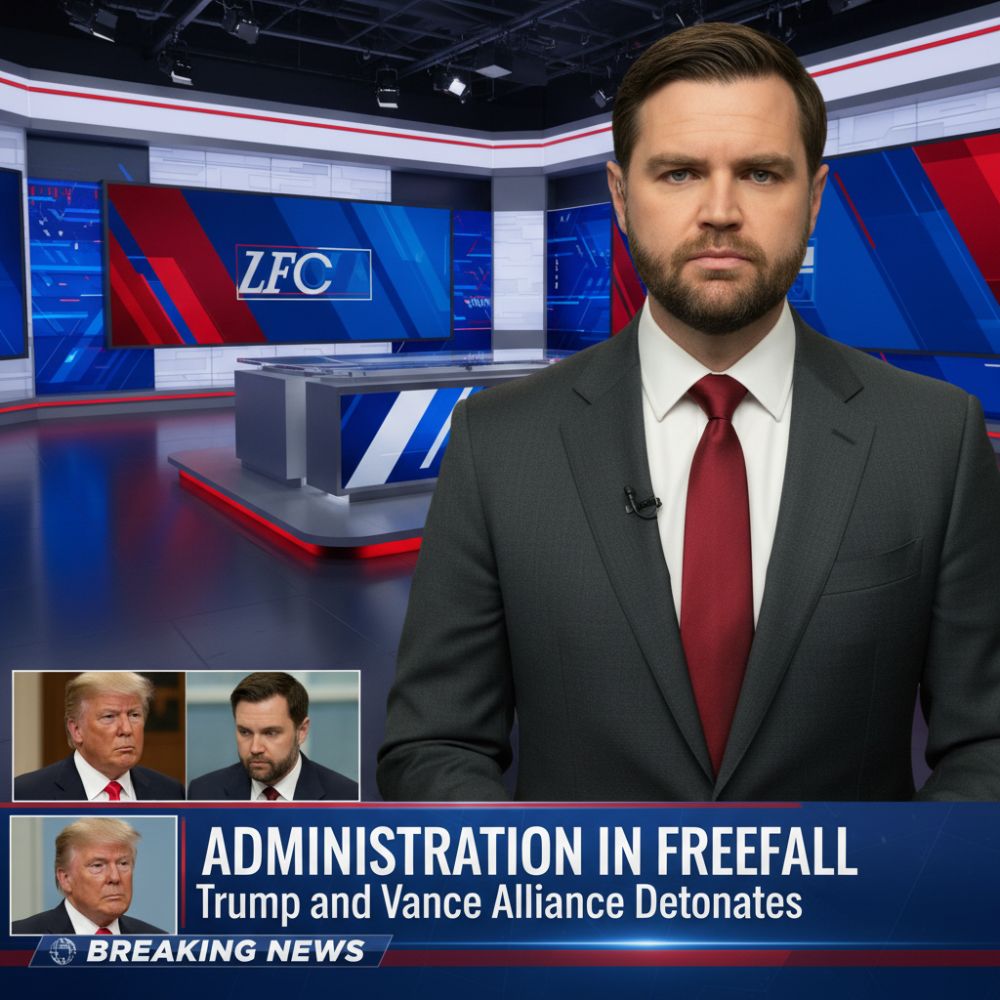
But this week, that alliance didn’t just fray—it detonated on national television.
In a stunning display of what political analysts are calling “terminal desperation,” President Donald J. Trump publicly turned on his Vice President, J.D. Vance, blaming the Iraq War veteran and “America First” heir for the collapse of a high-stakes peace deal with Iran. The fallout has sent the 2026 political landscape into a state of absolute chaos, pushing impeachment odds to a record 72% and signaling the final, structural collapse of the Trump administration.
The Oman Collapse: Why Trump Blamed Vance
The catalyst for this unprecedented public rift was the failure of a diplomatic off-ramp involving the Sultanate of Oman. Vice President Vance, drawing on his personal experience as a veteran skeptical of “endless wars,” had been the primary architect of a limited engagement strategy. He had spent weeks pushing for a diplomatic resolution that would prevent the current Iran conflict from spiraling into a multi-year quagmire.
However, hours after Vance’s envoys made their final case, Tehran rejected the proposal entirely, demanding massive reparations and a total cessation of U.S. hostilities.
Instead of standing by his deputy, President Trump took to the cameras at the White House to deliver a blistering “philosophical” critique of his own VP. Trump claimed that Vance was “less enthusiastic” about the war effort and suggested that Vance’s “caution” was what emboldened Iran to reject the deal.
“Trump is saying if Vance had been more warlike, maybe Iran would have accepted. He is rewriting history in real-time to claim the war wasn’t aggressive enough, ignoring that his own military warned against the very escalation he is now ordering.”
The “Patriot” vs. The “Warlord”: A Philosophical Schism
The friction between the two men isn’t just about one failed deal; it’s about two irreconcilable visions of “America First.”
The Vance Vision: Grounded in his service in Iraq, Vance has argued that a multi-year conflict in Iran would be a strategic disaster for the U.S. economy and military readiness. He recommended diplomacy, exit plans, and limited strikes.
The Trump Vision: Increasingly isolated and facing domestic legal threats, Trump has pivoted toward total escalation. He has recently ordered B-52 grid strikes and massive infrastructure bombing, directly contradicting the “cautious” path Vance spent months constructing.
By publicly stating that Vance was “philosophically different,” Trump didn’t just disagree with a policy—he essentially declared his Vice President an ideological traitor to the movement. This “throwing under the bus” has horrified the GOP base, for whom loyalty is considered the most sacred currency.
The Legal Pincer: Boasberg, Impeachment, and Arrest
The timing of this internal civil war could not be more devastating for the President. The rift with Vance is occurring as a “pincer movement” of legal and legislative forces closes in on the Oval Office:
The Arrest Order: Judge James Boasberg has issued a formal arrest order related to the administration’s defiance of court mandates in “Operation Metro Surge.”
The Supreme Court Rejection: The high court has officially rejected claims of absolute presidential immunity, leaving Trump legally exposed for the first time in his presidency.
The Impeachment Momentum: The House has already moved to impeach, and the public fight with Vance has provided the Senate with the “instability” argument needed to secure a conviction.
Internal projections now show that at least 17 Senate Republicans are ready to vote for removal, viewing Trump as “unstable” and “incapable of managing the team.”
The Death of the 2028 Heir
For the Republican Party, the most tragic consequence of this week’s events is the destruction of J.D. Vance’s political future. Vance was the hand-picked successor, the man supposed to carry the MAGA flame into 2028 and beyond.
By publicly branding Vance as “sabotage” and “cautious,” Trump has effectively made him “damaged goods” within the movement. Analysts suggest that Vance may have no choice but to resign in the coming days to salvage whatever remains of his personal reputation.
“Vance is probably going to step down. Staying is humiliating. Leaving allows him to take the moral high ground and potentially write the definitive account of an administration in freefall.”
A Bloodbath in 2026: The Electoral Consequence
As the administration implodes, the Republican Party is bracing for an electoral catastrophe. New projections show a potential 55-seat loss in the House of Representatives for the GOP in 2026.
The reasons are three-fold:
Independents are disgusted: 70% of independent voters are demanding accountability for the war and the legal defiance.
The Base is Fractured: The public fighting between Trump and Vance has broken the “unity” spell that usually keeps the base energized.
Economic Pain: The escalation in Iran, which Vance tried to stop, has kept gas prices at record highs, hitting voters directly in their wallets.
The Military’s Contingency
Perhaps most concerning is the reaction from the Pentagon. Military leaders, who have long been skeptical of Trump’s “bomb them to the stone ages” rhetoric, now see a Commander-in-Chief who is publicly feuding with his own second-in-command while ordering high-stakes B-52 strikes.
The military chain of command requires stability. When the President and Vice President are at war with each other, that stability vanishes. Sources suggest the Joint Chiefs are already making “continuity of operations” plans, ensuring that the nuclear triad and global deployments remain secure even if the White House collapses into a total succession crisis.
Conclusion: The End of an Era
As we move into the final weeks of this crisis, the narrative is no longer about whether Trump can win the war or beat the charges. It is about how the American democracy survives the “final breakdown” of its leadership.
The “Vance Variable” was supposed to be the stabilizer of the Trump presidency—a young, articulate veteran who could bridge the gap between populist rhetoric and strategic reality. Instead, he has become the ultimate scapegoat for a President who refuses to accept that his own escalations have failed.
The arrest is imminent. The impeachment is proceeding. And the Vice President is being ushered toward the exit. The “Trump Era” isn’t just ending; it is being dismantled by the very man who created it.
Is J.D. Vance the victim of a desperate President, or was his “caution” a genuine failure of leadership? Join the discussion below as we track the final days of the most chaotic administration in modern history.