Trump Explodes After Kimmel and Colbert’s On-Air Attacks Ignite a National Media Firestorm
A fierce media storm erupted this week after late-night hosts Jimmy Kimmel and Stephen Colbert delivered back-to-back monologues that sharply criticized Donald Trump, triggering an emotional and highly public reaction from the former president. What began as comedy quickly escalated into one of the most talked-about clashes between political power and entertainment media in recent years.
The controversy followed a surprise national address by Trump that interrupted multiple prime-time television programs. Commentators described the speech as unusually rapid and disjointed, prompting both Kimmel and Colbert to question—through satire—the decision to preempt scheduled broadcasts. Rather than focusing on policy, the hosts framed the interruption itself as symbolic of growing tension between political authority and public patience.
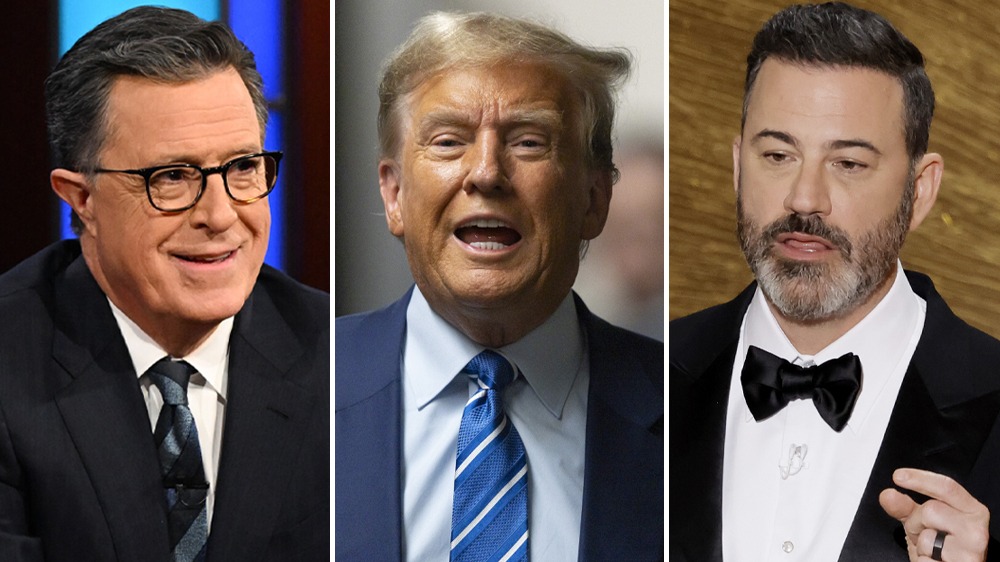
Kimmel addressed the moment head-on, arguing that repeated interruptions of entertainment programming signaled a deeper disregard for norms. His monologue blended humor with concern, suggesting that leadership requires restraint and clarity, not constant disruption. The audience response was immediate, with clips from the segment spreading rapidly across social media platforms.
Colbert took a different approach, choosing not to air Trump’s address live. He later explained that the decision was deliberate, framing it as an editorial choice rather than censorship. His subsequent monologue mocked the interruption itself, portraying it as emblematic of political spectacle overtaking substance—a theme that resonated strongly with viewers.
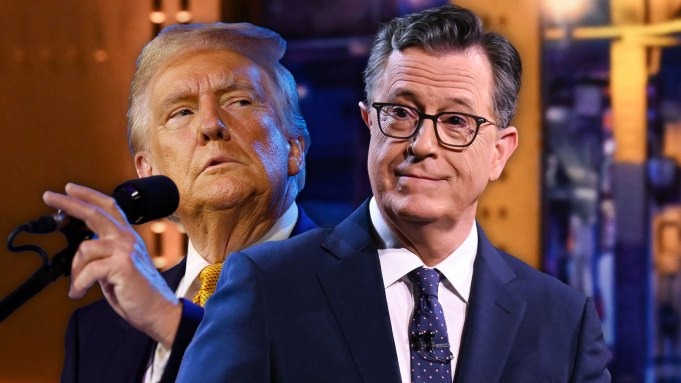
Trump responded angrily on social media, attacking both hosts and celebrating reports of network pressure and legal threats directed at their shows. The former president praised efforts to challenge broadcasters he viewed as hostile, framing the conflict as a fight against what he called “media bias.” Critics, however, warned that such rhetoric risks chilling press freedom and creative expression.
The situation escalated further when reports emerged of regulatory scrutiny aimed at networks airing critical commentary. Media analysts described the moment as alarming, noting that comedians were being treated as political adversaries rather than entertainers. The backlash prompted widespread discussion about the role of satire in democratic societies.
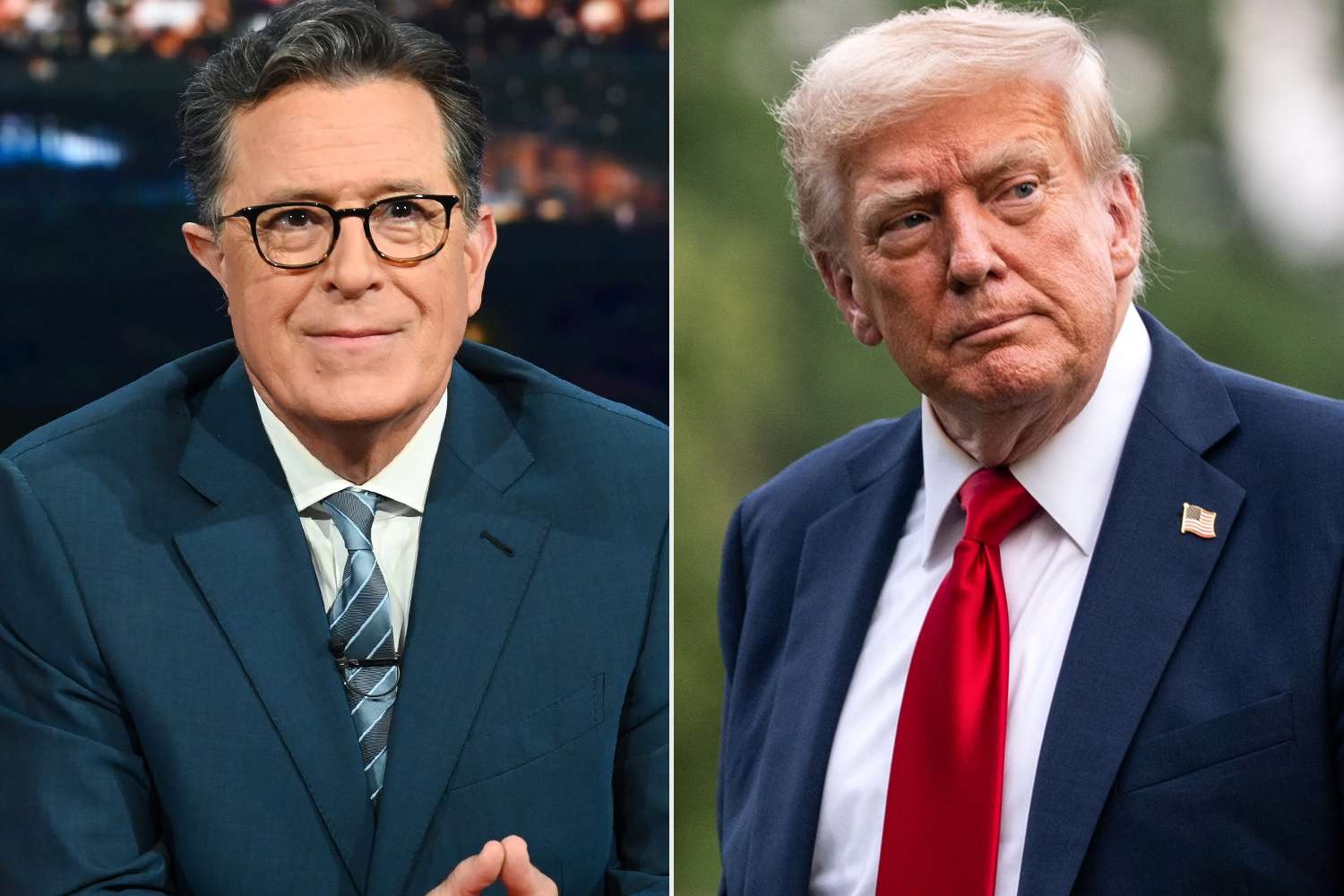
Public reaction split sharply along partisan lines. Supporters of Trump accused late-night television of crossing into activism, while defenders of Kimmel and Colbert argued that satire has long served as a check on power. Hashtags related to the broadcasts trended nationwide, underscoring the scale of public engagement.
As the dust settles, the episode highlights a broader cultural shift: late-night television is no longer just entertainment but a central arena for political accountability and resistance. Whether viewed as necessary scrutiny or excessive provocation, the clash between Trump and America’s top comedians has left a lasting imprint on the media landscape—one that underscores how fragile the line between power, criticism, and free expression has become.