Volkswagen Ditches U.S., Pours $7 Billion Into Canadian Gigafactory as Tariffs Backfire
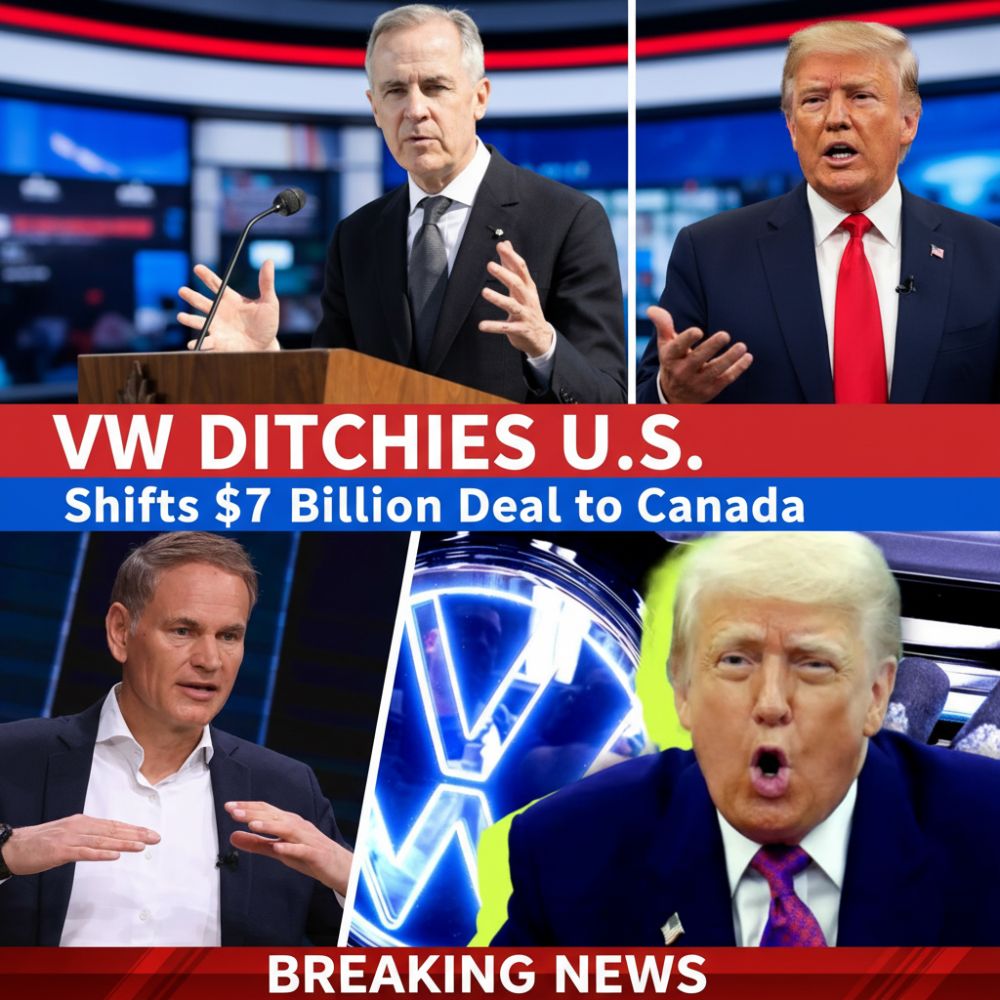
Volkswagen announced on Thursday that it will redirect its planned North American electric vehicle battery investment to Canada, abandoning previously considered U.S. sites in a decision that underscores the unintended consequences of President Trump’s trade tariffs.
The German automaker confirmed that its $7 billion PowerCo gigafactory will proceed in St. Thomas, Ontario, a city halfway between Detroit and Toronto. Just six months ago, company executives had been weighing locations in Michigan and Ohio.
The reversal came after months of internal cost modeling. According to documents reviewed by The Times, Volkswagen calculated that U.S. import tariffs on European vehicle components would add nearly $1.2 billion annually to its North American operations over the next decade.
“We follow the economics,” said Thomas Schmall, Volkswagen’s board member for technology, in a brief statement. “Canada offered stability, predictable trade rules, and direct access to critical minerals. The United States offered uncertainty.”
The decision represents a significant blow to the Biden-era industrial policy that had successfully lured foreign investment to American soil. Those incentives remain on the books, but global automakers have grown wary of sudden tariff shifts.
Volkswagen is not alone. Industry sources indicate that at least three other European automakers are reviewing their U.S. manufacturing footprints. The common thread: fear that vehicles or components imported from Europe could be hit with punitive tariffs at any moment.
“Tariffs were supposed to bring factories back to America,” said Kristin Dziczek, an auto industry analyst based in Chicago. “Instead, they’re sending them to Canada. That’s not a win. That’s a self-inflicted wound.”
The St. Thomas gigafactory will be Volkswagen’s largest battery cell plant outside Germany, employing roughly 3,000 workers and producing enough cells to power more than one million electric vehicles annually. Construction is already underway.
Canadian Prime Minister Mark Carney seized on the announcement during a press conference in Ottawa. “This is what happens when you build walls instead of bridges,” he said. “Canada is open. Canada is reliable. Canada is ready to power the clean economy.”
The contrast with the Trump administration’s response was striking. The White House issued a brief statement calling Volkswagen’s decision “disappointing” and hinting at possible retaliation, though officials offered no specifics.
Inside the administration, however, frustration was palpable. Trade advisers had privately assured the president that tariffs would pressure European automakers to expand U.S. production. Instead, those companies appear to be shifting investment to America’s northern neighbor.

Volkswagen’s calculus involved more than tariffs. Canada recently finalized investment tax credits for clean technology manufacturing that rival the U.S. Inflation Reduction Act. The country also offers streamlined permitting and abundant hydroelectric power.
Perhaps most critically, Canada has secured access to key battery minerals—lithium, nickel, cobalt—through newly signed trade agreements with Australia and several African nations. The United States remains heavily dependent on imports from China.
“The Canadians thought three moves ahead,” said Daniel Brenden, a supply chain consultant who has advised both governments. “They knew tariffs were coming. They built the alternative route before anyone realized they needed one.”
For the city of St. Thomas, the announcement was transformative. Mayor Joe Preston stood beside Volkswagen executives as the news broke, calling it “the single largest economic development in our history.” Local hotels are already fully booked with construction contractors.
For the American towns that lost the factory, the mood was grim. Officials in Lima, Ohio, and Lansing, Michigan, had spent months preparing incentive packages. Both communities now face the prospect of watching thousands of jobs land an hour north of the border.
Volkswagen’s decision also complicates the broader North American auto landscape. The company’s existing assembly plant in Chattanooga, Tennessee, will now rely on battery cells shipped from Ontario. Those cells will cross the border twice—first as components, later inside finished vehicles.
Each crossing invites new tariff exposure. Analysts warn that Volkswagen may eventually reconsider its U.S. assembly footprint entirely if trade tensions continue to escalate.
“This is not the end,” Dziczek said. “This is the beginning of a long, slow unraveling of integrated North American auto production. And everyone—American workers, Canadian workers, Mexican workers—will be poorer for it.”
Back in St. Thomas, the earth is already moving. Excavators dig foundations where cornfields stood last summer. Volkswagen’s blue and white logo hangs from a temporary construction trailer. Workers in hard hats stream past a sign that reads, in English and German: “Welcome to the Future.”
Meanwhile, across the border in Detroit, union representatives watched the news with a mix of anger and resignation. “We were told tariffs would protect us,” said one United Auto Workers official who requested anonymity. “Instead, they just built our competition forty miles away. On the other side of a line on a map.”