OTTAWA — In a move that signals a dramatic realignment of global economic and security partnerships, Canada and the European Union have finalized a sweeping agreement that officials on both sides of the Atlantic are calling the most significant bilateral accord in a generation — one that analysts say will fundamentally alter the balance of power in North America and beyond.
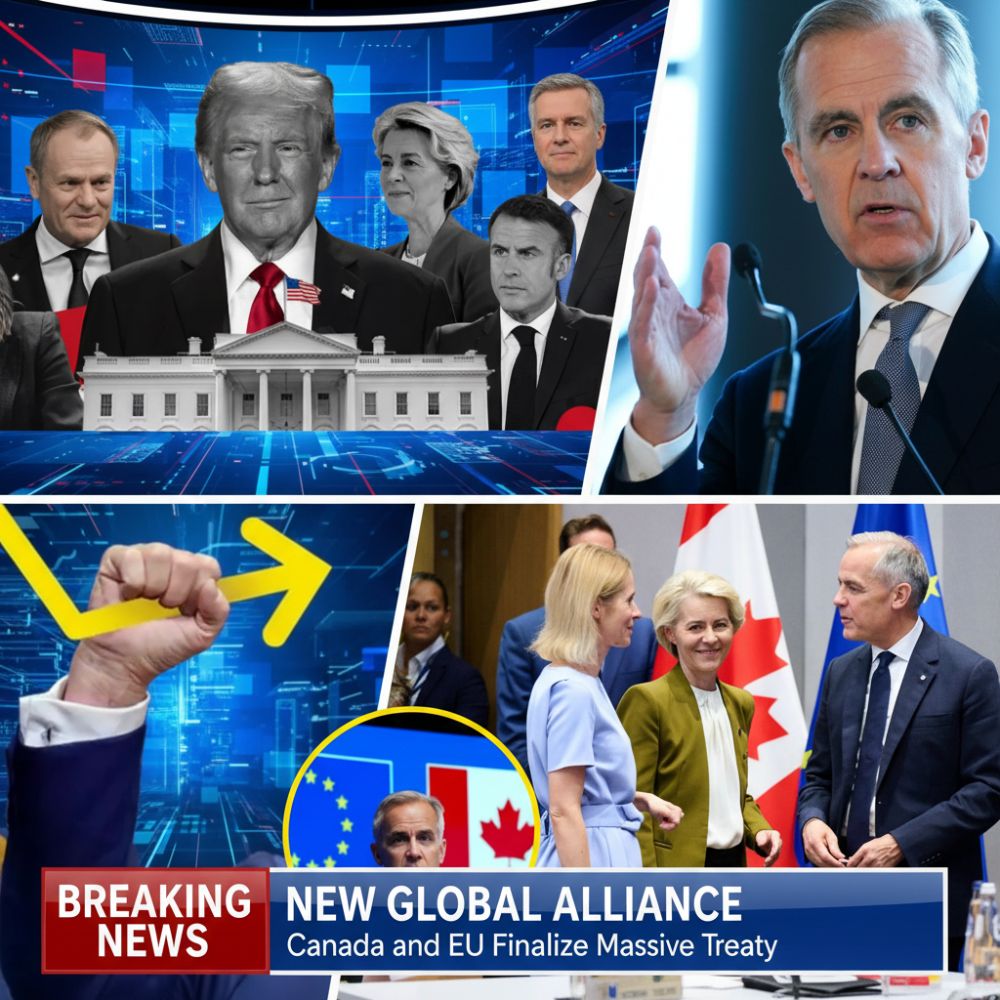
The treaty, finalized in closed-door negotiations over the past eight months and confirmed by Canadian officials late Wednesday, encompasses deep cooperation on energy security, critical minerals supply chains, defense procurement, and trade. For the first time, it formally ties Canada’s resource wealth to Europe’s industrial base in a framework explicitly designed to reduce dependence on the United States.
“This is not merely a trade agreement,” said a senior Canadian government official who spoke on condition of anonymity to discuss the sensitive negotiations. “This is a fundamental repositioning. We are building a bridge across the Atlantic that ensures Canada has options — real, structural options — in a world where our largest neighbor has become increasingly unreliable.”
The agreement, which has been in development since early last year, came together with surprising speed in recent weeks. European Commission officials flew to Ottawa for a final round of talks that concluded just before dawn on Tuesday, with both sides signing a memorandum of understanding that now awaits formal ratification.
While the full text has not been released, officials familiar with its contents described a package that includes guaranteed access for European manufacturers to Canadian rare earth minerals, joint investment in Arctic infrastructure and defense, the creation of a transatlantic energy corridor for liquefied natural gas, and streamlined regulatory standards that effectively create a unified market for key sectors.
For Canada, the treaty represents a historic departure from a foreign policy framework that has, for decades, prioritized the relationship with Washington above all others. For the European Union, it provides a stable, like-minded partner for critical resources at a moment when the bloc has been scrambling to secure supply chains outside the reach of both American and Chinese influence.
“Canada has long been the junior partner in North America, dependent on the United States for trade, security, and economic stability,” said Chrystia Freeland, the former deputy prime minister and a longtime advocate of diversifying Canada’s international relationships. “This agreement changes that calculus. It gives Canada leverage, independence, and a seat at a different table.”
The reaction from Washington was swift and, according to multiple sources, furious. Within hours of the news breaking, senior Trump administration officials convened an emergency meeting at the White House to assess the implications. President Trump, who has repeatedly clashed with Ottawa over trade and defense spending, was said to be “deeply angered” by what one adviser described as “a betrayal by a country we’ve subsidized for generations.”
The White House issued a statement late Wednesday expressing “grave concern” over the agreement and hinting at potential retaliatory measures. “The United States has been Canada’s closest ally and largest trading partner for over a century,” the statement read. “We will not stand by while our economic and security interests are undermined by actions taken in bad faith.”
The stakes extend far beyond diplomatic posturing. The treaty effectively rewrites the rules of North American energy integration, a cornerstone of the U.S.-Canada relationship since the 1980s. By committing to a long-term energy partnership with Europe, Canada is signaling that it will no longer prioritize American markets for its vast oil, gas, and hydroelectric resources.
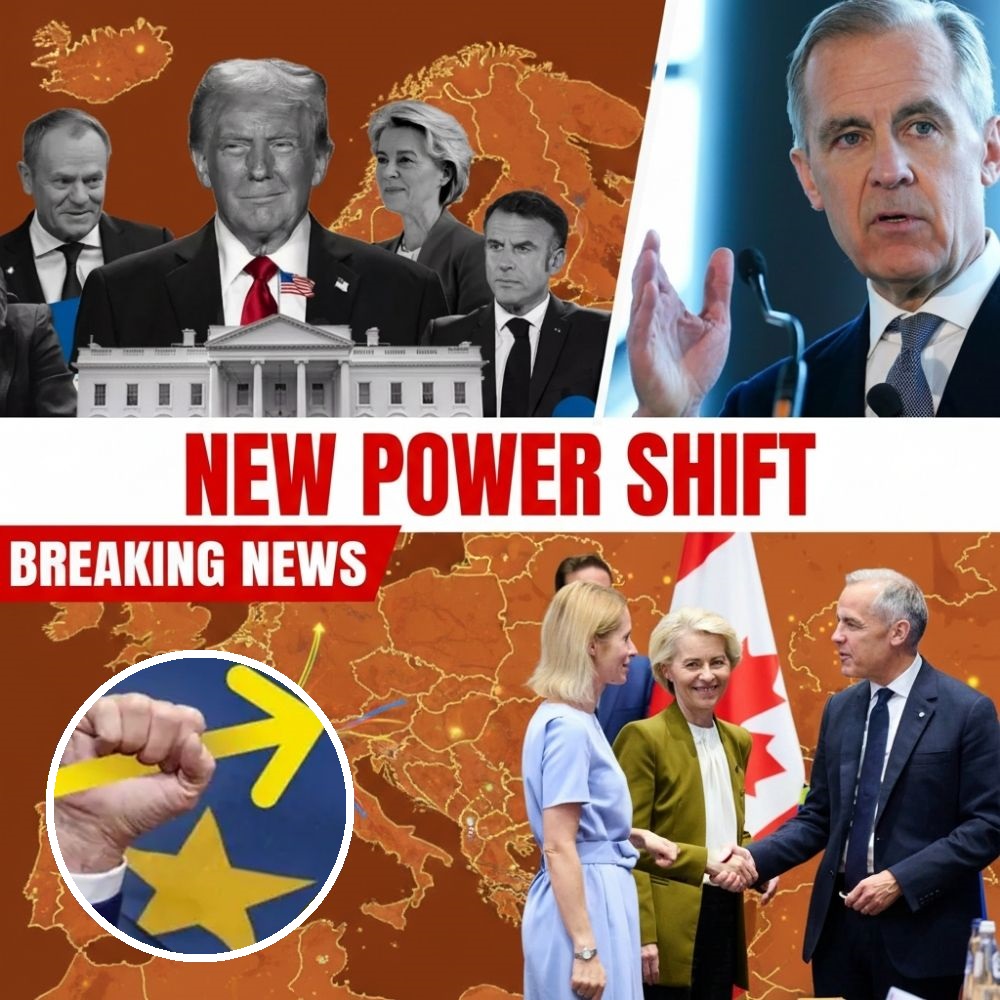
In Europe, the reception was markedly different. Ursula von der Leyen, president of the European Commission, hailed the agreement as “a new chapter in transatlantic cooperation — one built on mutual interest, shared values, and strategic autonomy.”
“Europe needs reliable partners,” she said in a statement from Brussels. “Canada has shown that it is ready to stand with us, not simply as a supplier, but as a sovereign nation charting its own course.”
For businesses on both sides of the Atlantic, the agreement opens up new possibilities — and new uncertainties. Canadian energy and mining companies stand to gain guaranteed access to European markets, potentially reducing their exposure to the cyclical whims of American trade policy. European manufacturers, particularly in the automotive and defense sectors, gain a stable partner for critical materials that have become flashpoints in the U.S.-China trade war.
But the agreement also carries risks. Analysts warned that the treaty could provoke a sharp escalation in trade tensions with Washington, including potential tariffs, border restrictions, or even a reexamination of the United States-Mexico-Canada Agreement, which governs North American trade.
“This is a calculated gamble,” said Laura Dawson, executive director of the Center for North American Prosperity and Security. “Canada is betting that the long-term benefits of diversification outweigh the short-term costs of angering Washington. But the scale of this agreement suggests they are not just betting — they are all in.”
In Ottawa, Prime Minister Mark Carney’s government has been careful to frame the treaty not as a rejection of the United States, but as a natural evolution of Canadian sovereignty. Speaking to reporters following the announcement, Mr. Carney emphasized that Canada remains committed to its relationship with Washington, but would no longer subordinate its interests to American demands.
“Canada has always been a nation that builds bridges,” Mr. Carney said. “We are building bridges to Europe, to Asia, to partners around the world who share our values and our vision. That is what sovereign nations do.”
The coming weeks will determine whether Washington views the agreement as a manageable adjustment or a provocation demanding retaliation. Either way, the treaty represents a seismic shift in the architecture of Western alliances — one that has been quietly taking shape for years but has now exploded into the open.
As one European diplomat put it, speaking on condition of anonymity: “The old assumptions about North America are gone. Canada has made its choice. Now everyone has to live with the consequences.”