BRUSSELS — In a move that has sent shockwaves through the alliance and drawn the fury of President Trump, Prime Minister Mark Carney’s government has formally met NATO’s longstanding two percent defense spending target for the first time since the end of the Cold War — a development that Canadian officials are framing as a decisive shift in transatlantic power dynamics .
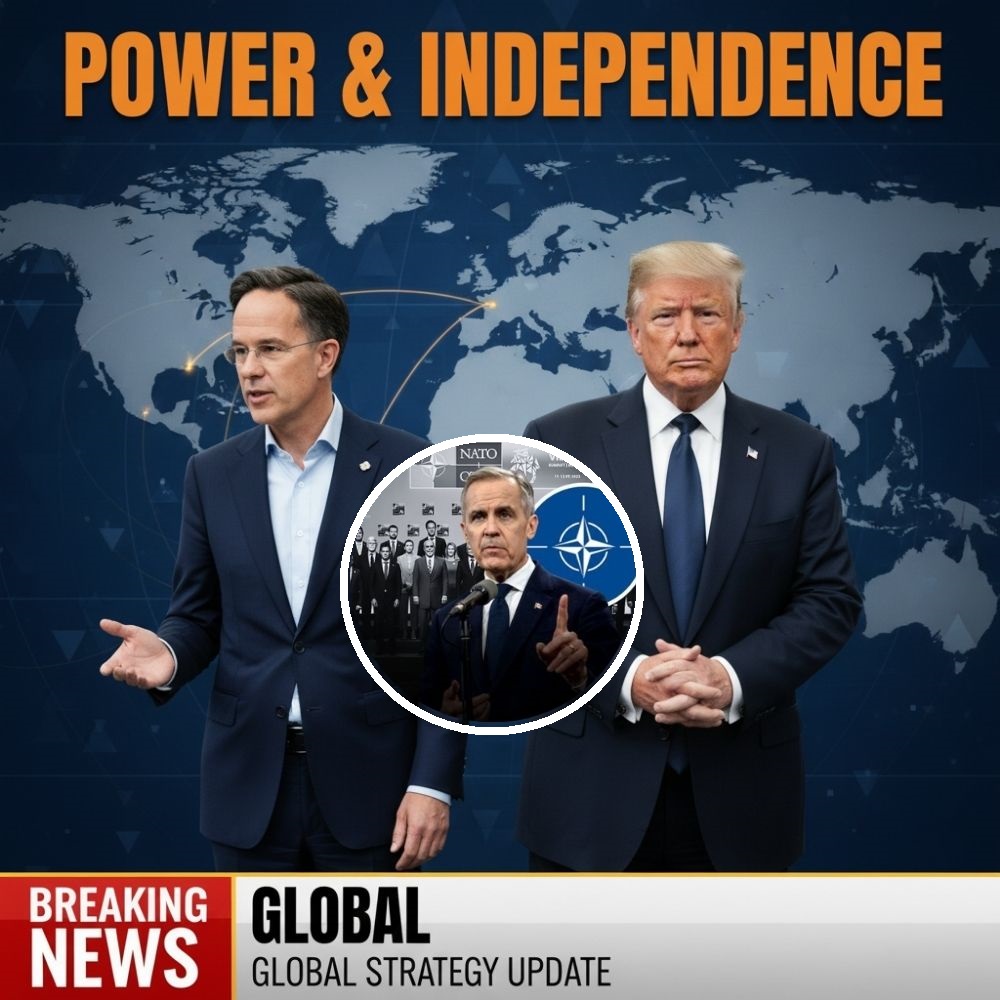
The announcement, contained in NATO’s annual report released Thursday, confirmed that Canada spent just over $63 billion on national defense in 2025, reaching the benchmark that successive Canadian governments had failed to achieve for more than a decade . For the Carney administration, the achievement represents more than a budgetary milestone; it is being wielded as a declaration of strategic independence.
“For the last ten months, Canada’s new government has been working with unprecedented speed and scale,” Mr. Carney told reporters in Halifax on Thursday. “We’re just getting started” .
The timing could not be more inflammatory from Washington’s perspective. President Trump has long made Canada a target of his criticism over defense spending, repeatedly warning NATO countries not to expect American protection if they failed to pay their share . Now, with Canada finally meeting the benchmark, the administration finds itself facing an Ottawa that appears emboldened rather than conciliatory.
NATO Secretary-General Mark Rutte acknowledged the role of American pressure in driving the change, crediting Mr. Trump’s “loud rhetoric about free riders in the alliance” for pushing every member to meet the target .
“I don’t believe that without the present American administration the whole of NATO would have been meeting the two percent at the end of 2025,” Mr. Rutte said in Brussels .
But inside the Carney government, officials say the spending surge was about more than satisfying American demands. The prime minister has cast the military buildup as a partial antidote to the economic and security threats posed by Mr. Trump’s tariff war and his repeated comments about annexing Canada as the “51st state” .
“We ran for office recognizing the world had changed,” Mr. Carney said, “recognizing the importance of securing Canada, defending Canada, fulfilling our commitments” .
The shift has been rapid and dramatic. When Mr. Carney took office, Canada was spending approximately 1.47 percent of GDP on defense, placing it among the laggards of the 32-member alliance . His government accelerated a timeline that had originally targeted 2030, and then moved it forward again, announcing an additional $9 billion in defense spending last summer .
Defense Minister David McGuinty described the strategy as one of relentless execution: “hitting singles every morning — no home runs” . The spending has funded military pay raises, new rifles, munitions, drones, aircraft, and improved housing for service members .
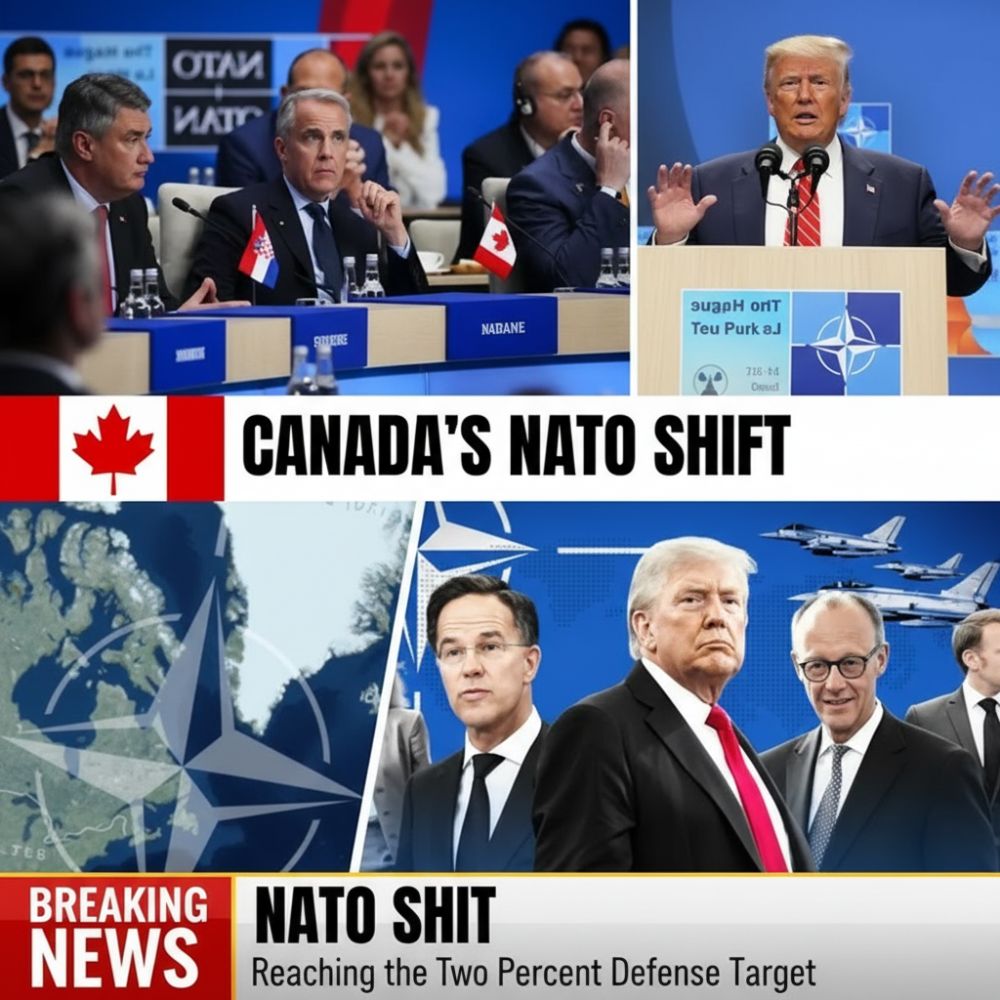
“The speed with which we moved was a little bit unusual,” Mr. McGuinty said. “I’ve been around Ottawa a long time — it’s the fastest I’ve ever seen” .
But the achievement has done little to ease tensions with Washington. In recent days, the White House has expressed fury over what it perceives as ingratitude from an ally it has long protected. Mr. Trump has repeatedly mocked Mr. Carney, calling him “governor” and suggesting Canada is wholly dependent on the United States for its survival .
Privately, administration officials are seething. The idea that Canada would use its newfound spending compliance as a platform for defiance has landed poorly in the West Wing, where the president’s advisers see it as a provocation.
Canadian officials, for their part, have made no secret of their intent. Mr. Carney has committed to reaching the new NATO target — an even steeper spending level of five percent of GDP — by 2035 . He has also signaled that Canada will seek to reduce the portion of its defense purchasing that goes to American companies, currently about 70 percent .
The government is considering replacing future purchases of F-35 fighter jets from the United States with Swedish Gripen planes that could be manufactured in Canada . Industry Minister Mélanie Joly has said any submarine deal must come with commitments from foreign automakers to open factories in Canada — a direct effort to reduce reliance on the United States as a trading partner .
For now, the response from Washington has been a mix of fury and calculation. Some of the president’s allies, including Steve Bannon, have taken to labeling Canada “hostile” and framing it as a threat to U.S. hemispheric defense . Others warn that the administration would be wise to recognize the shift for what it is: a signal that the old assumptions about American dominance can no longer be taken for granted.
As Mr. Carney put it in a speech earlier this year at the World Economic Forum in Davos: “The strong have their power. But we also have some capabilities — to stop pretending, to face reality, to strengthen ourselves at home and stand together” .
The question now is whether the rupture between Ottawa and Washington represents a temporary strain in a long alliance or a more permanent realignment. With Mr. Carney pledging to spend more, buy differently, and assert Canada’s sovereignty with a new edge, the era of quiet Canadian deference to American demands appears to be over.
“We’re just getting started,” the prime minister said Thursday . In Washington, those words were heard not as a promise of cooperation, but as a warning.