BREAKING: Donald Trump Faces Scrutiny After Surprising Claim Draws Media Attention
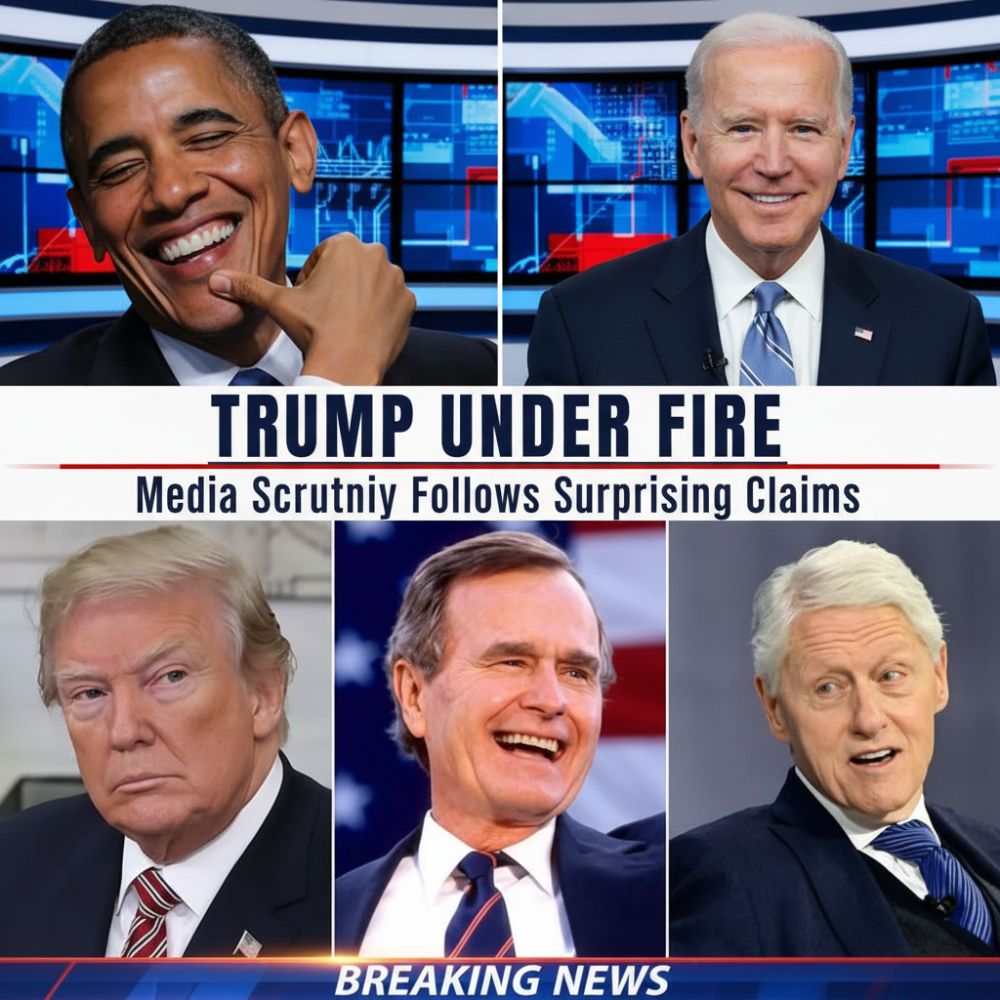
A new wave of political scrutiny is building after a surprising claim made by Donald Trump prompted reporters and analysts to take a closer look at the details behind it. The statement, delivered during a recent public appearance and later amplified through social media, has quickly become a focal point of national discussion.
The claim itself, while attention-grabbing, has sparked questions about its accuracy, context, and broader implications. Journalists across multiple outlets began examining the assertion within hours, seeking to verify the information and understand how it fits into ongoing political narratives.
Initial reports suggest that the claim touches on a complex issue—one that involves overlapping factors such as policy decisions, historical context, and evolving data. As a result, efforts to evaluate its validity have proven challenging, with different interpretations emerging depending on the sources and perspectives involved.
Media organizations have responded by launching detailed fact-checking efforts. Some have highlighted areas where the claim appears to align with certain data points, while others have identified inconsistencies or gaps that require further clarification. This mixed picture has only intensified public interest, as audiences look for clear answers.
In response to the growing attention, Donald Trump defended his statement, insisting that it reflects a broader reality that he believes is not being fully acknowledged. He emphasized that his remarks were intended to draw attention to an issue he considers important, even if the specifics are subject to debate.
“This is something people need to look at closely,” he said, suggesting that the conversation itself is as significant as the claim.
Supporters have echoed this view, arguing that the statement highlights concerns that deserve greater scrutiny. They contend that focusing solely on technical details risks overlooking larger patterns or trends that may be affecting the country.
Critics, however, have called for greater precision and accountability, emphasizing the importance of accuracy in public statements—especially from high-profile figures. They argue that unclear or disputed claims can contribute to confusion and undermine public trust.
“Public figures have a responsibility to ensure that what they say is grounded in verifiable information,” one analyst noted. “Otherwise, it becomes difficult for people to separate fact from interpretation.”
The situation underscores the increasingly complex relationship between politics and information in the digital age. A single statement can trigger a cascade of reactions, from immediate public responses to in-depth journalistic investigations. The speed at which information spreads often means that claims are widely discussed before they are fully examined.
Social media has played a central role in amplifying the issue. Clips of the original statement, along with commentary and analysis, have circulated widely, generating millions of views and a broad spectrum of reactions. Hashtags related to Donald Trump began trending shortly after the claim gained attention, reflecting the intensity of the public response.
Experts note that this dynamic can create a feedback loop, where initial reactions shape subsequent coverage and discussion. “Once a claim goes viral, it takes on a life of its own,” one media analyst explained. “Even as fact-checking progresses, the narrative continues to evolve.”
Political leaders from both parties have been asked to weigh in, though many have approached the situation cautiously. Some have used the moment to emphasize the importance of evidence-based discussion, while others have focused on the broader issues raised by the claim rather than its specific details.
The episode also highlights the role of journalists in navigating a fast-moving information landscape. Fact-checking has become an essential component of modern reporting, requiring careful analysis and, often, collaboration across multiple sources. In cases like this, where information may be incomplete or contested, providing clear and balanced coverage can be particularly challenging.
For the public, the situation serves as a reminder of the importance of critical thinking and media literacy. With so much information available—and often conflicting—understanding how to evaluate sources and interpret claims is more important than ever.
As the investigation into the statement continues, new details may emerge that either clarify or further complicate the picture. In the meantime, the discussion remains active, with commentators and citizens alike debating not only the claim itself but also what it reveals about the current state of political communication.
For Donald Trump, the moment underscores his continued ability to shape national conversations. Whether through policy positions, public appearances, or unexpected statements, he remains a central figure in the political landscape.
Ultimately, the significance of the claim may depend less on its initial impact and more on what follows—how it is examined, how it is understood, and how it influences the broader dialogue.
In a time when information moves faster than ever, moments like this illustrate both the power and the challenge of modern communication. They remind us that behind every headline lies a process of discovery, interpretation, and debate—one that continues to unfold long after the first words are spoken.