WASHINGTON — A simmering trade dispute over potash, the white mineral that feeds the world’s crops, is escalating into a full-blown crisis for American farmers just as planting season gets underway. The threat of new U.S. tariffs on Canadian potash has exposed a dangerous vulnerability in the domestic food supply chain, leaving growers facing the prospect of surging costs and uncertain access to the single most critical input in modern agriculture.
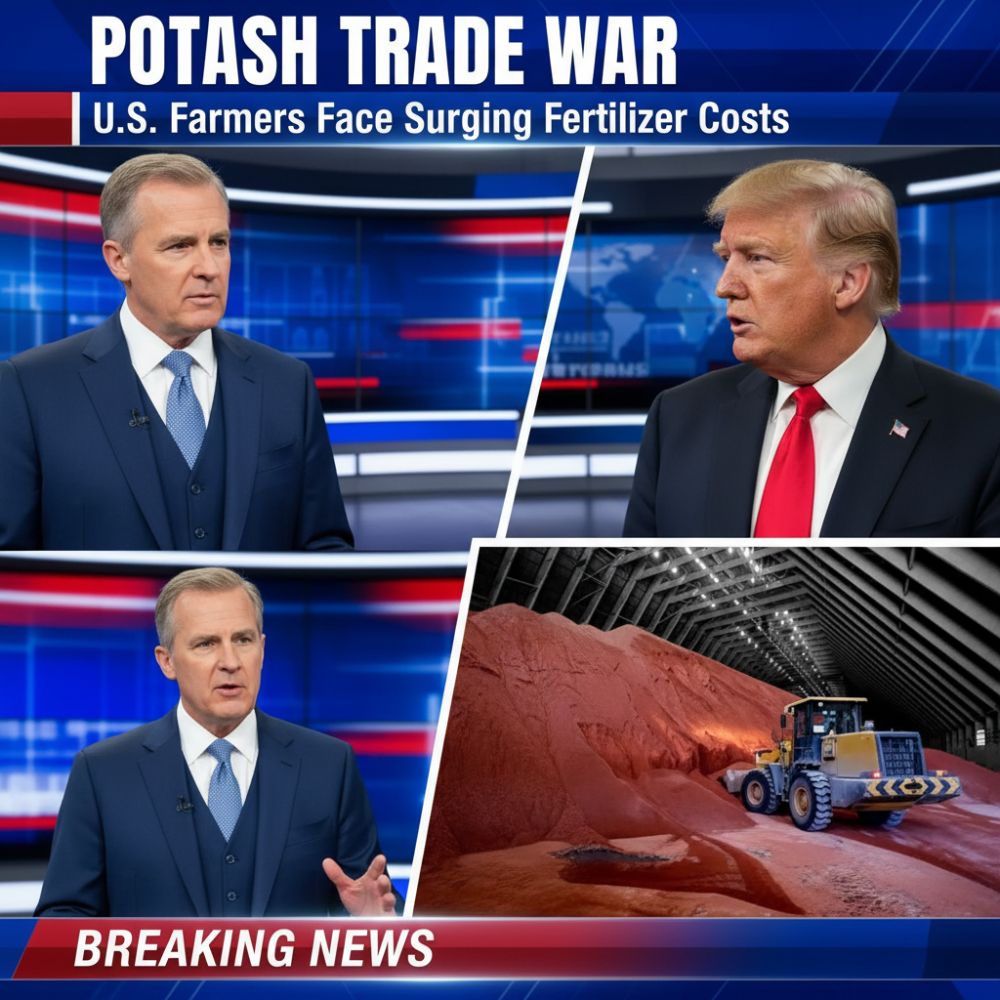
The tension burst into public view after signals emerged that former President Donald J. Trump, now back in office, is considering targeting Canadian potash with punitive tariffs. The move, framed as retaliation in a broader trade dispute, has landed with particular force in America’s heartland, where farmers are preparing to sow corn, wheat, and soybeans across millions of acres.
At the center of the storm is a simple but uncomfortable fact: The United States relies on Canada for roughly 85 percent of its potash imports. There is no domestic mine capable of filling the gap, and new mining projects take years, even decades, to develop.
“You cannot grow a high-yield corn crop in Iowa without Canadian potash,” said Matt Carstens, a fifth-generation farmer in Story County, Iowa. “If that supply gets expensive or disappears, my margins evaporate overnight. And margins are already razor-thin.”
Potash is one of three primary nutrients essential for plant growth, alongside nitrogen and phosphorus. It strengthens root systems, improves drought resistance, and dramatically increases yields. Without it, American crop production would fall sharply, and food prices would almost certainly rise.
Canada produces roughly one-third of the world’s potash, with the vast majority coming from mines in Saskatchewan. Those mines are among the lowest-cost and highest-quality in the world, making them nearly impossible to compete with. For decades, the United States has simply bought what it needed across the longest undefended border in the world.
That comfortable arrangement is now under threat. The proposed tariffs, which could range from 10 to 25 percent, would immediately raise costs for American farmers. Because potash is a commodity with little differentiation, those costs would be passed through directly.
Industry analysts estimate that a 25 percent tariff would add more than $2 billion annually to American farmers’ input costs. That burden would fall hardest on corn and soybean growers in the Midwest, who use potash intensively and operate on tight margins.
“Tariffs on potash are a tax on the American food supply,” said Rob Fox, an agricultural economist at CoBank. “This is not like steel or aluminum. You cannot substitute around potash. You cannot buy a different kind of fertilizer and get the same result. The plant needs potassium, period.”
The timing could hardly be worse. Spring planting is already underway across the southern United States and will soon begin in the Corn Belt. Farmers typically purchase fertilizer months in advance, but many delayed this year hoping trade tensions would ease. Those who waited are now facing a rapidly closing window.
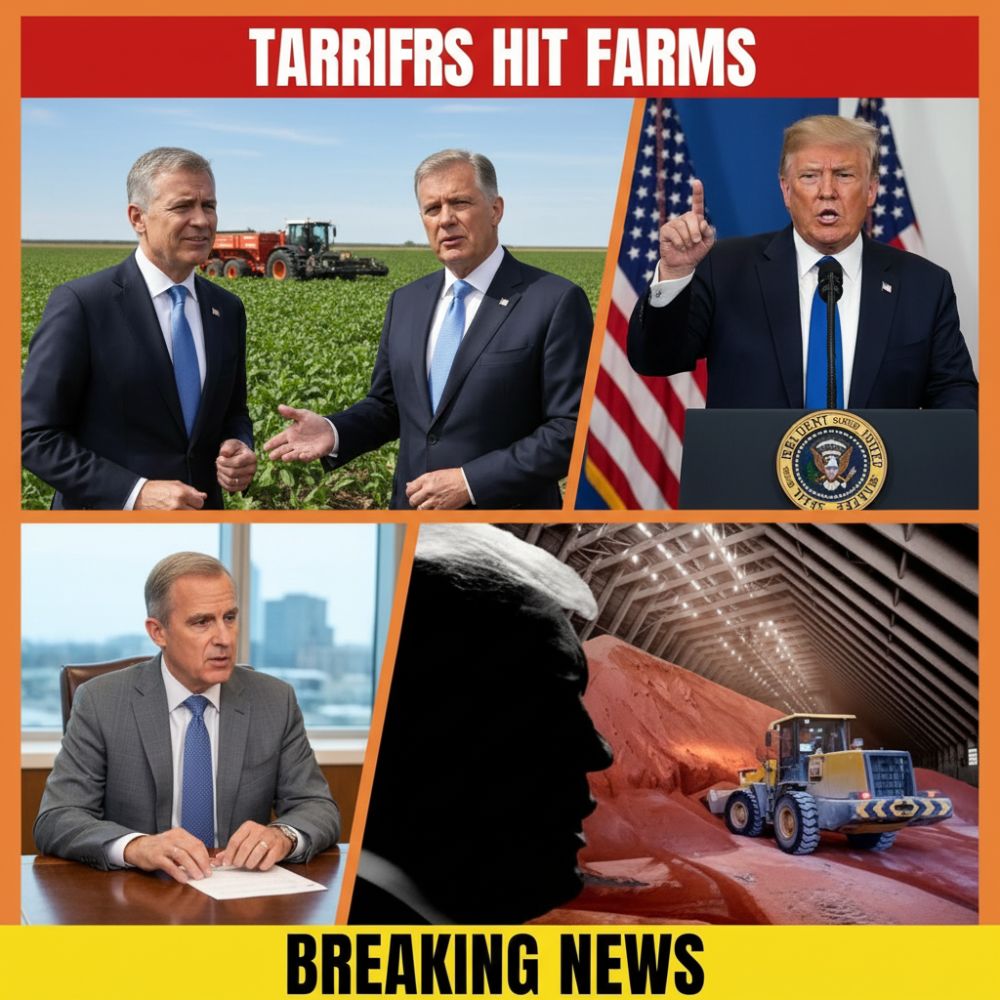
Canada, for its part, is not waiting to see what Washington does. Major Canadian potash producers, including Nutrien and Mosaic, have already begun exploring alternative markets in Europe, Southeast Asia, and Latin America. Those regions are eager for stable, long-term supply agreements, and Canadian exporters are listening.
“If the United States imposes tariffs, we will not simply absorb the cost,” said Ken Seitz, chief executive of Nutrien, the world’s largest potash producer. “We have customers around the world. We will redirect supply to where it is valued.”
That threat carries real consequences for American buyers. If Canadian producers successfully diversify their customer base, the United States could find itself competing for potash on global markets rather than enjoying privileged access from a neighbor. That competition would likely mean higher prices, even without tariffs.
The political dimensions of the dispute are delicate. The U.S. farm belt remains a powerful political constituency, and any policy that raises costs for farmers carries significant electoral risk. Several Republican senators from agricultural states have already privately expressed alarm about the potash proposal.
Yet the administration has framed the tariffs as a necessary response to Canadian trade practices in other sectors, including dairy and lumber. The logic is that pressure must be applied across the board to force concessions from Ottawa. Potash, in this view, is leverage.
Critics argue the leverage flows in the opposite direction. Canada supplies an irreplaceable input to American agriculture. The United States supplies many things Canada can obtain elsewhere. That asymmetry, they say, makes potash a weak point, not a strong one.
“We think we are punishing Canada,” said Mary Lovely, a trade economist at the Peterson Institute for International Economics. “But we are really punishing ourselves. This is a textbook case of shooting at your own foot.”
For American farmers watching the standoff unfold, the calculus is simple and grim. If tariffs come, they will pay more. If Canada diverts supply elsewhere, they may not get enough at any price. And if planting season arrives without clarity, they will make decisions under uncertainty — the one condition modern agriculture cannot tolerate.
As the sun rose over the cornfields of Iowa on Sunday, the question hanging over the landscape was not whether trade wars have winners and losers. It was whether American farming itself had just become a casualty.