Ottawa — A renewed emphasis on domestic purchasing in Canada is drawing attention from policymakers and industry leaders, as officials assess its potential impact on trade relations with the United States.
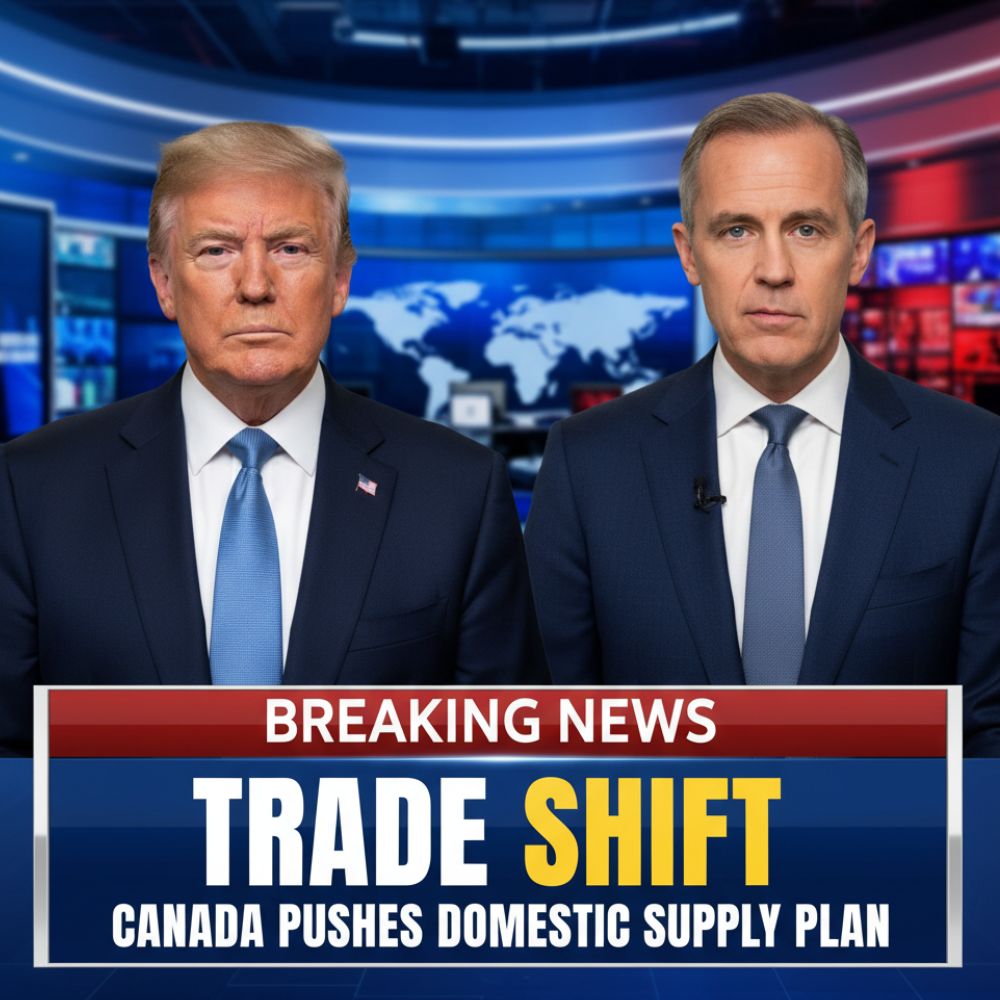
The shift follows recent rhetoric from Donald Trump, who has signaled support for steep tariff measures on foreign imports, including proposals that could significantly raise costs for trading partners. While no sweeping policy has been fully implemented, the tone of the discussion has prompted responses from key allies.
Among them is Mark Carney, who has advocated for strengthening domestic supply chains and encouraging Canadian businesses and consumers to prioritize locally produced goods. The approach, often described as a “Buy Canadian” strategy, reflects broader efforts to reduce reliance on external markets.
Officials in Canada have framed the initiative as a resilience measure rather than a retaliatory strike. By diversifying supply sources and boosting internal production, they argue, the country can better navigate an uncertain global trade environment.
“This is about stability,” one Canadian official said. “We want to ensure that our economy is less vulnerable to external shocks.”
Some online narratives have characterized the policy shift as an immediate and sweeping disruption to U.S. exports. However, trade analysts caution that such portrayals exaggerate the speed and scale at which economic changes typically occur.
“Supply chains don’t reroute overnight,” said an economist specializing in North American trade. “Adjustments happen gradually, and they involve a wide range of actors and agreements.”
The United States and Canada maintain one of the largest bilateral trade relationships in the world, with goods and services crossing the border daily in volumes that reach into the billions of dollars. Industries such as energy, manufacturing and agriculture are deeply interconnected, making abrupt shifts both difficult and costly.
Even so, policy signals can influence long-term decisions. Companies may begin exploring alternative suppliers or markets in response to perceived risks, potentially reshaping trade patterns over time.

For American exporters, the prospect of reduced access to Canadian markets raises concerns about competitiveness and pricing. Tariffs, if implemented at high levels, could make U.S. goods less attractive, while domestic preference policies in Canada could further shift demand.
Business groups in both countries have urged caution, emphasizing the importance of maintaining open and predictable trade frameworks. Several organizations have called for renewed dialogue to prevent escalation and protect cross-border economic ties.
“Stability is essential,” said a representative of a North American trade association. “Both economies benefit from cooperation.”
Financial markets have also shown sensitivity to the evolving rhetoric, though no large-scale disruption has been confirmed. Analysts note that uncertainty alone can influence investment decisions, even in the absence of concrete policy changes.
For policymakers, the situation reflects a broader challenge: balancing domestic priorities with the realities of a highly integrated global economy. Efforts to promote local industries can bring benefits, but they also carry the risk of unintended consequences.
“There’s always a trade-off,” said a public policy expert. “The question is how to manage it without undermining long-standing partnerships.”
As discussions continue, neither side has announced definitive measures that would fundamentally alter the structure of North American trade. Still, the exchange of signals has underscored the fragility of economic relationships shaped by both policy and perception.
For now, the impact remains more prospective than immediate. But as governments refine their strategies and businesses adjust expectations, the direction of travel is becoming clearer: a gradual shift toward greater economic self-reliance, unfolding within one of the world’s most closely linked trading systems.
Whether that shift leads to lasting change—or renewed cooperation—will depend on the decisions made in the months ahead.