New York City — What was supposed to be a standard late-night interview quickly escalated into one of the most talked-about moments in recent television history when former President Donald Trump attempted to assert full control during a live segment of The Late Show with Stephen Colbert.
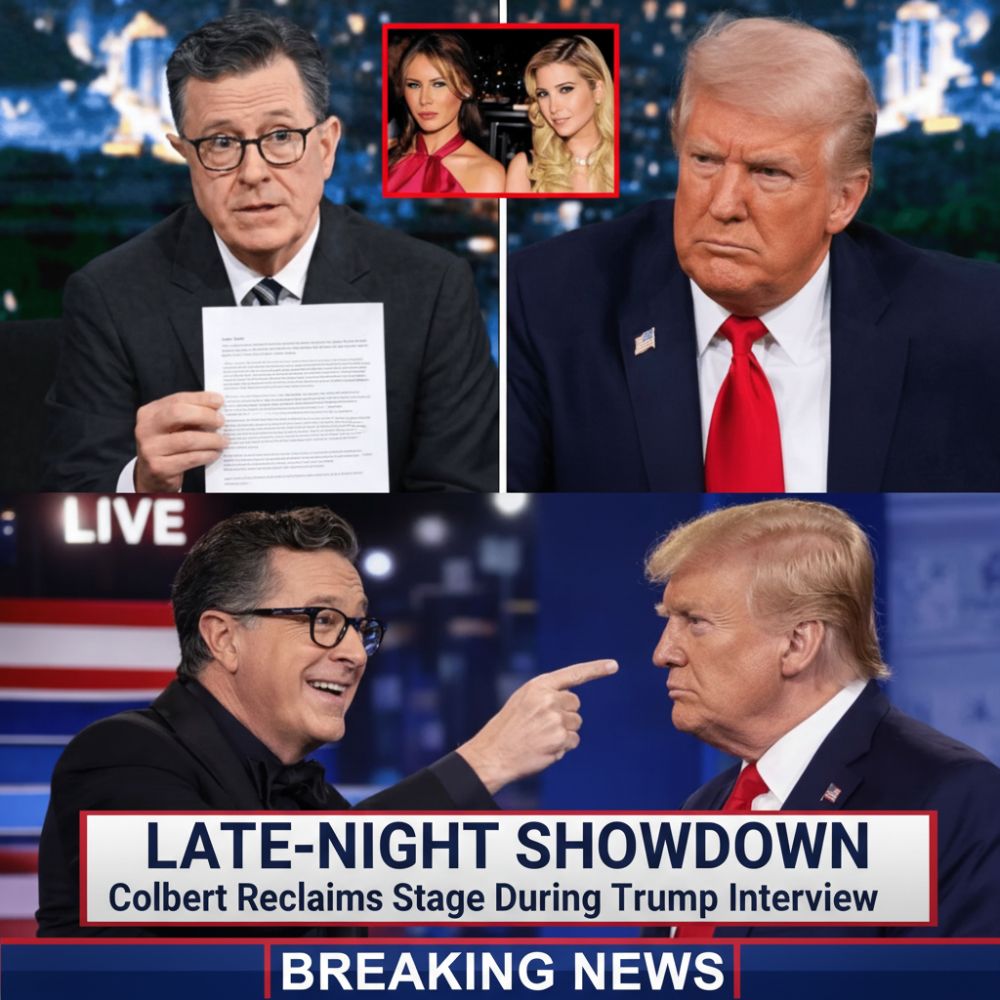
The encounter highlighted the clash of personalities, live media pressures, and the unpredictable dynamics that unfold when high-profile figures share the same stage.
The evening started with the typical energy of a late-night program: a live studio audience, a mix of political commentary, entertainment segments, and discussions about current events. Colbert, known for blending humor with political critique, opened the segment with his usual wit, setting the stage for what seemed like a manageable discussion.
Trump, however, quickly steered the conversation toward his preferred talking points, demonstrating a familiar strategy: dominating dialogue and redirecting focus.
THE ATTEMPTED TAKEOVER
Within the first five minutes, Trump began interrupting Colbert repeatedly. He inserted lengthy anecdotes, critiques of political opponents, and commentary on current events—all delivered with the emphatic gestures and raised voice that have defined his public persona. The audience noticed the shift almost immediately. The interview, originally balanced and scripted, teetered on the edge of chaos.
Trump leaned forward multiple times, cutting off Colbert mid-question, and gesturing toward the cameras in a manner that conveyed both urgency and assertiveness. “You know, Stephen,” Trump said at one point, “the real story here is what I’ve accomplished and the way the media won’t cover it.” The statement, while expected from Trump, indicated his attempt to take complete narrative control.
Studio insiders later described the moment as tense. Staff behind the cameras could be seen adjusting timing cues and monitoring audience reactions, knowing that live television does not allow mistakes to go unnoticed.
COLBERT FLIPS THE SCRIPT
Rather than escalate, Colbert responded with a deft rhetorical move. Pausing deliberately, he delivered a line that immediately recentered the conversation and reasserted his authority on stage.
“You know, Mr. Trump, I thought I was hosting this show,” Colbert said, his tone simultaneously calm, witty, and sharp, “but apparently tonight I’m just here to listen to your campaign speeches.”
The studio erupted into laughter and applause. The audience’s reaction underscored the power of timing and delivery. Trump, momentarily taken aback, paused—an unusual break in his otherwise constant flow of speech. Colbert’s intervention was subtle yet commanding, turning what could have been a disorganized segment into a defining media moment.
THE AUDIENCE AND SOCIAL MEDIA ERUPT
Almost immediately, clips of the exchange circulated online. Fans and critics alike shared reactions across platforms like Twitter, Instagram, and TikTok. Within hours, the segment had gone viral, with hashtags referencing the moment trending nationally.
Media commentators noted the effectiveness of Colbert’s strategy. By using humor to reclaim control, he diffused potential tension, reaffirmed his role as host, and simultaneously highlighted the overbearing nature of Trump’s interruptions. The result was both entertaining and instructive—an object lesson in media dynamics and the management of high-profile personalities.
THE PSYCHOLOGY OF THE MOMENT

Experts in communication and behavioral psychology have since analyzed the encounter. They emphasize three key elements that made Colbert’s intervention so effective:
- Timing: The precise moment Colbert delivered his line maximized its impact. Interruptions earlier in the segment might not have had the same authority, and delayed responses could have allowed the imbalance to grow.
- Calm Authority: Colbert’s steady voice contrasted sharply with Trump’s more animated style, visually and psychologically signaling who was in control.
- Audience Alignment: The laughter and applause reinforced Colbert’s dominance, creating social proof that the audience sided with the host rather than the interrupter.
TRUMP’S REACTION
Following Colbert’s intervention, Trump attempted to regain control, interjecting again with his preferred talking points. However, the audience, now keyed into Colbert’s framing, responded differently. Every interruption was met with brief laughter, scattered applause, or disbelieving murmurs.
Insiders report that the live production team monitored these reactions closely, recognizing that the shift in audience perception could alter the entire tone of the segment. Trump’s strategy of dominance, familiar in rallies and media interviews, was less effective in a controlled television environment with a savvy host.
THE BROADER IMPLICATIONS
This moment offers insights beyond late-night entertainment:
- Power dynamics in live settings: Even high-profile figures like a former U.S. president can be checked by timing, humor, and composure.
- Media amplification: In the digital era, such exchanges do not remain contained within the studio. Clips circulate, influencing public perception and shaping political narratives.
- Narrative control: Colbert’s quick response demonstrates how effectively handling interruptions can redefine the story, turning potential embarrassment into a display of authority.
ANALYST COMMENTARY
Media analysts describe this exchange as emblematic of the challenges in modern political communication. One commentator noted, “Trump is accustomed to environments where he dictates the conversation. Live television with an audience that can react instantly changes the equation. Colbert understood that dynamic and leveraged it expertly.”
Another analyst emphasized the educational aspect for public figures and communicators: “It’s a reminder that preparation alone isn’t enough. Real-time responses, understanding the audience, and composure under pressure are equally critical.”
THE CULTURAL IMPACT
Within hours, memes, GIFs, and commentary began circulating, solidifying the moment in pop culture. Headlines read:
- “Colbert Shuts Down Trump in Instant Viral Moment”
- “Late-Night Show Becomes Stage for Unexpected Power Play”
- “Trump’s Attempt to Dominate Late-Night Collapses Under Colbert’s Wit”
For viewers, the segment offered both entertainment and a rare glimpse into the unpredictability of live media when high-profile personalities collide.
LESSONS LEARNED
For future interviews and public appearances, several lessons emerge:
- Composure is power: Staying calm and measured allows one to regain control in chaotic situations.
- Humor as strategy: Well-timed humor can redirect attention and neutralize potential dominance.
- Audience perception is crucial: Viewers’ reactions can reinforce authority or undermine attempts to control.
CONCLUSION
The encounter between Donald Trump and Stephen Colbert will be remembered as one of the defining late-night moments of recent years. What began as a routine interview escalated into a masterclass in narrative control, timing, and the power of live television.
Trump’s attempt to dominate the conversation backfired almost instantly. Colbert’s swift, witty intervention not only restored order but also created a viral moment that will be referenced in media training, communication studies, and pop culture retrospectives for years to come.