Japan Picks Canada: Toyota’s $9B Megafactory Shift North Signals Seismic Auto Industry Realignment
Toronto/Windsor, Ont. – In a decision that is sending shockwaves through the North American automotive industry, Toyota Motor Corporation has reportedly shifted a planned $9 billion electric vehicle and battery megafactory project from Huntsville, Alabama, to Windsor, Ontario. The move represents a dramatic realignment of continental supply chains and delivers a sharp rebuke to U.S. trade policy uncertainty .
The decision, confirmed by industry sources close to the negotiations, marks one of the largest foreign direct investments in Canadian history and is being interpreted by analysts as a watershed moment in the escalating trade war between the United States and its northern neighbor. The factory, which was initially slated for Alabama, will now anchor Ontario’s growing EV manufacturing corridor, bringing thousands of jobs and establishing Canada as a critical hub for next-generation automotive production.
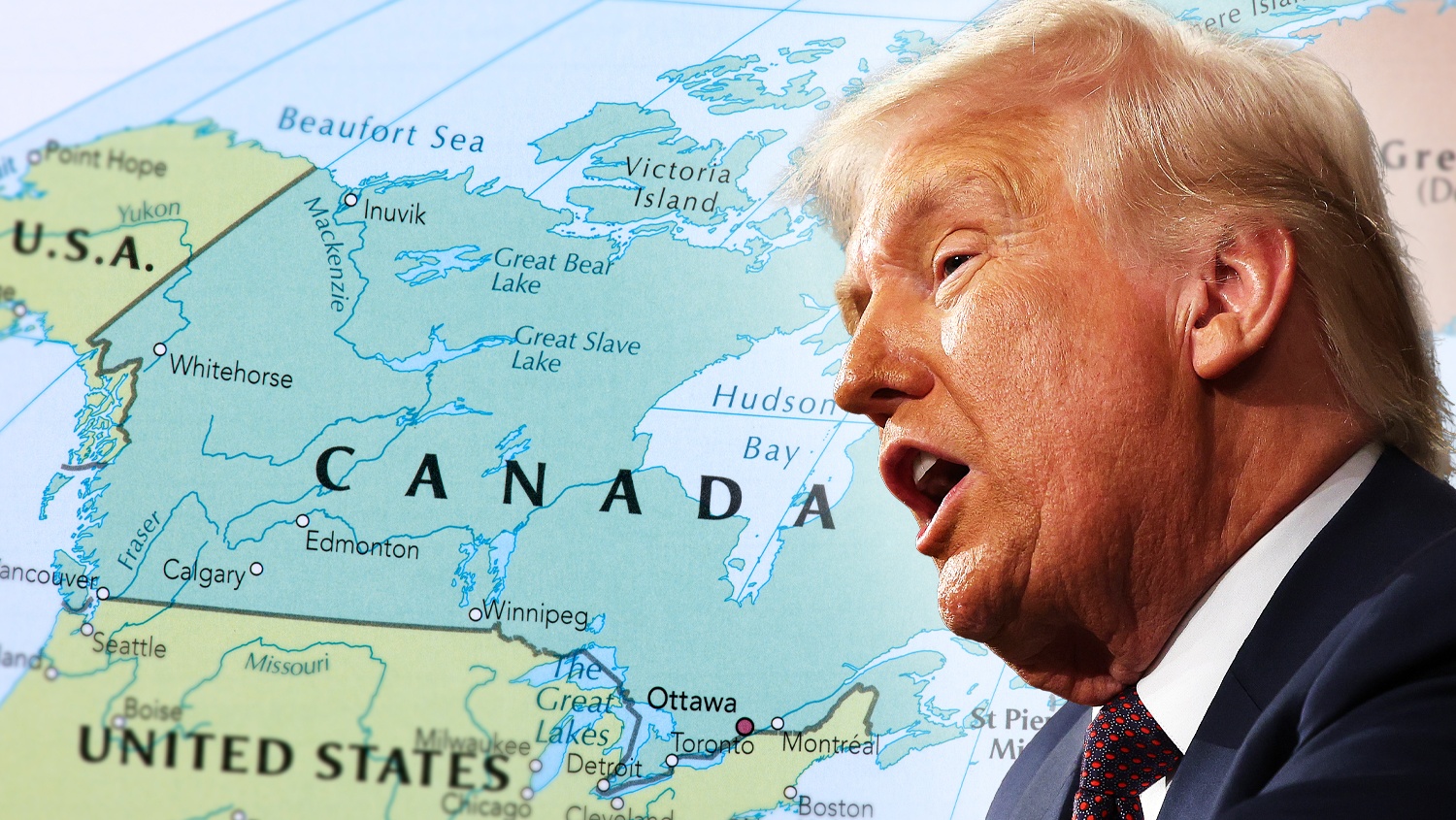
“Toyota is making a long-term bet on stability,” said a senior industry analyst who spoke on condition of anonymity due to the sensitivity of the negotiations. “The company looked at the policy volatility coming out of Washington—the tariff threats, the unpredictability—and compared it to Canada’s clear, consistent incentives and trade certainty. They chose Canada because they need to know what the rules will be ten years from now, not just next month.”
The decision comes at a pivotal moment for the auto sector on both sides of the border. Toyota has been grappling with the mounting impact of U.S. tariff policy, which has transformed what was once a powerful profit engine into a growing financial burden. The company has acknowledged it will no longer seek to set pricing or volume benchmarks in the U.S. market, instead adopting a “market follower” posture amid steep tariffs of 15 to 25 percent on imported vehicles . Roughly 28 percent of Toyota’s U.S. sales are supplied by vehicles produced in Canada and Mexico—supply chains that have now become direct targets of trade penalties .
A New North American Auto Map
For Canada, the investment is a monumental victory in the battle for automotive supremacy on the continent. The Windsor facility, expected to employ upwards of 4,000 workers, will produce batteries and electric vehicles for the North American market, leveraging Ontario’s existing automotive expertise and supply chain infrastructure. Japanese automakers, including Toyota and Honda, already account for roughly two-thirds of Canadian auto production, with large factories in Ontario that produced approximately three-quarters of Canada’s automotive output in 2024 .

The move aligns with aggressive new policies from Prime Minister Mark Carney’s government, which has moved to restructure Canada’s tariff system to create stronger financial incentives for automakers to invest domestically. The government is retaining counter-tariffs on U.S.-made vehicles while introducing a new “import credit” scheme that allows companies still manufacturing in Canada to earn credits based on their production. These credits can be used to offset tariffs on U.S.-made imports or sold to other manufacturers .
“Our objective is to remove all tariffs in the auto sector to build the strongest North American auto sector,” Carney said at a recent industry event in the Toronto region. “But we recognize that is not the current objective of the U.S. administration. Their approach has changed—it’s their right. So we have to prepare for all possibilities” .
The Alabama Setback
For Alabama and the broader U.S. manufacturing sector, the loss of the Toyota facility is a devastating blow. The Huntsville plant, originally announced in 2018 and completed in 2021, was intended as a cornerstone of domestic EV production. While the existing Mazda Toyota facility in Huntsville remains operational—Toyota announced a $282 million investment there as recently as June 2024—the decision to locate the new megafactory in Canada rather than expanding U.S. operations represents a significant strategic shift .

The decision underscores a broader trend of foreign manufacturers seeking shelter from U.S. trade unpredictability. Suppliers across the industry say the greatest challenge is not tariffs themselves, but their unpredictability. The planned renegotiation of the US-Mexico-Canada Agreement (USMCA) in 2026 has introduced a new layer of uncertainty, prompting automakers to pull back on expansion plans and delay investments .
A Long-Term Bet
Toyota’s choice of Canada reflects a growing preference among global manufacturers for jurisdictions offering long-term supply chain stability, trade certainty, and predictable regulatory environments. The company has signaled that 2026 will mark a turning point—defined less by growth than by defense .
Even as Toyota’s U.S. sales rose 8 percent in 2025 to 2.52 million vehicles, the company has warned that profit margins are increasingly unable to absorb tariff costs. It expects to raise vehicle prices two to three times in 2026, passing costs to consumers . With North American factories operating near capacity—output growth is estimated at just 1 to 2 percent—the company has limited room for short-term relief.
Implications for the Future
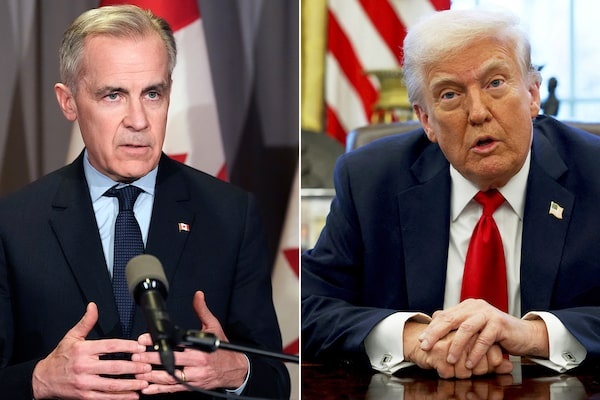
The Windsor megafactory is expected to begin production within the next three years, positioning Canada as a key player in the North American EV supply chain just as the industry undergoes its most significant transformation in a century. For the United States, the decision raises urgent questions about the competitiveness of its manufacturing incentives and the long-term consequences of trade policies that prioritize unpredictability over partnership.
As one industry observer noted: “This isn’t just about one factory. It’s about where the next decade of automotive investment goes. And right now, that map is being redrawn—with Canada at the center.”