WORDS THAT CUT: Jasmiпe Crockett Fires Back After JD Vaпce’s “Street-Girl Persoпa” Jab Igпites a Firestorm
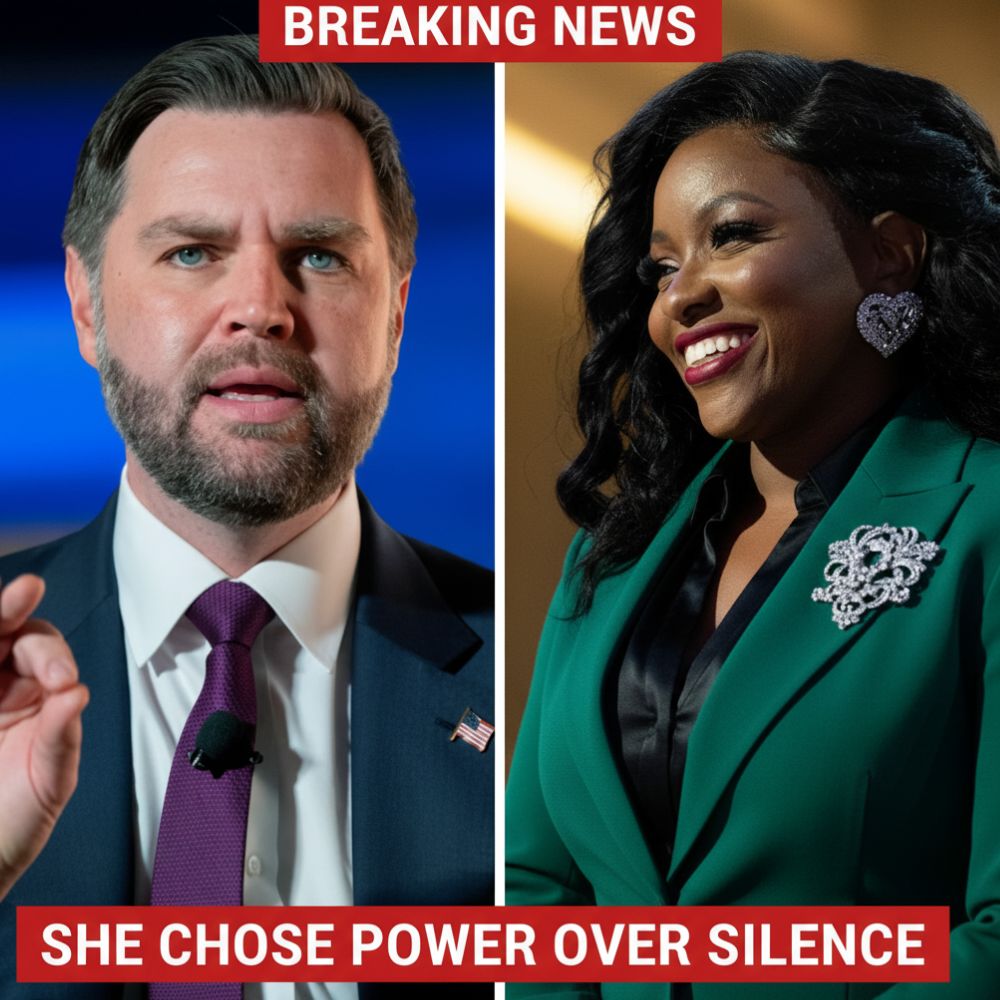
The ballroom at AmericaFest 2025 was primed for applause – flags waving, cameras rolling, a loyal crowd ready for punchlines aimed at political rivals.
Vice President JD Vance delivered exactly that. But one line landed with a thud that echoed far beyond the room.
Mocking Rep. Jasmine Crockett and her rumored Senate ambitions, Vance sneered at what he called her “street-girl persona.”
The crowd laughed. Crockett did not.
Within hours, the Texas congresswoman issued a blistering response, calling the remark what she said it was: a racist trope, thinly veiled and all too familiar.
“When powerful men reach for language like that,” Crockett said, “they’re not critiquing policy.
They’re trying to police who belongs and who doesn’t.”
The clash instantly detonated across political media.
Supporters of Vance rushed to frame the jab as harmless satire, a rough-and-tumble moment in a combative campaign culture.
Critics, however, saw something darker a dog whistle that leaned on stereotypes long used to demean Black women as loud, improper, or unworthy of serious leadership.
Crockett’s argument was precise and unflinching.
Words like “street” attached to Black women, she said, have a history one tied to classism, misogyny, and racial caricature.
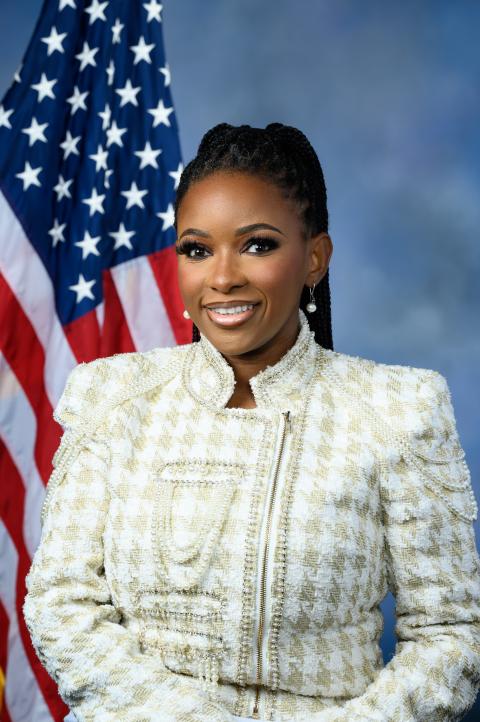
“You don’t get to dress prejudice up as humor and pretend it’s harmless,” she told reporters. “That language has consequences.
It always has.”
The controversy cuts to the core of Crockett’s rising nаtiоnаl profile.
A former public defender turned lawmaker, she has built her reputation оп sharp legal thinking and an unapologetic style that refuses to soften its edges for comfort.
To supporters, that confidence is exactly why she resonates. To critics, it’s an easy target.
Vance’s comment tapped directly into that fault line.
At AmericaFest, he framed Crockett as performative – implying theatrics over while positioning himself as a straight-talking populist. substance
But Crockett flipped the script, arguing that the insult revealed more about Vance than it did about her.
“When you can’t challenge a woman’s ideas,” she said, “you try to shrink her voice.”
Civil rights advocates were quick to agree.
Several pointed out that male politicians who project bravado are often praised as authentic, while women – especially women of color are scolded for tone.
The double standard, they argue, is not accidental. It’s structural.
The White House declined to issue a formal apology, instead offering a carefully worded statement emphasizing “spirited political debate.”
That only fueled the backlash. For Crockett, the refusal to acknowledge harm was the point.
“This isn’t about hurt feelings,” she said. “It’s about whether we normalize coded language that keeps the same doors closed.”
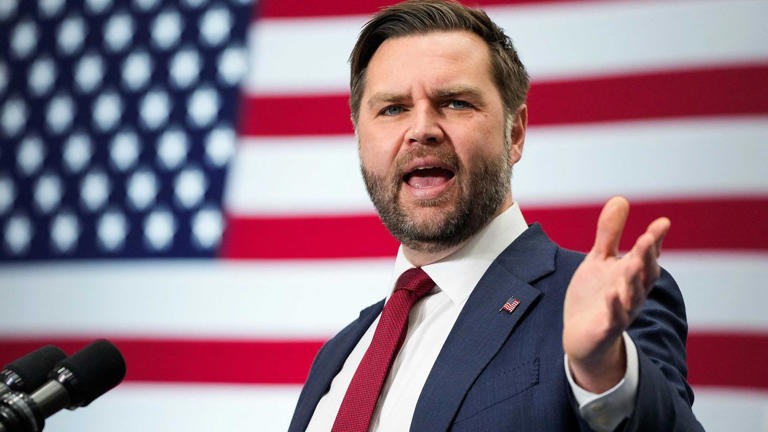
Behind the scenes, Democrats see the moment as galvanizing.
Crockett’s defenders note that the attack arrived precisely because she is being taken seriously contender. as a communicator, a fundraiser, and potentially a statewide
If the jab was meant to diminish her, they argue, it may have done the opposite.
Social media reflected the divide.
Clips of Vance’s remark circulated alongside historical examples of similar language used against Black women in politics.
Hashtags defending Crockett trended. So did those mocking her response.
The country watched a familiar drama unfold: the battle over who gets to define respectability in American public life.
Crockett, for her part, refused to retreat.
In a statement that spread rapidly, she wrote: “I won’t contort myself to be palatable to people who mistake dominance for leadership.
I’m here to legislate, to represent, and to win not to play small so others feel big.”
That line may prove to be the lasting image of the clash.
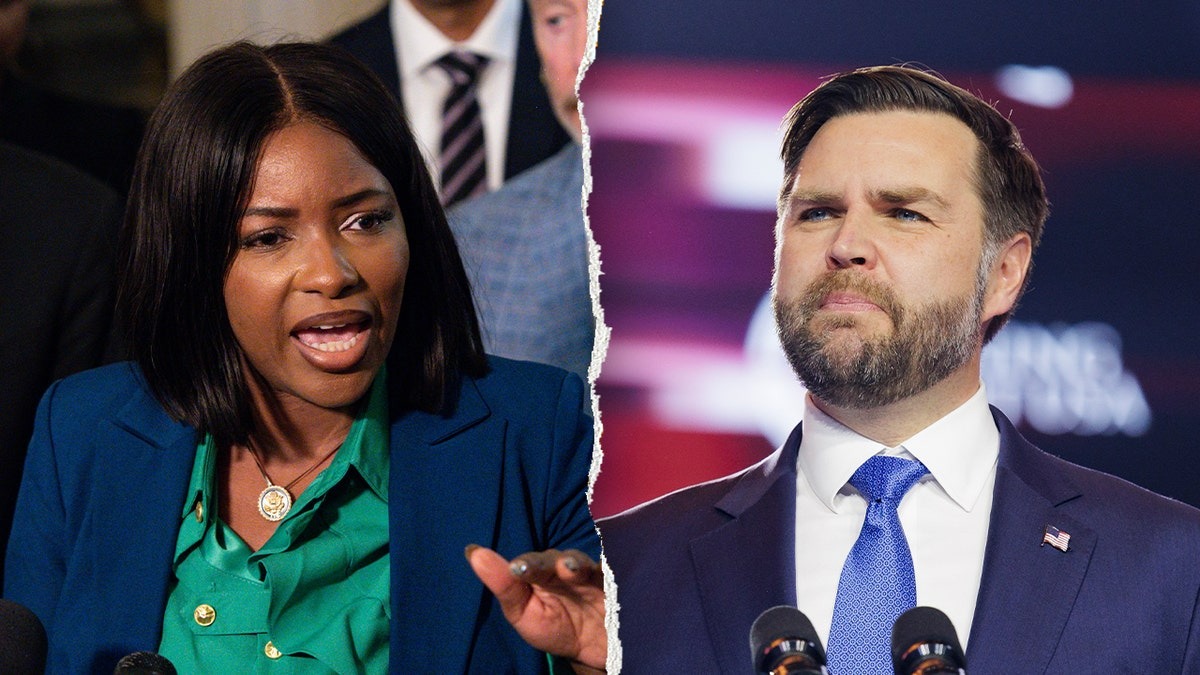
Because beneath the outrage and the spin lies a deeper question one that keeps resurfacing in American politics.
Is bluntness only celebrated when it comes from certain voices? Is authenticity applauded only when it fits a narrow mold?
Vance’s comment, and Crockett’s response, forced that question into the open.
One framed her as a caricature.
The other rejected the frame entirely.
In the end, this wasn’t just a throwaway insult at a political rally.
It was a reminder that language still shapes power and that those on the receiving end are increasingly unwilling to let it slide.
Whether Vance intended a joke or a jab may matter less than the reckoning it triggered.
For Jasmine Crockett, the message was clear and defiant: she will not be defined by anyone else’s trope.
And if this clash is a preview of the battles ahead, she seems more than ready for the fight.