Explosive Hearing: Rep. Goldman Confronts AG Bondi Over Epstein File Transparency
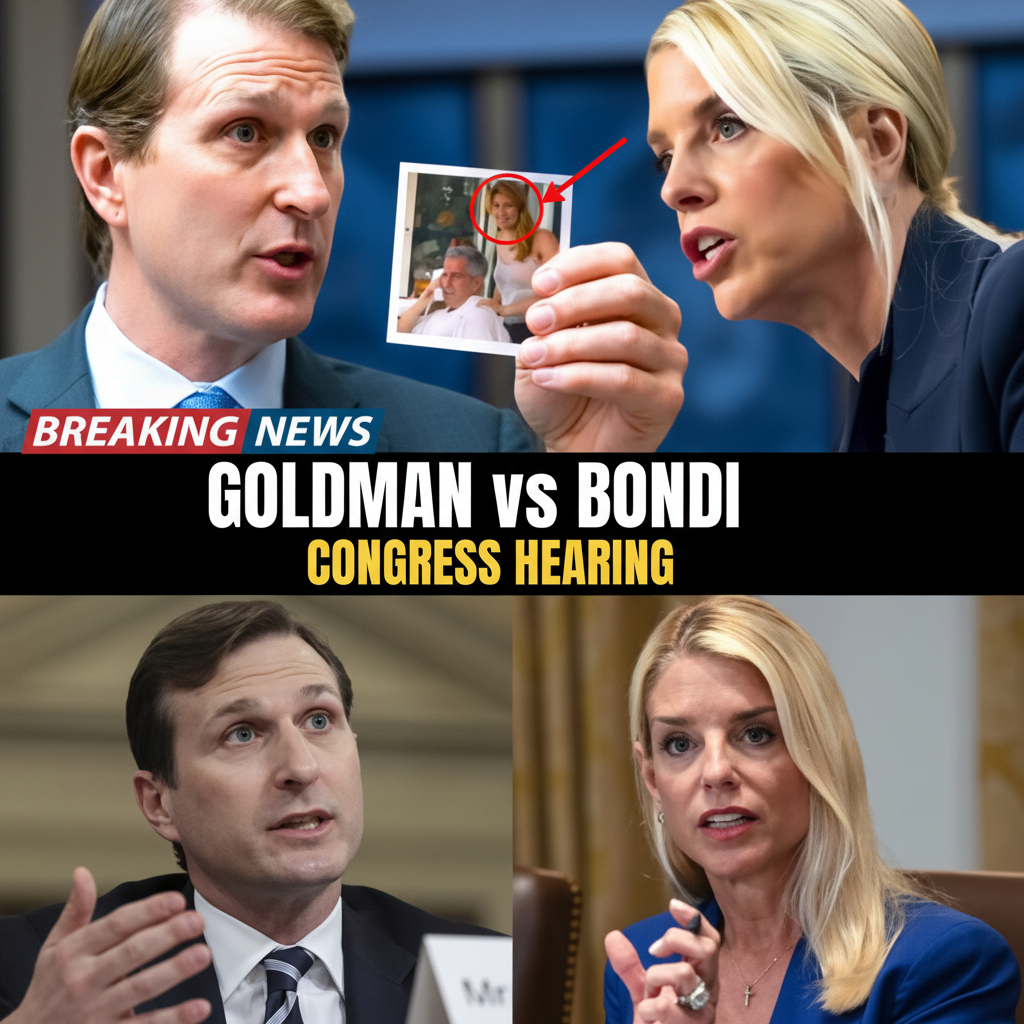
WASHINGTON – A congressional oversight hearing rapidly escalated into a full-blown legal and political confrontation this week, as Representative Dan Goldman (D-NY) presented Attorney General Pam Bondi with compelling evidence challenging the Department of Justice’s handling of the Jeffrey Epstein investigation files. Goldman alleges a pattern of “improper redactions” and “intentional witness intimidation” within the released documents.
The Alleged ‘Privileged’ Email and SDNY Memo
The core of the dispute focused on a specific email exchange between Jeffrey Epstein and Ghislaine Maxwell. Goldman asserts this communication was deliberately withheld from both the public and Congress under a “false claim of privilege.”
During his inquiry, Representative Goldman revealed he had personally reviewed the millions of documents released by the DOJ. While the administration maintains the remaining files are “duplicative,” Goldman pointed to high-value records still heavily redacted.
“I found a couple of important documents: an 86-page prosecution memo from the Southern District of New York and a draft indictment from Florida,” Goldman stated. He then introduced the “bombshell” exhibit: the email from Jeffrey Epstein to Ghislaine Maxwell, which he claims contained notes of statements made by a prominent public figure regarding his prior relationship with Epstein.
When pressed for an unredacted release, Attorney General Bondi repeatedly cited “privilege.” Goldman, a former federal prosecutor, sharply countered: “There is no attorney-client privilege. This was sent from Jeffrey Epstein to Ghislaine Maxwell. There is no reason for this to be hidden from the American people.”
Disturbing ‘Victim List’ Anomaly Uncovered
Perhaps the most disturbing segment of the hearing involved the Department’s approach to victim privacy. Goldman accused the DOJ of inadvertently protecting individuals while potentially exposing survivors.
He cited a document titled ‘Epstein Victim List’, which initially contained 32 names. “One name is redacted; 31 are not,” Goldman observed, emphasizing the discrepancy. “That is not a mistake. That is not an accident. Someone looked at that list and decided to redact one name while leaving 31 survivors exposed. That is clearly intentional to intimidate these victims.”
Bondi responded by attributing inconsistencies to “tight deadlines” and the vast volume of documents under review, maintaining a low overall error rate.
The Powerful ‘Silent Gallery’ Confrontation
Tension peaked as Goldman addressed several survivors of Epstein’s network seated directly behind the Attorney General. In a poignant moment, Goldman posed three questions:
- How many have met with the DOJ to provide evidence? (No hands were raised)
- How many reached out to offer testimony? (Nearly all hands were raised)
- How many were denied or ignored? (The group indicated they had all been turned away)
“Despite the commendable efforts to seek justice, how many are still willing to speak?” Goldman asked. Every survivor signaled their continued willingness to testify, challenging earlier departmental statements that all willing individuals had been heard.
The ‘Immigration’ Pivot and Ongoing Implications
The hearing concluded with a notable shift in focus as Bondi turned from the Epstein files, introducing photographs of undocumented individuals involved in criminal activities in New York. She accused Goldman of overlooking critical safety concerns affecting his constituents.
While supporters praised this pivot as a necessary highlight of public safety, critics viewed it as a “textbook deflection” from the documentary evidence presented by Goldman. As oversight continues, the “Epstein-Maxwell Email” remains a pivotal point in the transparency debate. Goldman’s assertion is clear: when survivor information is handled unevenly and powerful associates’ communications are withheld, the Department of Justice risks appearing to prioritize control over due process. The question of what truly lies within the “missing” documents continues to challenge public confidence in the DOJ’s leadership.