In a significant geopolitical development, Finland’s recent accession to NATO has fundamentally reshaped the strategic balance in Northern Europe, effectively constraining Russia’s formidable Northern Fleet within the Baltic Sea.
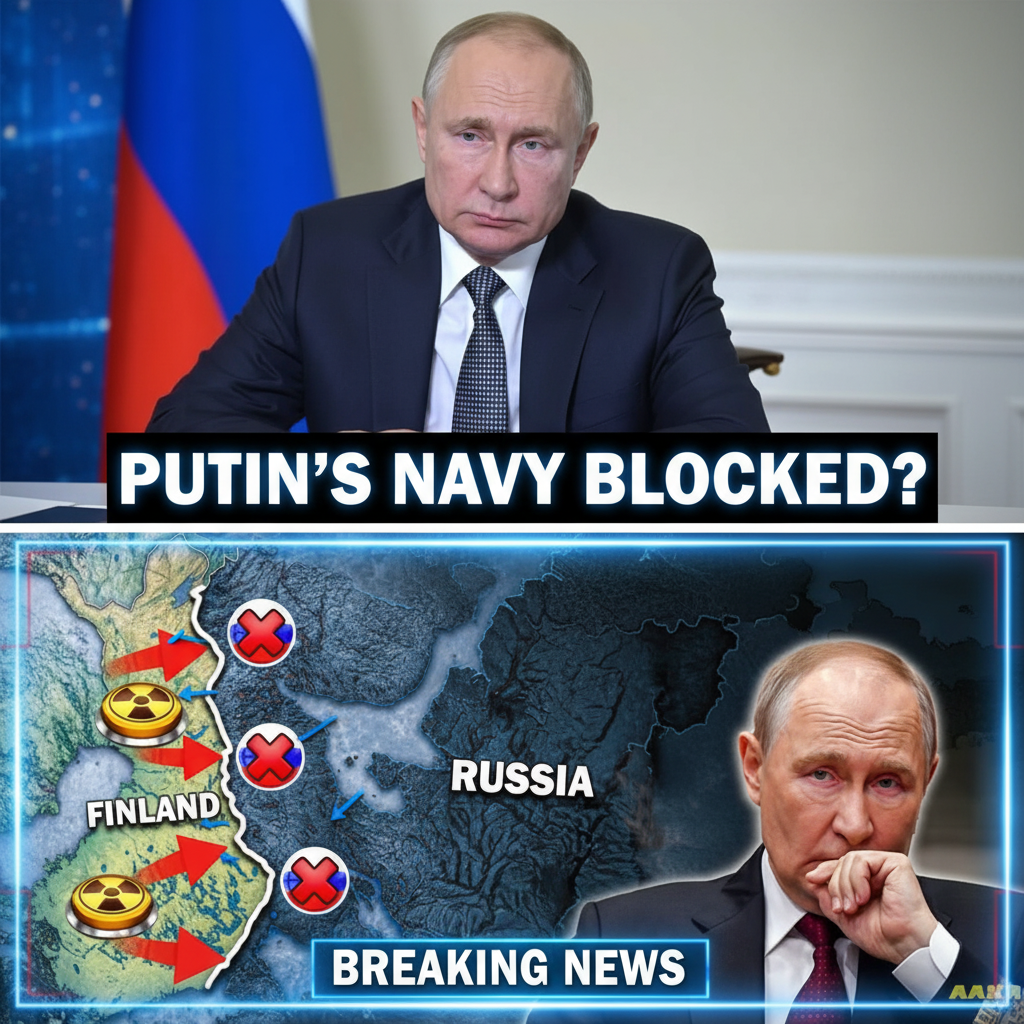
Initially, Russia escalated its military presence in the Karelia and Murmansk regions, a move widely interpreted as an attempt to compel Finland into neutrality. However, this aggressive strategy has produced an unintended and impactful consequence, pushing Finland towards a historic alignment with the Western alliance.
The Baltic Sea: A New “NATO Lake”
Putin’s strategic objective to maintain a geopolitical buffer zone around Russia’s borders has encountered a considerable setback. The Kremlin’s efforts to enforce Finnish neutrality through military pressure inadvertently led to Finland’s decision to join NATO and, notably, to reconsider its 1987 nuclear ban. This pivotal shift has profound implications.
With Finland now a full NATO member, the Baltic Sea is increasingly referred to as a “NATO Lake.” This strategic transformation places Russia’s most critical naval assets, including the Northern Fleet and its nuclear-capable submarines, directly within NATO’s effective operational reach. The historically significant Kola Peninsula, a long-standing stronghold for Russian naval power, is now strategically contained, rendering key Russian areas like St. Petersburg more susceptible to potential actions.
Finland’s Robust Defense Mobilization
Far from being intimidated, Finland has responded with decisive action, significantly enhancing its national defense capabilities. The nation has:
- Deployed advanced high-tech border barriers.
- Prepared a highly trained reserve army, potentially numbering up to 1 million personnel.
- Leveraged some of Western Europe’s most capable artillery forces.
This comprehensive mobilization establishes Finland as a formidable bulwark against any potential aggression from the north. These measures are a calculated and robust response to Russia’s escalating rhetoric and military maneuvers.
Russia’s Strategic Miscalculation Exposed
Finland’s strengthened position has highlighted a critical vulnerability within Russia’s military posture. The perceived northern buildup by the Kremlin is increasingly viewed as an illusion, a facade masking deeper operational challenges, particularly concerning manpower and logistical support, exacerbated by ongoing engagements elsewhere.
The strategic ramifications for Russia are substantial. With the Baltic Sea effectively secured by NATO, Russia’s aspirations for regional power projection are now severely limited. The Northern Fleet, once a paramount symbol of Russian naval strength, finds its operational freedom curtailed by the very alliance Russia sought to weaken.
The global community now keenly observes whether Russia will attempt to challenge this new status quo in the Baltic Sea or if the Northern Fleet will remain strategically constrained. Finland, reinforced by its new alliances and advanced military readiness, stands prepared to uphold its sovereignty.
This evolving situation underscores the dynamic nature of international relations and how strategic miscalculations can lead to dramatic reversals of fortune. Finland’s resolute stance against aggression has not only neutralized immediate threats but has also fundamentally altered the geopolitical landscape of Northern Europe for the foreseeable future.