U.S. Corn Shipments Rejected as Canada Seizes Control of Supply Chain, Leaving Trump Fuming
CHICAGO — A massive disruption in North American agricultural trade has erupted into a full-blown political crisis after reports confirmed that major shipments of U.S. corn have been rejected at the Canadian border, with Ottawa quietly orchestrating a backup plan to replace American exports with domestic and alternative sources. The move has infuriated former President Donald Trump, who sources say is “absolutely livid” as a key sector of the American economy faces sudden exclusion from its northern neighbor.
What began as a routine quality inspection dispute at a Manitoba grain terminal has rapidly spiraled into what analysts are calling a strategic realignment of food supply chains. According to internal trade documents obtained by agricultural reporters, multiple shipments of U.S. corn destined for Canadian livestock operations were flagged for failing to meet newly tightened phytosanitary standards. While the official reason cited concerns over agricultural residues, industry insiders believe the rejections were a calculated move designed to send a message.
Within 72 hours of the border blockage, Canadian grain giants had already mobilized. Emergency contracts were signed with domestic producers in Ontario and Quebec, while a surge of imports from allied nations—including Brazil and Ukraine—began arriving at Canadian ports to stabilize feed grain deliveries. The quiet pivot effectively neutralized any leverage the United States might have held as a dominant supplier.
For Trump, who has long framed American agricultural dominance as a pillar of national strength, the development represents a humiliating blow. Sources close to the former president describe a man “consumed by rage” as he watches a market that was once a guaranteed win slip away.
“He sees this as a personal betrayal,” a former Trump advisor told reporters. “Corn exports to Canada were supposed to be untouchable. The idea that they would not only reject our product but immediately replace it—that cuts deep. He feels the bluff was called again, and this time, American farmers are paying the price.”

The political fallout has been immediate and severe. In Iowa, Nebraska, and Ohio—key battleground states where corn is king—farmers are expressing alarm as news of the market shift spreads. Local grain elevators report a sudden glut, with prices already beginning to soften as the Canadian market tightens. Agricultural economists warn that if the Canadian pivot becomes permanent, U.S. farmers could lose upwards of $2 billion annually in export revenue.
“This is a gut punch to the heartland,” said Harlan Schmidt, a fourth-generation corn farmer from central Illinois. “We’ve always counted on Canada as a steady, reliable buyer. If that door closes, we’re looking at silos filling up and loan payments coming due with nowhere to send the crop. It’s terrifying.”
In Ottawa, officials have maintained a calm, almost clinical demeanor. Agriculture Minister Lawrence MacAulay issued a measured statement emphasizing that “Canada’s first priority is ensuring the stability and security of our food supply chain.” When pressed on whether the rejection of U.S. corn was politically motivated, MacAulay deflected, insisting that “all imports must meet our rigorous standards, full stop.”
Yet behind the scenes, sources confirm that the move was coordinated at the highest levels. The rapid deployment of replacement shipments suggests a playbook that had been quietly prepared for months—a contingency plan designed to reduce Canadian dependence on American agricultural inputs.
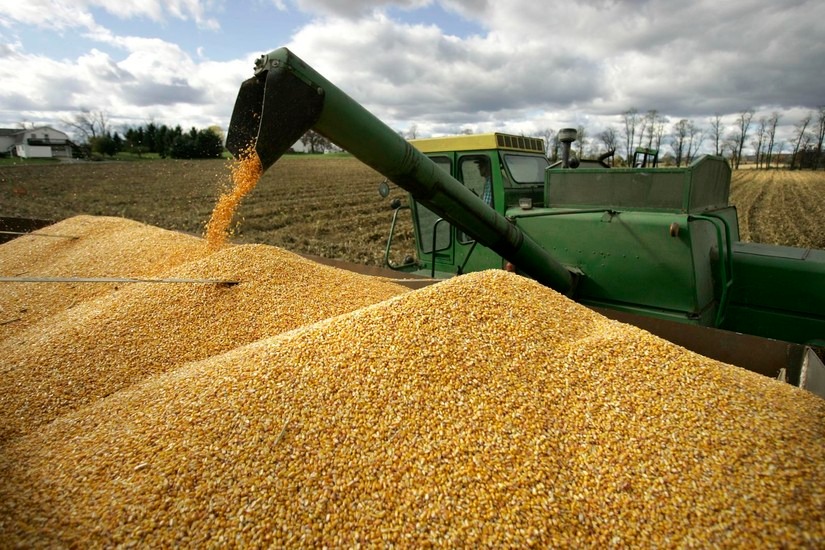
The economic ramifications extend far beyond the farm gate. Transportation giants like BNSF Railway and Union Pacific, which move massive quantities of grain northward, are already reporting reduced volumes. Ethanol producers who rely on corn as a feedstock are nervously watching the situation, fearing that a sustained loss of the Canadian market could destabilize domestic prices.
On social media, the MAGA ecosystem has erupted. Prominent pro-Trump influencers are calling for immediate retaliation, demanding tariffs on Canadian potash, lumber, and dairy. “They want a trade war? Fine. Let them eat expensive Brazilian corn while their farmers rot,” one commentator posted.
But experts warn that retaliatory measures could backfire catastrophically. The United States still relies heavily on Canadian energy imports and critical minerals. A tit-for-tat escalation could spiral into a broader conflict neither economy can afford.
“This is a chess move, not a tantrum,” said Dr. Sanjay Mehta, a trade economist at Northwestern University. “Canada has demonstrated that the United States is no longer an irreplaceable partner. They’ve diversified. They’ve shown they can pivot. The question now is whether American producers can adapt or whether they’ll be left clinging to a market that no longer needs them.”
As corn prices flicker on the Chicago Board of Trade and farmers gather anxiously in community halls across the Midwest, one thing is painfully clear: the era of automatic Canadian reliance on U.S. agriculture is over. The rejection of those corn shipments wasn’t just a trade dispute—it was a declaration of independence. And in the heartland, they’re left wondering what happens next.