Trump and Canada Travel Rules: How Criminal Convictions Can Affect Border Entry
Recent discussions in political and legal circles have raised questions about whether former U.S. President Donald Trump could face travel restrictions when entering Canada due to his criminal convictions in the United States. The debate centers on how Canadian immigration law treats foreign nationals who have been convicted of serious offenses.
While the issue has become a topic of political commentary online, immigration experts emphasize that the situation is governed by established legal procedures under Canadian law.

Canadian Immigration Law and Criminal Inadmissibility
Canada’s immigration system operates under the Immigration and Refugee Protection Act, which outlines conditions under which foreign nationals may be denied entry into the country. One of the key provisions of the law concerns criminal inadmissibility, a rule that allows border authorities to refuse entry to individuals convicted of serious crimes.
Under this framework, if a foreign national has been convicted of an offense that would be considered an indictable crime under Canadian law—such as certain forms of fraud or financial misconduct—they may be considered inadmissible at the border.
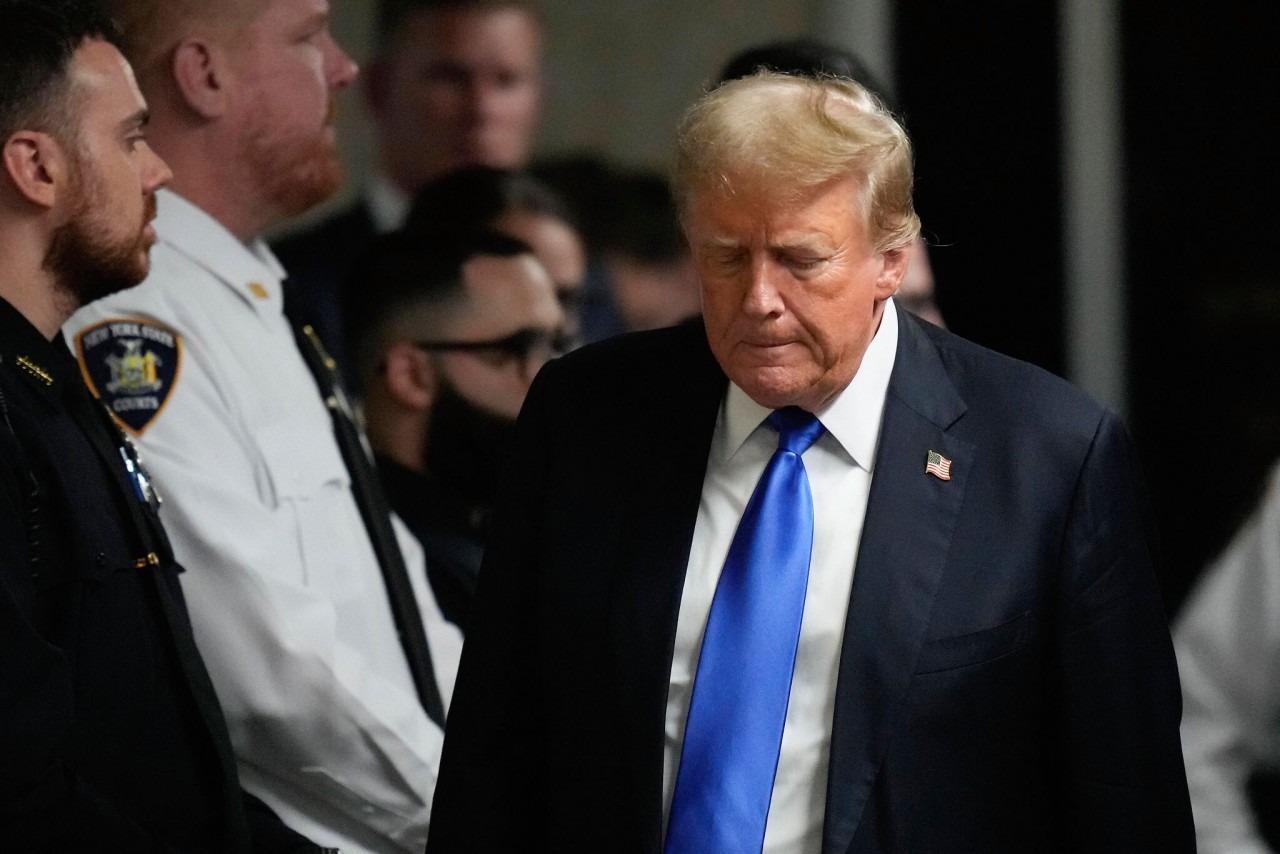
In 2024, Trump was convicted on multiple felony counts in a New York court involving falsification of business records. While those convictions occurred in the United States, Canadian immigration officers may review foreign convictions to determine whether they correspond to comparable criminal offenses under Canadian law.
Legal scholars note that the key factor is equivalency. Authorities must determine whether the foreign conviction would be treated as a serious offense if it had occurred in Canada.
How Border Officials Make Entry Decisions
If an individual is considered criminally inadmissible, Canadian border officers working under the Canada Border Services Agency have the authority to deny entry at airports, land crossings, or other points of entry.
However, inadmissibility does not always mean a permanent travel ban. Canadian law provides several legal pathways that may allow a person with past convictions to enter the country under specific circumstances.
One of these options is a Temporary Resident Permit (TRP), which allows Canadian authorities to grant entry to someone who would otherwise be inadmissible. Such permits are typically issued when officials believe the person’s visit serves an important purpose or when the benefits of allowing entry outweigh potential risks.
Diplomatic considerations can also influence such decisions when high-profile political figures are involved.

Diplomatic Protocol and Political Reality
Because Trump previously served as president and remains a major political figure in the United States, any border-related decision involving him would likely involve careful diplomatic considerations between the United States and Canada.
Government officials in Canada generally avoid publicly commenting on hypothetical scenarios involving foreign political leaders. Analysts say this approach helps prevent unnecessary diplomatic tensions between the two neighboring countries, which maintain one of the world’s largest economic and security partnerships.
For example, if a senior U.S. political figure planned an official visit to Canada, arrangements would typically be coordinated through diplomatic channels rather than treated as a standard traveler crossing the border.
A Complex Intersection of Law and Politics
The situation highlights how immigration law can intersect with international politics. While the legal framework governing criminal inadmissibility applies broadly to travelers from around the world, the practical implications may differ when high-profile leaders are involved.
Political commentators have noted the unusual optics surrounding the debate. Trump has frequently discussed trade disputes and economic policies affecting Canada, including tariffs and cross-border commerce. At the same time, legal analysts point out that immigration rules apply to individuals regardless of political status.
What Happens Next
At this stage, there is no indication that Trump has attempted to enter Canada since his convictions, and no official ruling has been made regarding his admissibility.
Experts say that if such a situation ever arose, the final decision would likely involve multiple layers of legal review, immigration policy considerations, and diplomatic coordination.
Ultimately, the discussion serves as a reminder that international travel rules can have complex implications—even for some of the most prominent figures in global politics.