THE $5.7 BILLION GAMBLE: Canada’s New Bridge Ends U.S. Trade Leverage, Trump Left Powerless
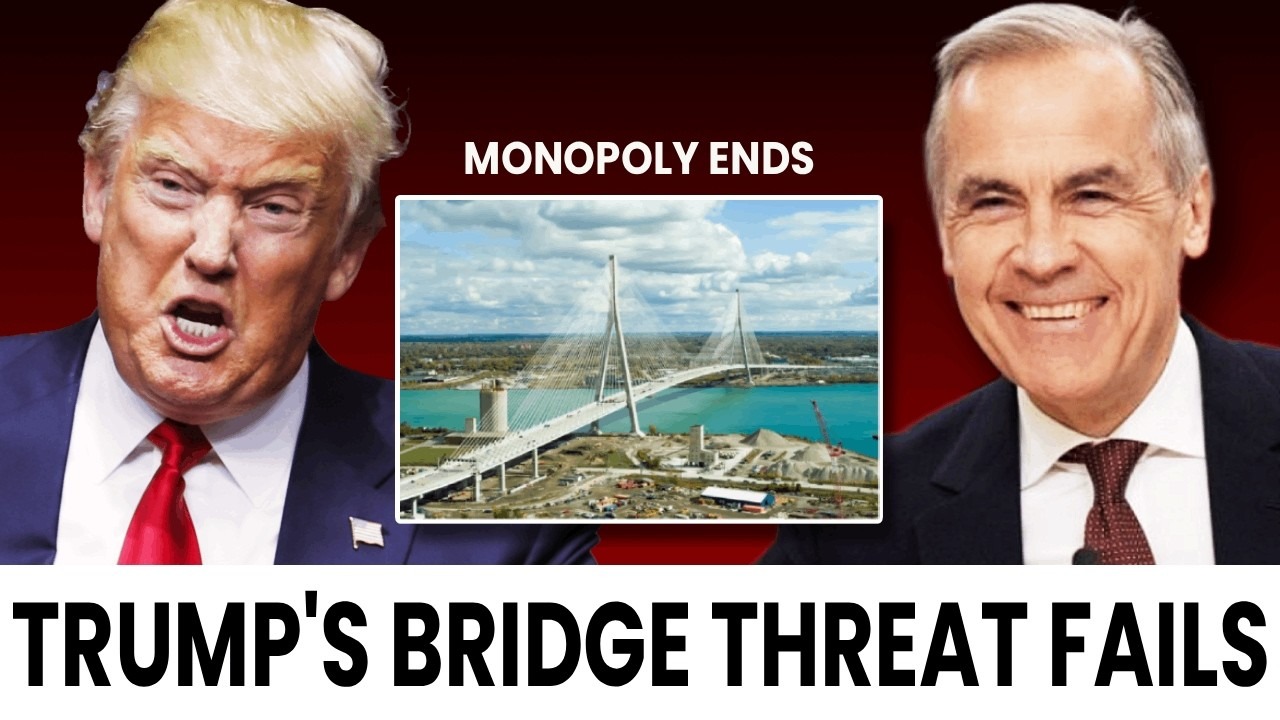
WINDSOR, ONTARIO – In a move that has fundamentally rewritten the geography of North American trade, Canada has opened a massive $5.7 billion infrastructure project that permanently severs Washington’s ability to use border crossings as political leverage against its northern neighbor. The new Gordie Howe International Bridge, connecting Windsor, Ontario, to Detroit, Michigan, stands as a monument to Canadian strategic foresight—and a tombstone for American economic coercion.
The project, entirely funded by Canada, represents the most significant shift in cross-border trade dynamics since the signing of the original Free Trade Agreement. For the first time in history, the busiest commercial border crossing between the two nations operates under Canadian control, with no vulnerability to U.S. political whims, shutdown threats, or inspection blockades.
The Anatomy of Leverage Lost
The numbers tell the story. The Windsor-Detroit corridor handles nearly $400 million in two-way trade daily—more than a quarter of all Canada-U.S. commerce. Until now, that traffic funnelled through the aging Ambassador Bridge, a privately-owned structure that repeatedly became a political pressure point during trade disputes. When Washington wanted to squeeze Ottawa, threatening to slow border inspections or close ports always worked.
That era ended at Tuesday’s ribbon-cutting ceremony.
“This is about sovereignty disguised as infrastructure,” explained trade analyst Meredith Lilly of Carleton University. “Canada just spent $5.7 billion to ensure that no American president can ever again hold our economy hostage by threatening the busiest commercial artery on the continent. Trump didn’t see this coming because he thinks in terms of tweets and tariffs. Canada thinks in terms of decades and concrete.”
How Canada Built Around America
The Gordie Howe Bridge’s strategic genius lies in its funding and governance structure. Unlike the Ambassador Bridge, which is U.S.-owned and subject to American regulatory whims, the new crossing is a Canadian public-private partnership. Canada fronted the entire construction cost, will collect the tolls, and controls the plaza and customs facilities on both sides of the border.
The Canadian plaza occupies 53 hectares of Windsor waterfront, featuring state-of-the-art inspection facilities, truck staging areas capable of handling 2,000 vehicles, and direct highway connections to Ontario’s 400-series highways. The U.S. plaza in Detroit, while on American soil, was built to Canadian specifications and operates under binational governance protocols that insulate it from unilateral U.S. decisions.
“We built this bridge to move goods, not to play politics,” said Ontario Premier Doug Ford at the opening ceremony. “Every truck that crosses here does so because Canada made it possible. That’s not leverage for Washington. That’s leverage for working people on both sides of the border.”
Trump’s Fury, Washington’s Panic
The reaction from the Trump White House has been volcanic. President Trump, who repeatedly threatened to close border crossings during trade disputes with Canada, reportedly learned of the bridge’s opening through media reports and erupted in fury.
“Canada thinks they’re so smart,” Trump posted on social media. “This bridge would not exist without American steel and American workers. We will find other ways. Nobody bypasses the United States!”
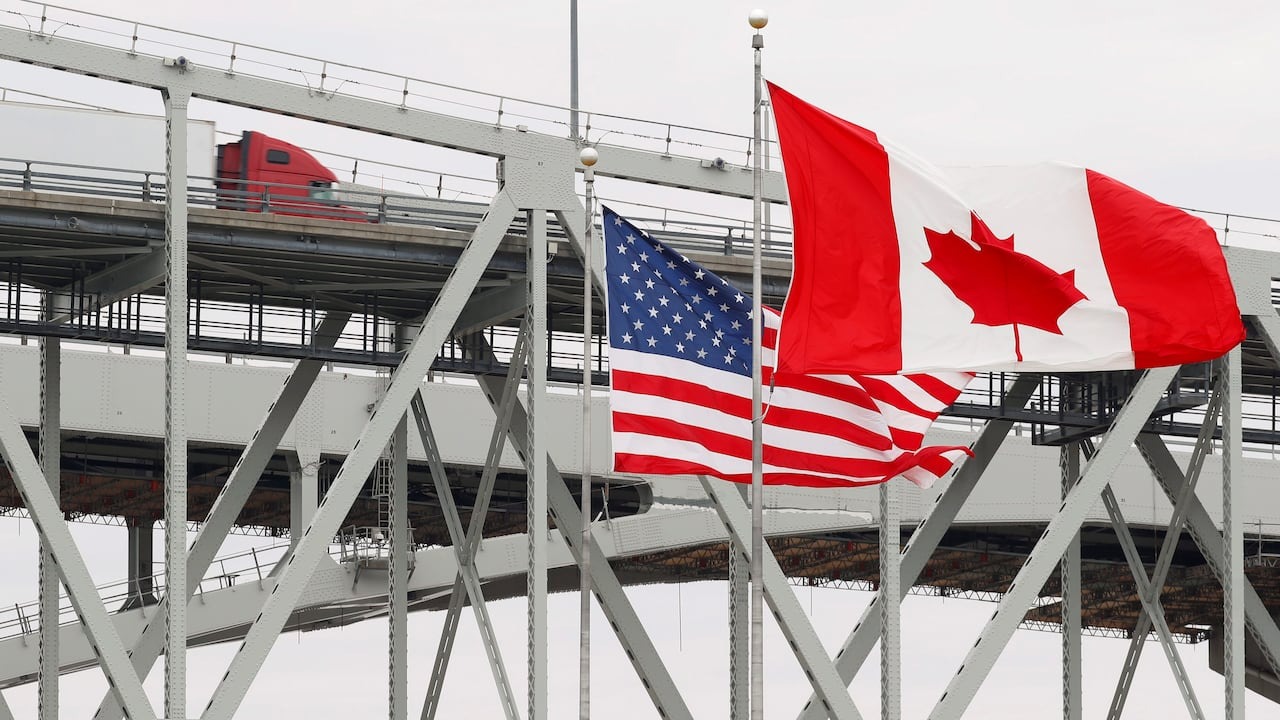
But trade experts note the fundamental reality: there is no other way. The Ambassador Bridge, already over capacity, cannot absorb additional traffic. The Detroit-Windsor Tunnel is for passenger vehicles only. The Blue Water Bridge in Port Huron is hours away. For commercial traffic moving between Canada’s industrial heartland and the American Midwest, the Gordie Howe Bridge is now the only game in town—and Canada holds all the cards.
“Trump can threaten tariffs, he can threaten inspections, he can threaten anything he wants,” said former U.S. Trade Representative Michael Froman. “But when the physical infrastructure exists because Canada built it, Canada owns it, and Canada controls access to it, those threats become empty. Leverage is about options. The U.S. just lost its best option.”
The Economic Earthquake
The implications extend far beyond politics. Canadian manufacturers, previously vulnerable to border slowdowns during trade spats, now enjoy guaranteed access to their largest market. American companies dependent on just-in-time delivery from Canadian suppliers—particularly in the auto sector—can now plan with confidence, knowing the bridge won’t become a political bargaining chip.
“This changes everything for supply chain planning,” said Flavio Volpe, president of Canada’s Automotive Parts Manufacturers’ Association. “We used to build in buffer inventory because nobody knew when the next border crisis would hit. Now? That uncertainty is gone. Canadian parts will cross, period. That’s worth billions in efficiency gains alone.”
The bridge’s design anticipates future growth, with capacity for 12,000 trucks daily—double current Ambassador Bridge traffic. Fiber optic cables running alongside the roadway will carry data traffic, and plans exist for future rail connections. Canada didn’t just build a bridge; it built a corridor designed to dominate continental trade for the next century.
The Pattern Emerges
The Gordie Howe Bridge joins a growing list of Canadian infrastructure projects explicitly designed to reduce dependence on U.S. goodwill. The recent $500 million CPKC rail expansion to Mexico, the Greenland mining partnership, and now this bridge form a coherent strategy: diversify trade routes, build independent capacity, and quietly render American leverage obsolete.
“This is what geopolitical maturity looks like,” wrote Canadian author and strategist Irvin Studin. “Smaller powers don’t confront larger neighbors directly. They build around them. They make themselves indispensable while making coercion impossible. Canada just executed the perfect strategic play.”
The Human Dimension
Beyond the geopolitics, the bridge represents something simpler: jobs and connection. The project employed 2,500 workers during construction, many of them from communities devastated by previous trade wars. The Windsor-Detroit region, historically divided by the river, now connects more directly than ever.
“We’ve waited generations for this,” said Windsor mayor Drew Dilkens, his voice cracking during the ceremony. “My grandfather worked in the auto plants. He watched trucks queue for hours at the old bridge, watched business lost because of politics. Today, we take control of our own destiny.”
What Comes Next
As trucks began rolling across the new span, carrying Ontario auto parts to Michigan assembly plants and Michigan agricultural products to Canadian tables, the broader implications continued to sink in. Washington’s trade warriors, accustomed to dictating terms, now confront a Canada that no longer asks permission.
When Trump demands concessions, Canada now points to the bridge—and to the rail line to Mexico, and to the Greenland minerals deal, and to the diversified trade relationships steadily reducing American centrality. The message is unspoken but unmistakable: you need us more than we need you.
“This bridge doesn’t just carry trucks,” Lilly reflected. “It carries a message. The message is that Canada is no longer a satellite. It’s a sovereign nation with its own interests, its own infrastructure, and its own future. America can be part of that future, but only as a partner. The days of leverage are over.”
The Gordie Howe International Bridge stands open, steel and concrete spanning the Detroit River, carrying the weight of a transformed relationship. On one side, a nation adjusting to diminished influence. On the other, a nation that finally built its way to equality. Between them, a river that no longer divides—and a bridge that changes everything.