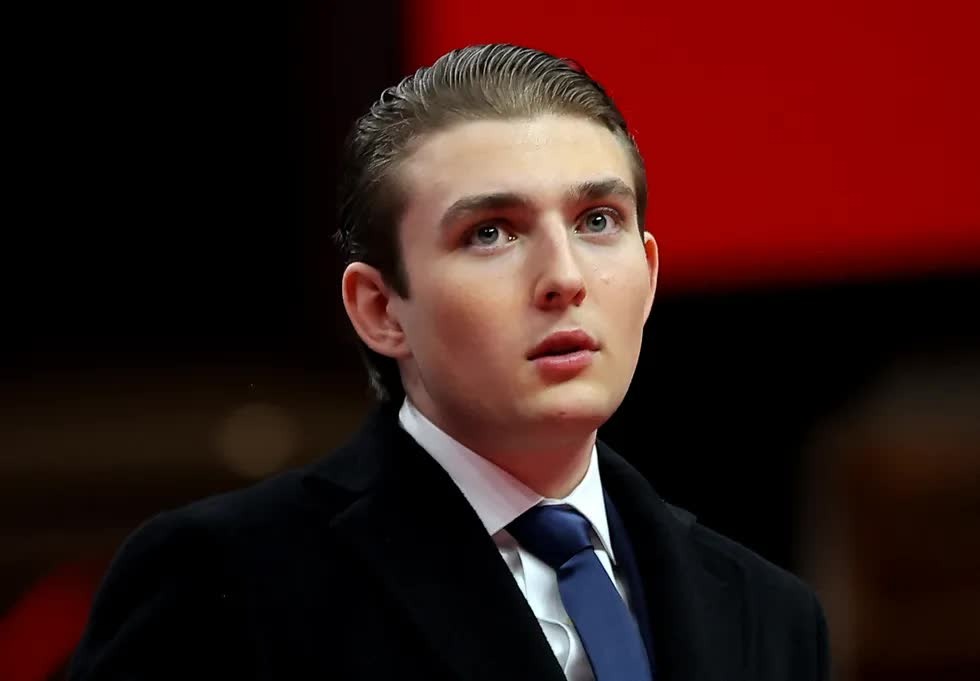
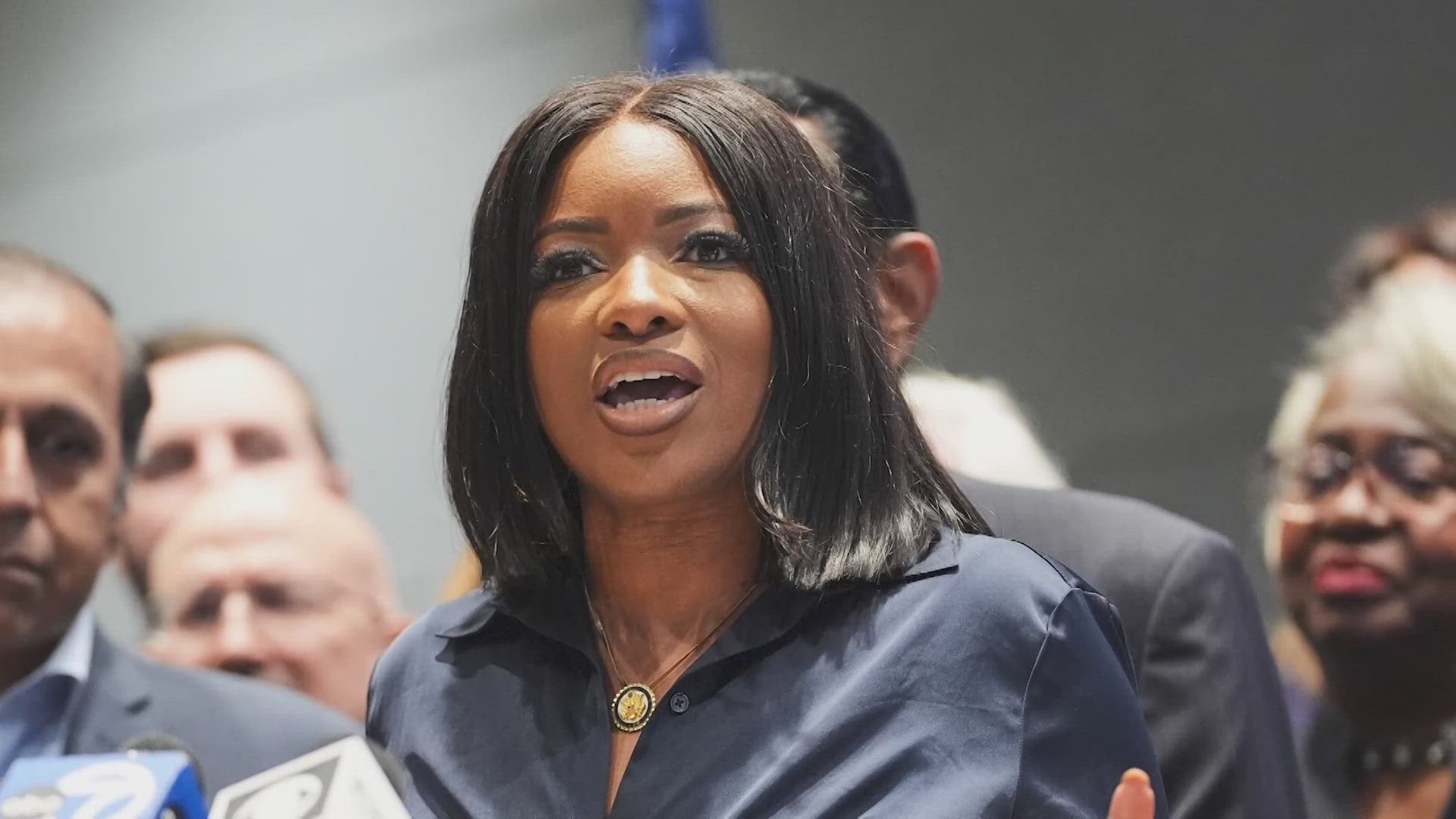
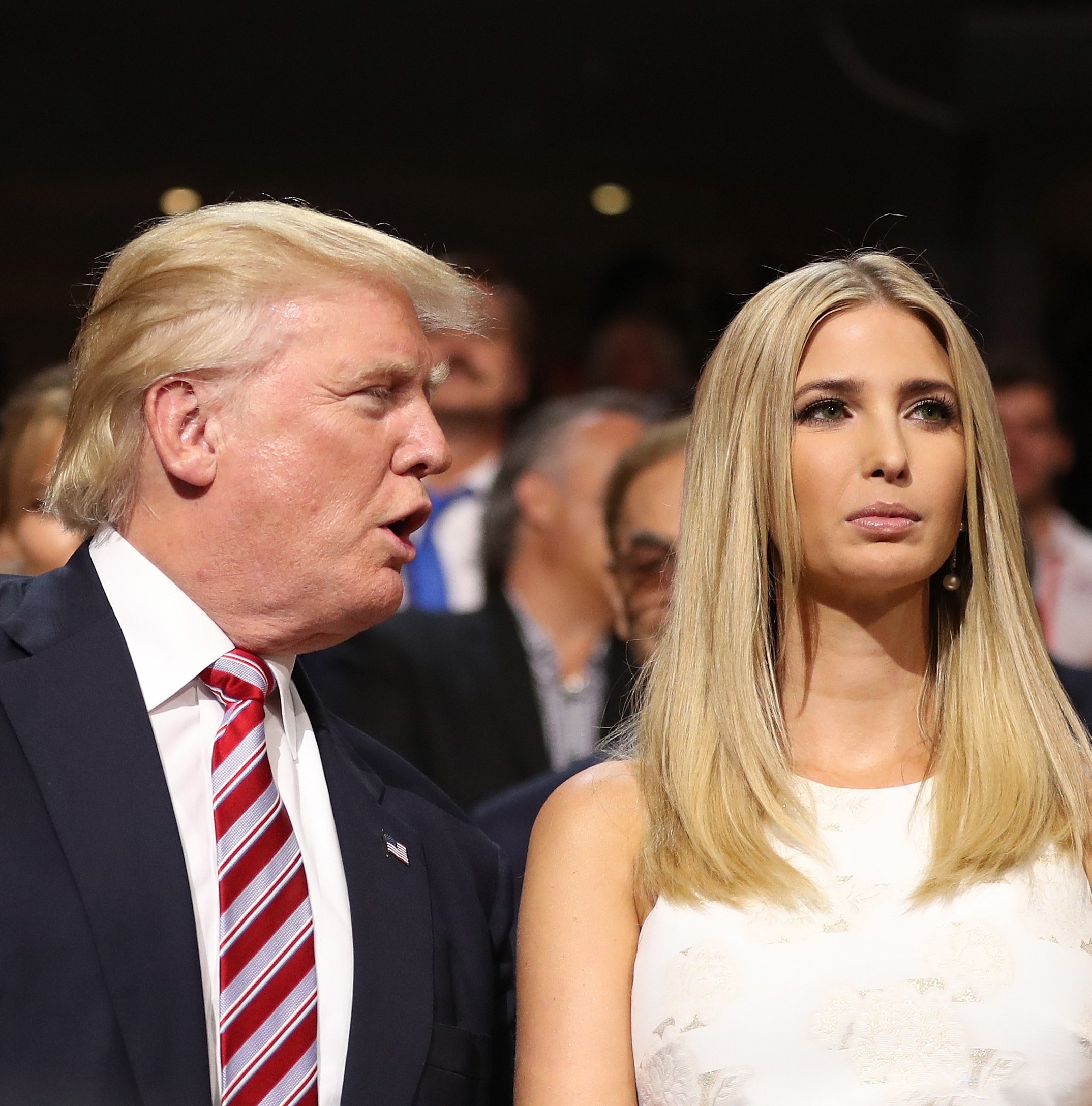
The past week delivered a masterclass in modern outrage economics, when a sensational DNA rumor involving Ivanka Trump, Jasmine Crockett, and Barron Trump detonated across television panels, timelines, and group chats with breathtaking speed.
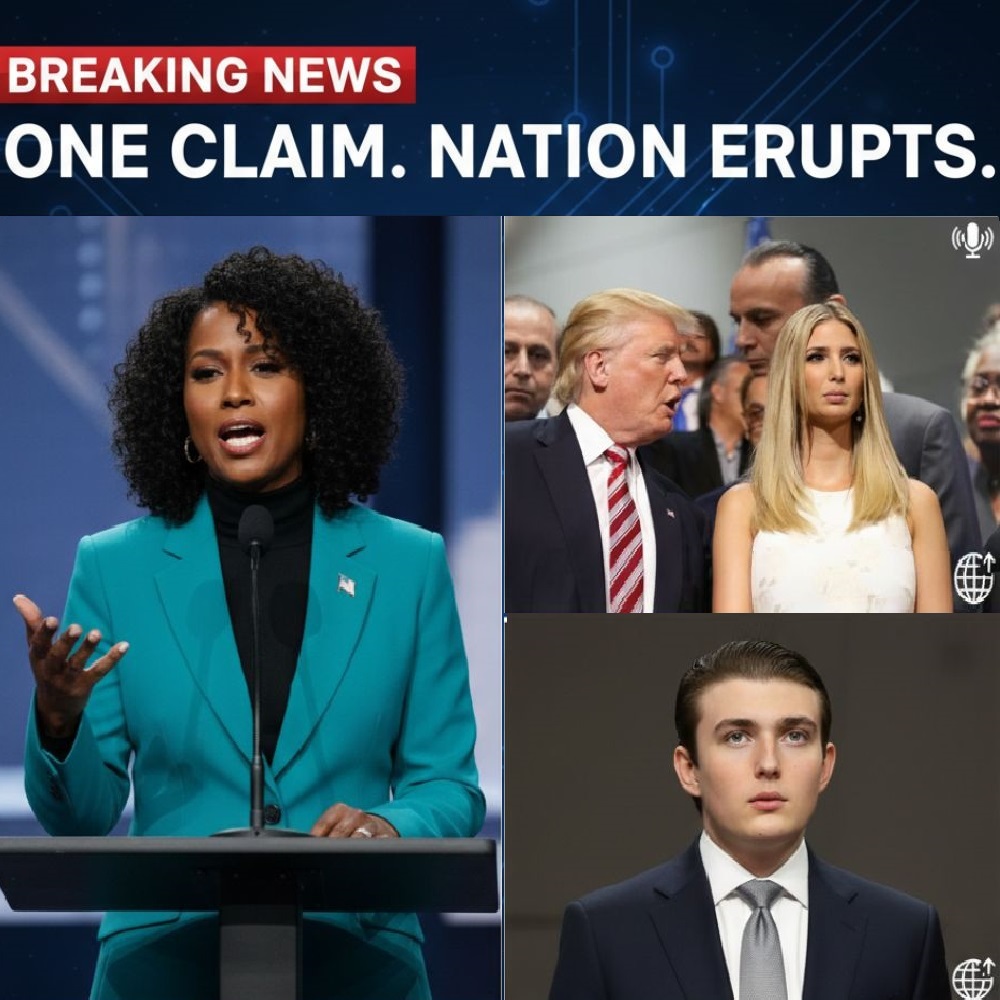
Within minutes, the claim leapt from a speculative talking point into a national fixation, proving once again that the collision of politics, celebrity lineage, and alleged “proof” can overpower nuance, verification, and even basic skepticism in today’s attention-driven media ecosystem.
Importantly, no verified evidence was established, yet the rumor’s velocity revealed something deeper and more unsettling about how audiences now process information, emotion, and tribal loyalty in an era where controversy itself has become a profitable commodity.
What followed was not a fact-finding mission, but a psychological spectacle, as millions chose sides instantly, sharing clips, captions, and commentary that framed belief or disbelief as a moral identity rather than a rational conclusion.
The television moment at the center of the storm mattered less for what was said than for how it was staged, edited, clipped, and algorithmically amplified to trigger maximum shock, disbelief, and engagement across competing ideological communities.
Producers understand this formula intimately, knowing that nothing travels faster online than a claim touching bloodlines, power, and betrayal, especially when it involves figures already symbolizing opposing visions of American identity.
Social platforms responded predictably, flooding users with emotionally charged content loops, where disbelief fueled curiosity, curiosity fueled sharing, and sharing fueled the illusion that repetition somehow transforms speculation into credibility.
This phenomenon exposes the uncomfortable truth that modern audiences often consume politics less as governance and more as serialized entertainment, complete with plot twists, villains, heroes, and shocking reveals designed for binge-worthy outrage.
In that environment, disclaimers dissolve quickly, because the emotional payoff of “what if this were true” frequently outweighs the discipline of waiting for confirmation, especially when influencers and commentators reward immediacy over accuracy.
The rumor also highlighted how family members of public figures become collateral damage in political combat, transformed into narrative devices rather than protected individuals, regardless of age, consent, or personal boundaries.
Critics argued that even discussing such claims crosses ethical lines, while defenders countered that powerful families have historically benefited from secrecy, making transparency a public interest regardless of discomfort or collateral consequences.
This tension between privacy and accountability is not new, but digital virality intensifies it dramatically, compressing debates that once unfolded over weeks into hours, while permanently archiving reactions that cannot be walked back.
Newsrooms now face an impossible balancing act, choosing between ignoring viral narratives and appearing complicit, or addressing them and risking amplification, both paths carrying reputational and moral consequences.
The result is a feedback loop where denial becomes content, outrage becomes currency, and every response—no matter how measured—feeds the same algorithmic engine that thrives on sustained conflict and emotional escalation.
Political fandoms further magnify this effect, interpreting silence as guilt, outrage as proof, and restraint as weakness, while rewarding the loudest voices with visibility, validation, and often monetization.
Meanwhile, serious policy debates are crowded out, replaced by spectacle-driven narratives that absorb public attention while offering little clarity, accountability, or constructive dialogue about actual governance challenges.
Media scholars note that DNA rhetoric has become a symbolic weapon, representing ultimate truth in a post-truth era, even though scientific legitimacy is routinely misused as a storytelling shortcut rather than a verified process.
This misuse creates a dangerous illusion of certainty, allowing audiences to feel informed without engaging with evidence, methodology, or credible sourcing, thereby weakening collective standards for truth and verification.
The episode also underscores how gender, race, and power intersect in viral controversies, shaping which narratives feel believable to different audiences based on preexisting biases rather than objective evaluation.
For supporters, the rumor reinforced suspicions of elite manipulation, while critics viewed it as an attack designed to delegitimize political opposition through personal humiliation rather than substantive critique.
Either way, the emotional polarization served platforms well, driving engagement metrics upward while deepening divisions that make constructive political conversation increasingly difficult to sustain.
Observers noted that outrage fatigue set in almost immediately, as timelines filled with competing “takes,” memes, and debunking threads, each vying for dominance in an overcrowded attention marketplace.
Yet even debunking struggled to gain traction, because corrections rarely travel as far or as fast as the original claim, particularly when the claim satisfies emotional or ideological appetites.
This asymmetry reveals a structural weakness in digital discourse, where the cost of spreading false or speculative information is low, while the cost of correcting it is high and often unrewarded.
The long-term damage lies not only in reputational harm, but in eroding trust across institutions, families, and media itself, leaving audiences cynical, reactive, and increasingly detached from verifiable reality.
As the cycle moves on, the controversy will fade from trending lists, but its lessons remain stark for anyone paying attention to how power, media, and emotion now intersect.
If democracy depends on informed citizens, then the normalization of spectacle over substance represents a quiet but profound threat, disguised as entertainment and delivered through devices we voluntarily refresh all day.
Ultimately, the real story was never about DNA, but about how easily narratives can be weaponized, monetized, and normalized when attention becomes the most valuable resource in modern public life.
Until audiences demand slower journalism, stronger verification, and ethical restraint, similar controversies will continue erupting, feeding the same outrage machine that thrives on division rather than understanding.