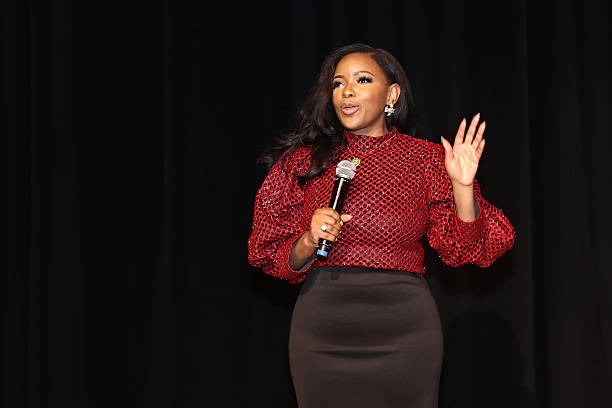
The segment began like countless political debates before it, but the tension was instantly sharper as Jasmine Crockett entered the studio with visible confidence, prepared not just to argue policy, but to dominate the moment with verbal force.
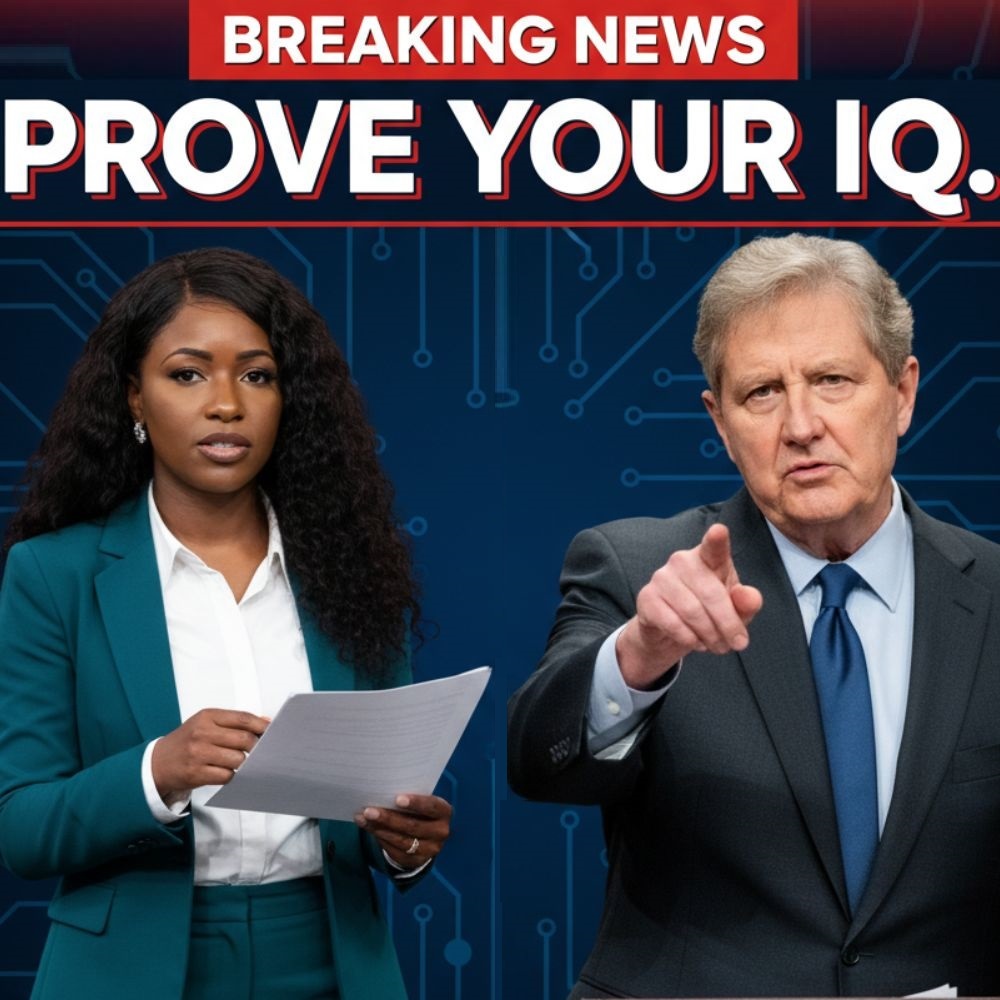
Viewers could sense from the opening exchange that Crockett wasn’t there to play defense, as her posture, tone, and pacing suggested a deliberate strategy to provoke, corner, and publicly embarrass her opponent before the cameras could cut away.
With a half-smile that quickly went viral online, Crockett leaned forward and challenged John Kennedy to “prove his IQ,” a line that drew scattered laughter, awkward glances, and immediate reaction across social media platforms.
For a split second, the table felt unbalanced, as if the insult itself had become the headline, signaling to audiences that this exchange would be remembered less for policy details and more for raw confrontation.
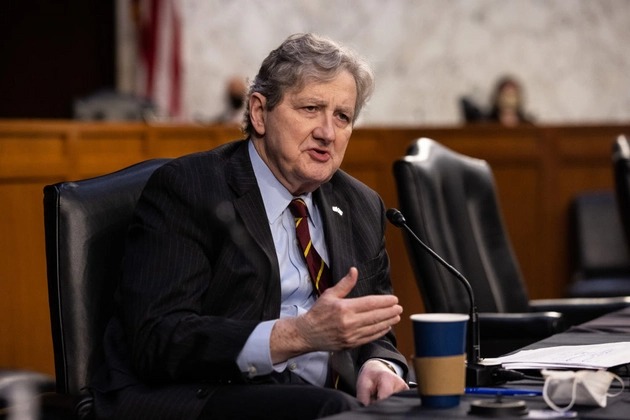
Kennedy, however, did not respond the way critics or supporters expected, as he neither fired back with sarcasm nor deflected with humor, choosing instead a silence so deliberate it unsettled everyone watching live.
Cameras lingered on his expression as producers hesitated, unsure whether the moment had stalled or whether something calculated was unfolding beneath the surface of his measured calm.
Then, without raising his voice or shifting his posture, Kennedy reached beneath his stack of notes and removed a sealed envelope that no one, including the host, appeared to know existed.
The movement was subtle, but the effect was immediate, as laughter faded, side conversations stopped, and the studio air seemed to tighten with anticipation and uncertainty.
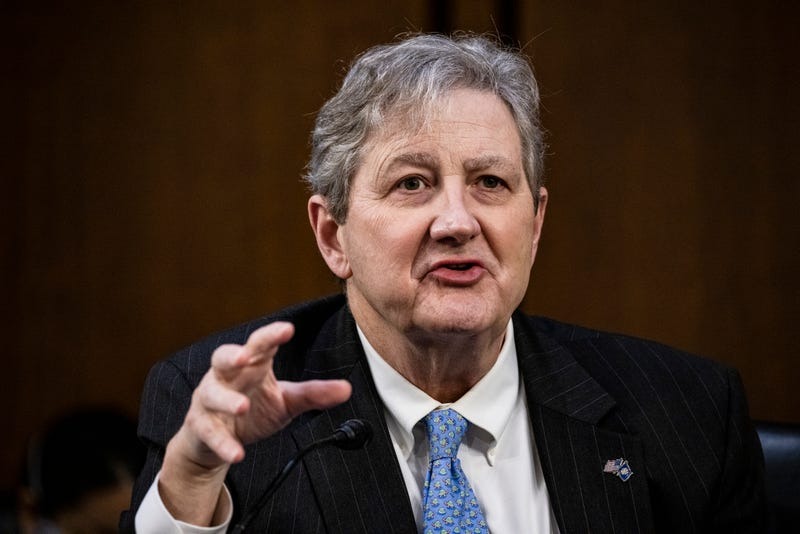
What followed over the next thirty-seven seconds has since been dissected frame by frame online, as Kennedy calmly referenced documented votes, public statements, and prior interviews attributed directly to Crockett herself.
He did not editorialize or insult, instead allowing dates, transcripts, and direct quotations to speak, creating a moment that felt less like a debate and more like a public evidentiary presentation.
Crockett’s expression shifted almost imperceptibly at first, as confidence gave way to calculation, and calculation slowly dissolved into a visible pause that audiences immediately recognized as discomfort.
The studio, once lively with interruptions and overlapping commentary, fell into an almost unnatural silence as panelists avoided eye contact and producers resisted cutting to commercial.
Online viewers described the moment as “watching a chess match end with a single move,” while others framed it as a warning about the risks of personal attacks in high-stakes political media.
Supporters of Kennedy flooded platforms with clips labeled “receipts over rhetoric,” praising the restraint and preparation that transformed a potential insult into a moment of strategic reversal.
Meanwhile, Crockett’s defenders argued that the exchange exposed deeper issues about gender, tone policing, and the unequal expectations placed on women who challenge powerful figures in public forums.
The clip’s virality was accelerated by the precise timing of the reveal, with commentators repeatedly emphasizing that the thirty-seven-second span felt longer, heavier, and more consequential than many full-length debates.
Political analysts quickly weighed in, noting that modern media rewards moments of silence and documentation more than shouting, especially when audiences are fatigued by endless performative outrage.
Within hours, hashtags referencing the exchange trended across platforms, splitting audiences into camps that argued not only about who “won,” but about what victory even means in political discourse.
Some viewers praised Crockett’s willingness to confront authority directly, arguing that her challenge reflected frustration shared by constituents tired of political double standards and coded condescension.
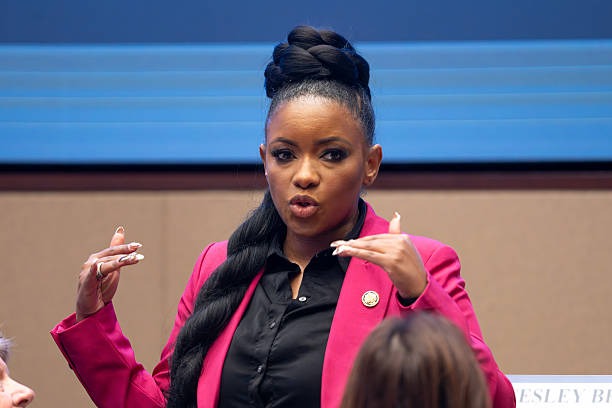
Others countered that the IQ remark crossed a line, shifting the focus from substantive issues to personal credibility, thereby opening the door for Kennedy’s methodical and devastating response.
Media scholars noted that the envelope itself became a symbol, representing preparation, institutional memory, and the enduring power of recorded words in an era that often prioritizes speed over accuracy.
The host’s inability to regain control of the conversation only amplified the drama, as the lack of interruption forced audiences to sit with the discomfort rather than escape it through commentary.
By the time the segment ended, neither participant had delivered a traditional closing argument, yet the silence itself felt like a conclusion that audiences instinctively understood.
Clips of Crockett freezing mid-response circulated widely, often stripped of context, prompting renewed debates about fairness, editing ethics, and the responsibilities of viral political content.
Kennedy’s supporters framed the moment as proof that experience and documentation still matter, even in an environment dominated by soundbites and emotional appeals.
Crockett’s allies, however, insisted that the backlash revealed how quickly assertive women are punished for rhetorical risks that male counterparts take routinely without consequence.
As the clip continues to resurface, it has become less about a single insult or envelope and more about the evolving rules of political confrontation in the digital age.
What makes the exchange linger is not just who appeared momentarily unprepared, but how quickly authority can shift when confidence meets unexpected evidence.
In an era where viewers crave authenticity yet reward spectacle, this thirty-seven-second standoff now stands as a case study in power, perception, and the unforgiving memory of cameras.
Whether remembered as a cautionary tale or a strategic masterclass, the moment has already secured its place in the ever-growing archive of political media flashpoints.
And as audiences continue to argue, share, and replay the clip, one truth remains unavoidable: sometimes silence, paired with preparation, can echo louder than any insult ever could.