John Neely Kennedy’s “Born in America” Bill Sparks a Political Earthquake Across the Nation
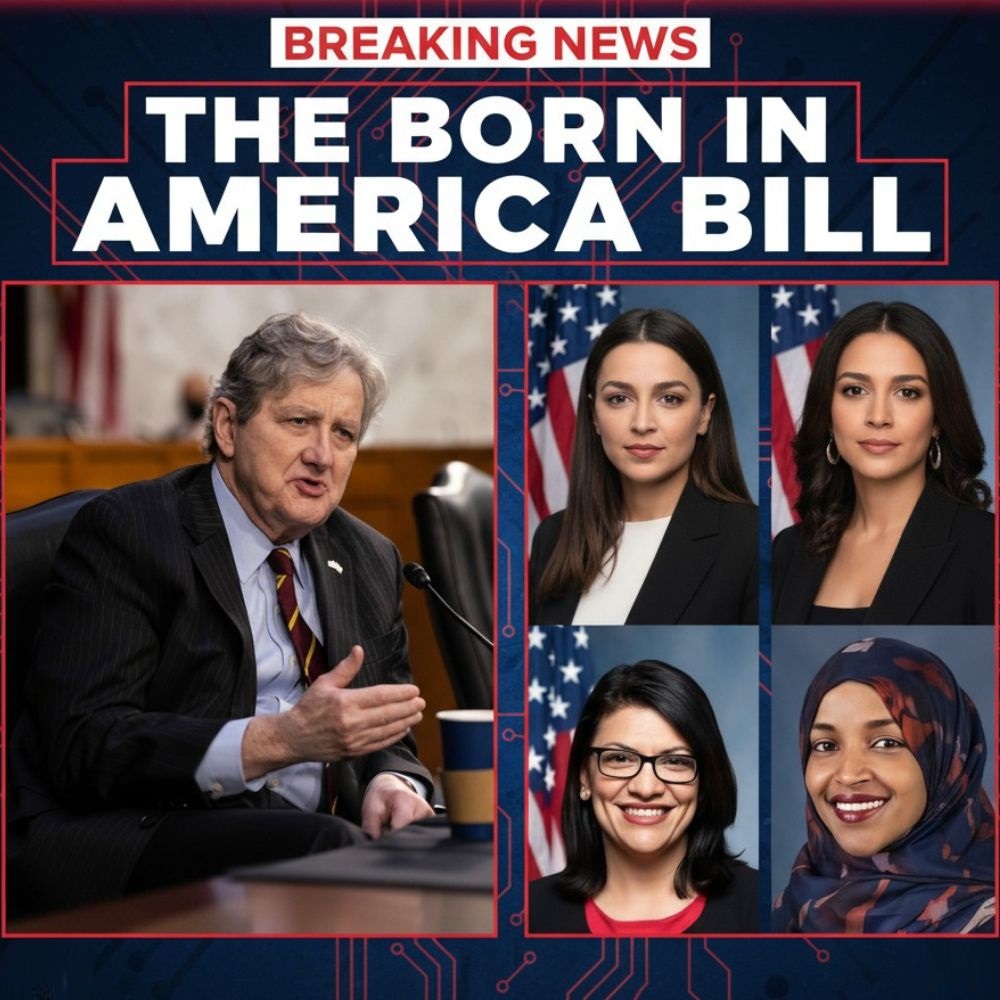
Washington rarely lacks controversy, but few proposals in recent memory have ignited debate as quickly or as fiercely as Senator John Neely Kennedy’s newly introduced constitutional initiative, widely known as the “Born in America” Act.
Within hours of its announcement, the bill had split lawmakers, electrified cable news panels, and set social media ablaze – not because of its technical language, but because of the fundamental question it dares to raise: Who should be allowed to lead the United States?
At its core, the proposal seeks to restrict eligibility for the nation’s most powerful offices – including Congress and the presidency to individuals born on U.S. soil.
Kennedy’s supporters argue that leadership at the highest level requires unquestionable allegiance to the country, rooted not only in citizenship, but in birth itself.
unquestionable allegiance to the country, rooted not only in citizenship, but in birth itself.
In their view, America’s leaders should embody a lifelong, indivisible bond with the nation they govern.
“This is about loyalty,” one supporter said.
“If you’re going to shape America’s future, your connection to this country should never be open to debate.”
Backers of the bill frame it as a patriotic safeguard a way to ensure that national decision-making remains firmly anchored in American identity, history, and interests.
They argue that global pressures, foreign influence, and divided allegiances have grown too powerful in modern politics, and that the nation must draw clearer lines when it comes to leadership.
But critics see something very different.
Opponents of the “Born in America” Act warn that it risks undermining one of the most foundational principles of the United States: that anyone, regardless of origin, can fully belong.
Naturalized citizens – many of whom have served in the military, built businesses, paid taxes, and raised families would be permanently barred from seeking the highest offices, regardless of merit, loyalty, or service.
Civil rights advocates have described the proposal as exclusionary and deeply symbolic in the worst way.
“This bill sends a message,” one legal analyst noted, “that some Americans are forever second-class, no matter how long they’ve lived here or how much they’ve contributed.”
The constitutional implications are equally explosive.
Amending eligibility requirements would require overwhelming political support – a hurdle few believe is realistically achievable.
Yet even critics admit that Kennedy’s goal may not be immediate passage, but something far more powerful: forcing a national reckoning.
Indeed, the proposal has reopened a long-simmering debate over what defines American identity in the 21st century. Is it birthplace?
Citizenship? Shared values? Or commitment to democratic ideals?
The United States has always balanced these questions uneasily, celebrating its immigrant roots while simultaneously wrestling with fears about sovereignty, security, and cohesion.
Kennedy, known for his sharp rhetoric and unapologetic style, appears fully aware of the storm he has unleashed.
In interviews following the announcement, he framed the bill not as an attack, but as a test one meant to challenge assumptions that have gone unquestioned for decades.
“Leadership should be unquestionable,” Kennedy said. “And sometimes that means asking uncomfortable questions.”
Political analysts suggest the timing is no accident.
With trust in institutions eroding and populist movements gaining traction globally, proposals like the “Born in America” Act resonate with voters who feel disconnected from elites and wary of globalization.
For these supporters, the bill represents clarity in an era of blurred boundaries.
At the same time, Democrats and moderate Republicans alike warn that such legislation could deepen divisions at a moment when national unity is already fragile.
They argue that America’s strength has never come from uniformity, but from its ability to integrate people from every corner of the world into a shared civic identity.
“The danger,” one former senator cautioned, “is not the bill itself- it’s the precedent it sets for defining ‘real Americans.”
Whether the proposal advances or stalls, its political impact is already undeniable.
It has reshaped headlines, reframed campaign talking points, and forced lawmakers on both sides to take a clear position.
Silence, in this case, is no longer an option.
In the end, the “Born in America” Act may never become law but it has already achieved something arguably more powerful.
It has exposed fault lines running through American democracy, compelling the nation to confront uncomfortable truths about belonging, power, and identity.
As the debate intensifies, one question now dominates the conversation in Washington and beyond: Is this bill a necessary defense of national sovereignty -or a warning sign of a democracy wrestling with fear of change?
Either way, the firestorm it has ignited is far from over.