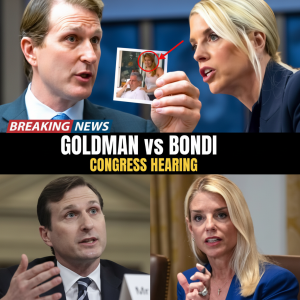
A dramatic live television moment exploded across social media after a provocative claim was aired, instantly pulling millions into a swirling debate over truth, rumor, and how quickly unverified narratives can dominate national conversation.

Within minutes, clips spread across platforms, stripped of context and amplified by outrage, curiosity, and algorithmic momentum, transforming a single broadcast exchange into a full-scale digital event few viewers initially understood.
Importantly, no independent verification accompanied the claim, yet its framing, timing, and theatrical delivery triggered emotional reactions that often outpaced careful analysis or basic fact-checking.
Media analysts quickly noted how the segment’s construction mirrored viral content playbooks, blending confrontation, implication, and shock value to maximize engagement rather than establish verifiable truth.
Cable news producers scrambled to respond, balancing the need to address audience interest while avoiding legal exposure and ethical pitfalls associated with repeating or legitimizing unproven allegations.
Social platforms lit up with hashtags, reaction videos, and stitched commentary, many users admitting they shared the clip before fully understanding what was claimed or whether any evidence existed.
Fact-checking organizations moved rapidly, issuing preliminary advisories reminding audiences that extraordinary claims require extraordinary evidence, particularly when they involve real people and deeply personal allegations.
Meanwhile, partisan influencers framed the moment through ideological lenses, either portraying it as a courageous truth-telling disruption or a reckless example of misinformation weaponized for attention.
Communication scholars emphasized how live television creates a unique vulnerability, where real-time reactions can lend false credibility to statements that would otherwise face editorial scrutiny.
The controversy reignited longstanding concerns about “performative outrage,” where emotional intensity substitutes for substantiation, allowing rumors to travel faster than corrections or clarifications.
Network executives reportedly convened internal discussions about broadcast standards, questioning how to maintain compelling programming without incentivizing claims that cannot be responsibly supported.
Critics argued that the real story was not the allegation itself, but the media ecosystem that rewards spectacle, outrage, and virality over verification, nuance, and accountability.
Supporters of stricter regulation pointed to the incident as evidence that platforms and broadcasters must rethink safeguards against harmful misinformation spreading under the guise of debate.
Free speech advocates countered that suppressing controversial statements risks chilling open discourse, even as they acknowledged the need for clearer distinctions between opinion, speculation, and fact.

Audience reactions revealed a troubling pattern, with many viewers expressing certainty about the claim’s validity based solely on confidence, tone, and repetition rather than confirmed evidence.
Psychologists noted how emotionally charged content exploits cognitive shortcuts, making viewers more susceptible to believing dramatic assertions when delivered in authoritative or confrontational settings.
As the clip continued circulating, parody accounts and satirical edits further blurred reality, complicating efforts by journalists to reintroduce context and caution into the conversation.
Several major outlets chose to cover the backlash rather than the claim, focusing on media responsibility, public reaction, and the mechanics of virality instead of repeating unverified details.
Legal experts warned that amplifying specific allegations without proof could expose networks and individuals to defamation risks, especially when claims involve private family matters.
The incident also sparked discussion about audience accountability, questioning whether consumers bear responsibility for sharing content before verifying its accuracy or potential harm.
Educators highlighted the moment as a case study in media literacy, emphasizing the importance of skepticism, source evaluation, and resisting emotional manipulation online.
Behind the scenes, public relations teams worked swiftly to manage reputational fallout, issuing statements urging restraint and discouraging the spread of unsubstantiated rumors.

Some commentators argued that the controversy revealed a deeper cultural hunger for scandal, where intrigue often outweighs respect for privacy or factual rigor.
Others observed that corrections rarely travel as far as the original sensational claim, creating a lasting imprint even after debunking efforts gain traction.
As days passed, engagement remained high, proving that controversy itself can become self-sustaining, independent of truth, fueled by reaction, rebuttal, and relentless commentary.
Journalists faced a dilemma, knowing that ignoring viral moments risks irrelevance, while covering them risks amplifying misinformation and legitimizing baseless narratives.
The episode underscored how modern media rewards immediacy over reflection, pushing audiences and outlets alike toward instant judgment rather than deliberate understanding.
Ultimately, the viral moment became less about what was claimed and more about how quickly information ecosystems can be hijacked by shock-driven storytelling.
It served as a stark reminder that in the digital age, attention is power, and power without verification can distort reality at breathtaking speed.
Whether lessons will be learned remains uncertain, but the incident stands as a cautionary tale about the fragile boundary between conversation and chaos.
As the noise slowly fades, one truth remains clear: in a world of instant virality, protecting facts requires far more effort than spreading fiction.